

Based on coverage from The Star, Winnipeg Free Press, The Peterborough Examiner, CKOM, and Sask Today.
Halifax teens who rely on free bus passes to get to school, work, and volunteering are bracing for changes after Nova Scotia’s latest budget cut funding for the program.
The decision to cut funding for the free transit pass program comes amid broader concerns about fiscal management, as previously reported in coverage of Nova Scotia's unbudgeted spending. This budget reduction raises questions about the province's commitment to supporting youth mobility and independence.
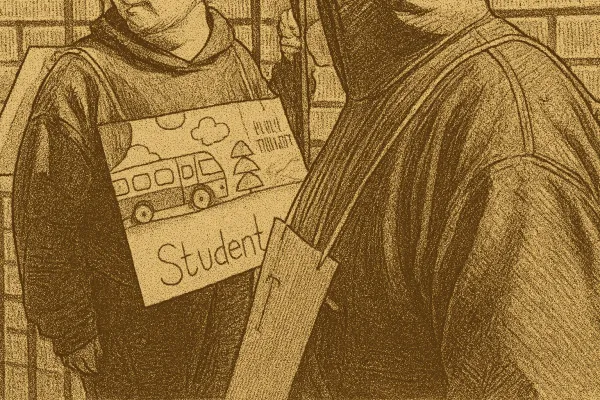
The student pass has been a daily lifeline for kids like 17-year-old Teddie Rofe, a Grade 11 student who babysits, cleans part-time, and volunteers weekly at a daycare. She says losing the pass would mean giving up some of those commitments and leaning more on her parents for rides, along with losing what she calls a real sense of independence.
Nova Scotia budget cuts Halifax student transit
The provincial budget includes a $600,000 cut to the $1.2 million the province has been spending each year to cover free bus passes for junior high and high school students tied to Halifax Regional Centre for Education and Conseil scolaire acadien provincial schools.
The reduction is part of broader restraint measures. Premier Tim Houston’s Progressive Conservative government says it needs to cut $130 million in grant funding while dealing with a $1.2-billion deficit.
Education Minister Brendan Maguire explains scale-back
Education Minister Brendan Maguire called the student transit pass program “a positive thing,” but said the government is under fiscal pressure and has to make tough choices.
Maguire says the program will be scaled back and that remaining funds will be moved to the Department of Opportunities and Social Development. That department already runs a program that provides free bus passes to youth in families receiving income assistance. Under the plan described by the province, passes would be available to students from families on income assistance rather than all junior and high school students in the Halifax area.
Halifax students describe work and school impact
Rofe says without the free pass, “I wouldn’t be able to do my volunteering, get to my job, or do any of that stuff.” She told The Canadian Press she was sad when she learned the cut was in the budget, because the pass let her get around without depending on her parents.
Grade 12 student Neil Wang, 18, says he uses the bus “literally every day” to get to and from school, to his part-time jobs at McDonald’s and as a lifeguard, to Cadets events downtown on weekends, and to see friends. He describes the pass as “basically a ticket to freedom.”
Halifax families squeezed by $66 monthly pass
One concern from families is the gap between qualifying for income assistance and being able to comfortably afford transit.
Rofe’s mother, Heidi Rofe, says plenty of households won’t qualify for income assistance but still can’t absorb another monthly bill. A youth bus pass in Halifax costs $66 a month.
She also says the current pass has made day-to-day life manageable in a busy household. She runs a small business, and her husband does shift work at the airport. With the pass, her daughter can get home from school and head out again for babysitting or daycare volunteering without needing a ride.
As students like Teddie Rofe face the impact of budget cuts on their daily lives, families may also be looking for ways to manage expenses during the colder months; for practical tips on keeping homes warm without breaking the bank, consider exploring budget-friendly hacks for winter warmth.
Transit advocacy group warns of long-term effects
Dan Hendry, project director with advocacy group Get on the Bus, argues the province is making “a huge mistake.” He says around 30 communities across Canada have some form of subsidized or free youth transit, but Halifax’s approach, offering students an unlimited pass, has been among the strongest models.
Hendry’s pitch is that when teens use transit early and often, it becomes normal, building habits that can carry into adulthood and help create a stronger transit culture over time.
On the ground, students like Rofe are already pushing back. She’s urging the premier to keep the program intact, writing to her MLA and to Houston asking the government to reconsider, saying young people are trying to build their futures and need reliable ways to get where they’re going.
Support Independent Canadian News Analysis
The Canada Report is supported by readers like you. If this article helped you understand what’s happening, you can support our work with a one-time tip.
Support The Canada Report