
Based on coverage from CBC, Economic Times, The Epoch Times, The Toronto Star, CP24, Toronto Sun, The Hamilton Spectator, and Truck News.
A Canada Border Services Agency officer at one of Ontario’s busiest crossings and a transport truck driver are facing a stack of criminal charges after a truck carrying “millions of dollars worth” of opium, cannabis products, and tobacco was allegedly allowed into Canada.
This incident follows a recent drug bust in Toronto, where authorities seized $7 million worth of cocaine and arrested a teenager, underscoring ongoing challenges in combating drug trafficking across Canada’s borders. For more details, see our coverage of the Toronto drug bust that seized $7M in cocaine.
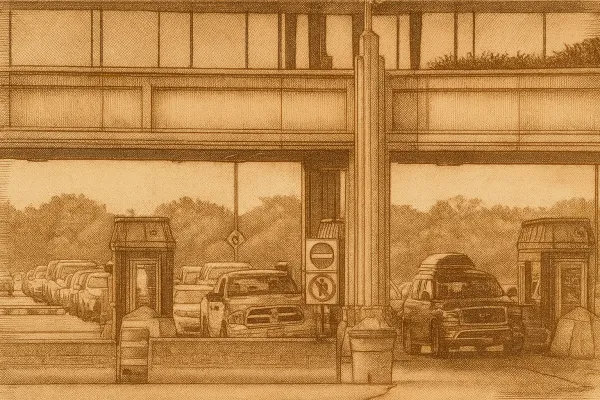
The RCMP says the case centres on the Queenston-Lewiston Bridge port of entry in Niagara-on-the-Lake. Investigators allege the officer didn’t follow CBSA policy and the truck and trailer container made it through the border, later turning up contraband.
Queenston-Lewiston Bridge charges in Niagara
The RCMP’s Federal Policing Central Region (Ontario) announced the arrests and charges in a news release dated March 20. Police say a male CBSA officer working at the Queenston-Lewiston Bridge and the truck driver were both taken into custody.
Across the reporting, the core allegation is consistent: a commercial transport truck was permitted to enter Canada, and it allegedly contained large quantities of illegal drugs and tobacco valued in the millions.
What RCMP alleges crossed into Canada
Police say the load included opium, cannabis products, and tobacco. The RCMP describes the value as “millions of dollars worth,” but none of the sources provide exact weights, quantities, or a more specific dollar figure.
The charges span federal drug and cannabis offences, plus allegations related to tobacco. Sources list charges that include conspiracy to import controlled substances, trafficking, importation, possession for the purpose of trafficking, distribution offences under the Cannabis Act, and transportation and possession of tobacco for the purpose of sale.
Who is charged: Daniel Notarianni and Abhishek Abhishek
Multiple outlets identify the CBSA officer as Daniel Notarianni and the truck driver as Abhishek Abhishek.
One report also notes that a Niagara Falls man with the same name as the officer received a peace officer exemplary service medal on Oct. 22, 2025, according to the Governor General’s website. The RCMP release itself focuses on the allegations tied to the border crossing and does not mention the medal.
As with any criminal case, charges are allegations and have to be tested in court.
Timeline: January arrest and March 6 warrant
The RCMP says the CBSA officer was arrested in January after the truck was allegedly allowed through without proper protocols being followed. The driver was also arrested around that time, according to the RCMP.
On March 6, the RCMP says it executed a search warrant connected to the officer. Some coverage describes this as an arrest warrant being executed on March 6, while other reporting frames March 6 as the date charges were laid and the warrant was executed. Either way, March 6 is presented as a key enforcement step in the case.
Court dates differ across reports
There are two sets of court timelines in the coverage.
The RCMP release information carried by some outlets says the driver appeared in court on March 13 and the officer was scheduled to appear on March 18, both in Welland, Ontario.
Other reporting, including CTV’s version of the story, lists much later dates: Notarianni is scheduled to appear in Welland on March 23, 2026, and Abhishek on April 9, 2026. Another account also points to an April 9 court date for the driver and places the appearances at the Welland courthouse.
RCMP-CBSA border security focus in Ontario
The RCMP says the investigation began after CBSA concerns were flagged and referred to RCMP Federal Policing. Superintendent Dale Foote said the case shows cooperation between the two agencies, adding that when CBSA brought information forward, RCMP members moved quickly and conducted what he called a “careful, impartial investigation.”
For Canadians, the bigger takeaway is uncomfortable but straightforward: border security depends on process and trust, and this case is about what happens when police allege that trust was broken at the point of entry.
Support Independent Canadian News Analysis
The Canada Report is supported by readers like you. If this article helped you understand what’s happening, you can support our work with a one-time tip.
Support The Canada ReportSource 1 | Source 2 | Source 3 | Source 4 | Source 5 | Source 6 | Source 7 | Source 8