
This report is based on multiple sources, including news articles, public records, official documents, and community input. While every effort has been made to ensure accuracy, some details may be disputed or evolving. For corrections, please contact info@thecanadareport.ca.
The Gate on the West Arm
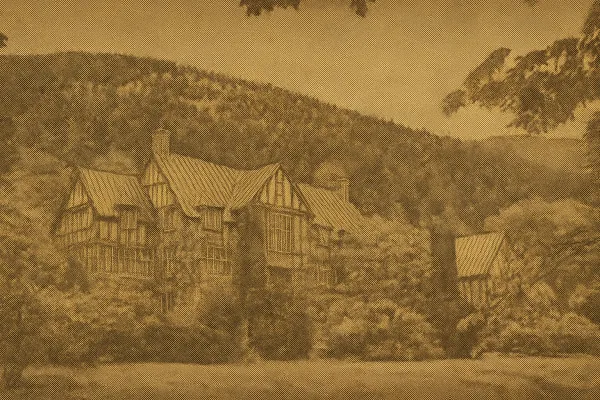
On a damp autumn afternoon, the wrought-iron gates at the edge of the Blaylock estate look less like a welcome than a warning. Granite pillars, lichen-softened, bracket a narrow road that bends toward the lake and disappears behind a screen of mature trees. Beyond the gate, the grounds fall in terraces toward Kootenay Lake, where the water is the colour of cold slate and the mountains across the West Arm hold their own weather. A wedding party has just left. A staff member in black slacks and a fleece jacket wheels a cart stacked with empty champagne flutes toward a service entrance that was once, in another era, the servants’ wing of a private palace.
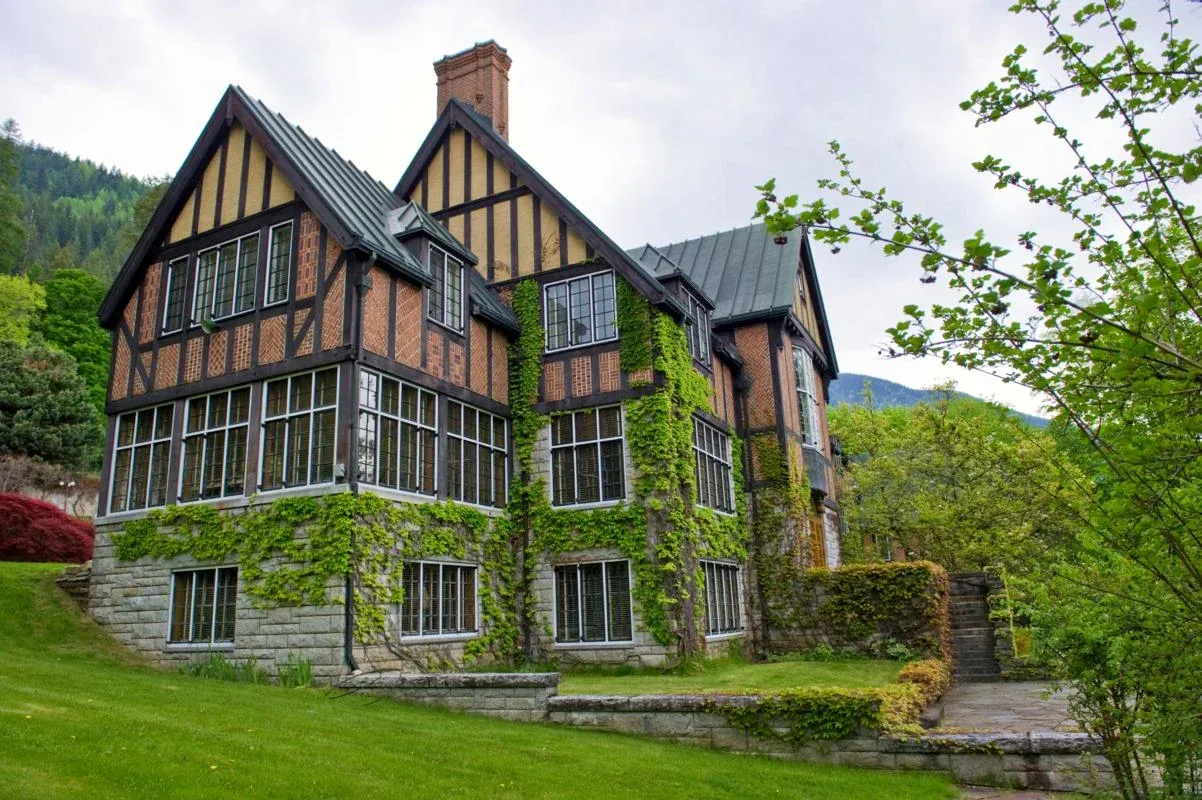
Inside, the mansion still performs its paradox: a Tudor Revival showpiece built in the Kootenays at a time when much of the country was scraping by. Heavy beams, carved wood panels, a stone hearth large enough to roast an animal, and leaded windows that throw a muted, amber light across polished floors. In the quiet between bookings, the building’s scale feels almost accusatory. A guestbook near the front hall carries the expected notes about lake views and gardens. But other entries bend toward something else: “We heard footsteps at 2 a.m.” “The third-floor room felt watched.” “Ask about the ghosts.”
That lore has become part of the business model. Blaylock is marketed as a “mansion in the mountains,” a retreat where stressed professionals can book a corporate workshop, couples can stage a weekend-long wedding, and travellers can pay for the pleasure of sleeping inside a place that once hosted industrial royalty. Yet the ghosts that hover in the brochures distract from the living story embedded in the stone and timber: a story of extraction and empire-building, of labour conflict and environmental cost, of wealth converted into architecture, and of what happens when the industries that created that wealth change or leave.
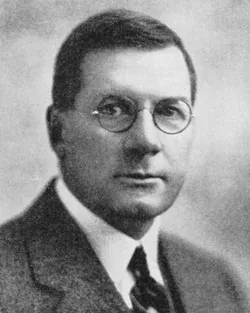
The mansion’s original name was Lakewood, a private summer home built for Selwyn G. Blaylock, the president of the Consolidated Mining and Smelting Company of Canada. His admirers remember him as a brilliant engineer and modernizer, a man who “turned lemons into lemonade” by converting toxic sulphur into fertilizer. His critics remember a hard-eyed corporate autocrat, the chair of a “company union” who ran meetings with a gavel and “ignored” motions from workers. Today, the estate sits between these competing memories, monetizing its mystery while carrying the weight of its origins.
Want more Canadian Deep Dives like this?
We release them weekly.
A Place That Was Not Empty
Long before the mansion’s gates announced private property, the West Arm of Kootenay Lake was a corridor of movement and meaning. The lake itself is part of a vast interior water network that shaped travel, trade, and seasonal life. The Kootenays, as the region came to be known in settler language, were not a blank canvas awaiting development. They were peopled, used, named, and governed by Indigenous nations whose presence is routinely reduced in local heritage storytelling to a prelude.
Even the word “Kootenay,” often glossed in booster histories as meaning “people of the water,” hints at a relationship to place that contrasts with the later industrial logic of extraction. The mansion’s own marketing and popular histories sometimes nod to this earlier world, but the nod can feel like scene-setting rather than accountability: a quick acknowledgement before returning to the romance of stone walls and imported shrubs. Yet the property’s later chapters only make sense if the land is understood as layered, contested, and repeatedly repurposed.
By the late nineteenth century, the West Arm was being pulled into the gravitational field of mining. Settlement, rail schemes, and industrial speculation transformed the shoreline into a patchwork of claims and holdings. Sternwheelers, not roads, carried the region’s ambitions, moving ore, lumber, equipment, and people between railheads and boomtowns. The lake was infrastructure before asphalt existed to compete with it. When the Blaylock mansion later imported materials “from the four corners of the earth,” those shipments did not arrive by magic. They arrived through the transportation system built to serve mines, smelters, and the companies that owned them.
Land title searches cited by later writers show the property passing through notable owners before Blaylock. The names that surface, an American Civil War veteran, a lawyer, a mayor, suggest the typical arc of frontier consolidation: land acquired, re-sold, and leveraged by men whose authority came from war service, law, or civic power. By the time Blaylock chose the site for Lakewood, the ground already carried a settler history of status and speculation, layered over an Indigenous history of presence that colonial record-keeping often rendered invisible.
Selwyn Blaylock’s Rise and the Shadow It Cast
In 1899, Selwyn Gwillym Blaylock left Montreal with a McGill degree in mining and metallurgy and arrived in Trail, British Columbia, at the edge of an industrial experiment. The Canadian Pacific Railway had recently purchased a smelter from American tycoon F. Augustus Heinze, not out of civic generosity but because controlling smelting meant controlling freight. In the Kootenays, the railway understood what mining entrepreneurs already knew: whoever managed the choke points, transportation and processing, could translate mineral wealth into durable power.
Blaylock was, by most accounts, a tireless worker and a technically gifted one. He rose quickly, from surveyor to chief chemist, then into management roles in Nelson and at the St. Eugene mines. At Cominco, the successor to the smelter enterprise consolidated in 1906, he became the kind of industrial leader Canada produced in the first half of the twentieth century: part engineer, part executive, part political actor. His supporters point to concrete achievements. With a research team, he helped develop a flotation process that revolutionized smelting efficiency, turning a struggling operation into a global-scale producer. The Trail plant became a major supplier of war materials in the First World War, and again in the Second.
But there is a second record alongside the honours and medals. Trail’s prosperity came with pollution so severe that an American Farmers Association sued for crop damage and won. The company was urged to clean up. The response has often been framed as Blaylock’s ingenuity: remove sulphur from smoke and sell it as fertilizer, creating what became Elephant Brand Fertilizer. It is an attractive story of industrial alchemy, and it contains truth. It is also, on closer inspection, a portrait of a company pushed by legal liability and public pressure to mitigate harm, then discovering profit in compliance.
Labour history complicates the heroic narrative further. In the highly unionized Kootenays, Blaylock has long been a “tall poppy,” admired and resented. Accounts from union circles describe him as an archetype of paternalistic control. In Al King’s Red Bait! Struggles of a Mine Mill Local, Blaylock is depicted chairing a company-sponsored committee that functioned as a management tool. “He sat at the head of the table with a gavel and when that gavel came down, the decision was made,” the book recounts. “Sometimes the men would try and pass their own motions, but Blaylock just ignored them.”
Defenders argue the era’s context matters: early industrial relations, different legal frameworks, wartime urgency. They point to his stated belief that worker security and welfare would be repaid in “good will” and efficiency, and to community institutions like the Trail Smoke Eaters hockey team as reflections of his philosophy. In the documents and memories that survive, Blaylock emerges as neither saint nor cartoon villain but something more revealing: a manager who understood that stability, whether through welfare measures or coercive control, was essential to uninterrupted production.
A Palace Built in Hard Times
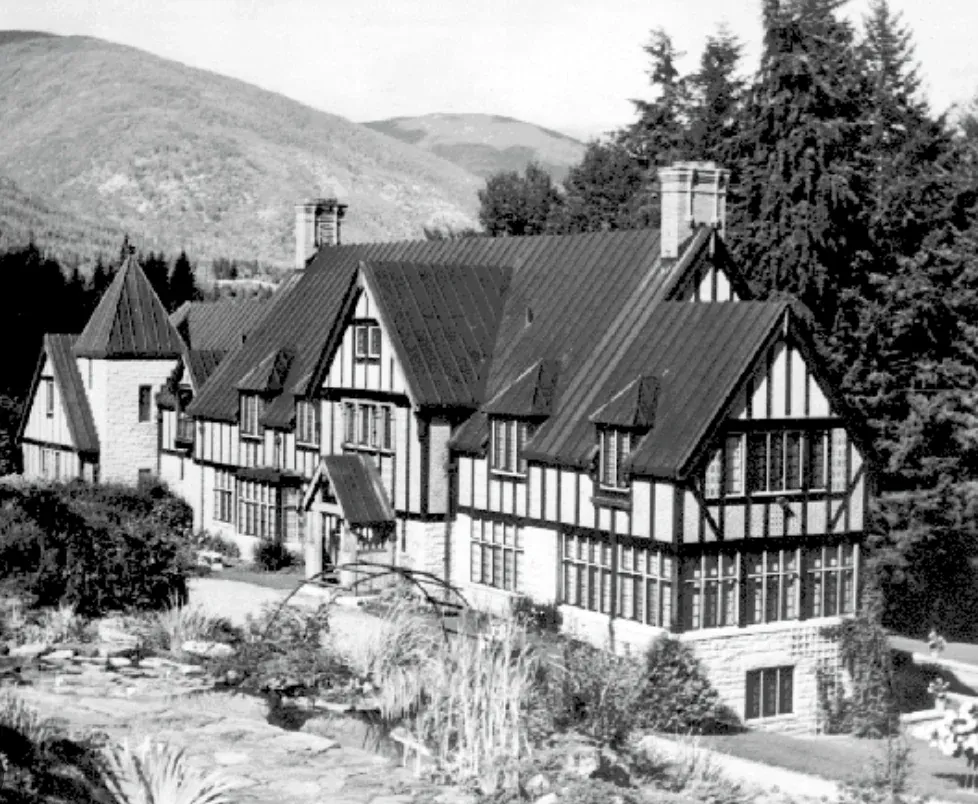
Lakewood was completed in the mid-1930s, a Tudor Revival mansion of roughly 16,000 square feet set within a vast estate, sometimes described as 13 acres, sometimes as much larger. Its very existence raises a question that still unsettles people in the region: why build a palace during the Depression, and who paid the real price for its beauty?
The official romance is that Blaylock was providing work. A Vancouver Sun report later captured the legend: Blaylock told the crew, “It’s hard times, there isn’t much work, so just take your time and do a good job.” That line, repeated in local lore, functions like a moral alibi. It casts extravagance as benevolence, a private project as public relief. There is evidence the build did employ skilled local trades. The head stonemason is remembered as Kuzma Golac, who died in Nelson in 1957. The master carpenter and carver of elaborate scrollwork panels was Mike Roberts, a name that still carries weight among families who grew up near the estate. A young architect, William Frederick “Bill” Williams, moved from Montreal to supervise construction and stayed, helping shape Nelson’s later architectural landscape.
But Lakewood was also a monument to the logistics of privilege. Blaylock hired a prominent Montreal firm led by J. Cecil McDougal, associated with grand CP hotel architecture. Materials were shipped in from afar, transported by Kootenay Lake sternwheelers, the same vessels that served the mining economy. The estate included a staff wing designed to house the people required to run a place built for entertaining: cooks, gardeners, cleaners, and caretakers whose lives rarely appear in the mansion’s published histories except as background texture.
The gardens themselves became an argument for status. Visitors are told of an arboretum stocked with rare trees and shrubs “collected from all over the world,” of tiered rock gardens, ponds and waterfalls, and thyme softening a path to a gazebo with panoramic views. The effect is of a landscape that simply grew there, inevitable as the slope beneath it. In truth, it was assembled through money, labour, and global plant trades that were not always legal or benign.
One of the most persistent theories, detailed in a B.C. Historical News article by Ron Welwood, suggests that Little Cherry Disease may have entered the region with ornamental Japanese flowering cherry trees brought to the estate despite an import ban. Welwood cites provincial plant pathologist W.R. Foster in claiming Blaylock “smuggled” the trees. Archivists and local historians, however, challenge the idea that the mansion was the sole or definitive source, noting that other families also imported similar trees. The debate itself, still alive decades later, reveals something essential: even the estate’s beauty is contested, shadowed by the possibility that private desire helped to spread a regional agricultural blight.
Weekends of Power and Wartime Secrecy
By the time Lakewood was finished, Blaylock had already used an earlier summer home on Roberts Bay as a setting for executive weekends. The Kootenays, remote and short on high-end entertainment options, made a private estate an instrument of corporate culture. Guests could be ferried in, fed, dazzled by views and comfort, and drawn into the intimacy where deals are shaped less by boardroom minutes than by shared meals and long walks.
It was “often said,” in local retellings, that important wartime supply decisions were made during these gatherings. The phrasing matters: “often said” is how communities transmit what they suspect but cannot document. Yet the structure of the claim makes sense. Cominco’s Trail smelter was not merely a regional employer; it was a strategic asset. In the Second World War, the plant became deeply involved in producing war materials. It also participated in the Manhattan Project through a top-secret effort known as “Project 9,” producing heavy water used in nuclear research and weapons development. That work was classified, and secrecy shaped everything around it, including where executives met and how information moved.
A mansion on Kootenay Lake was, in that context, a perfect instrument. It was isolated but accessible. It offered privacy under the cover of leisure. It allowed Blaylock to merge pleasure with strategy, to host leaders of companies supplying the Allied war effort in a setting designed to impress. The house’s architecture, with its thick stone, dark wood, and fortress-like posture, did not merely signal wealth. It signalled permanence and control.
Inside, the social choreography would have been as important as the rooms themselves: staff moving silently, guests moving from cocktails to dinner to late-night conversation by the hearth. Wartime rationing and anxiety existed elsewhere. At Lakewood, abundance was part of the message. The estate’s later ghost stories often fixate on footsteps in empty hallways or the feeling of being watched, but there is a more grounded haunting embedded in those walls: the knowledge that decisions affecting thousands of workers and shaping wartime production were made in a private home far from public scrutiny.
A Sudden Death and a Long Drift
Blaylock built Lakewood for retirement, but retirement barely arrived. He stepped back in 1945 and became seriously ill within months, dying in a Trail hospital after two weeks. An old friend, Archdeacon Fred H. Graham, eulogized him with a phrase that still circulates in local histories: “It was as if a great tree had fallen in the forest.” The line captures not just grief but scale. Blaylock was not merely a man; he was a system.
After his death, the estate entered a familiar pattern for oversized private mansions: intermittent use, creeping maintenance costs, and the slow disconnection between a family’s life and the property’s needs. His widow, Kathleen, is remembered as visiting only occasionally over the next two decades. Rumours grew in the gaps, including a myth that she would lose her inheritance if she did not return for six months a year. Patricia Rogers, who says she reviewed the probated will dated September 19, 1945, disputes that: there were no such conditions, she argues, and Kathleen received her share “free and clear.”
The estate’s drift also reveals something structural about resource wealth in British Columbia. Mining fortunes often leave behind either scars or showpieces, with little in between. Many boomtown mines, from Hedley to Princeton, left “a few scars on the hillside.” Trail’s prosperity left a palace. But palaces have their own hazard: they outlive the industrial logic that created them, and then they must either be repurposed or become ruins.
By the 1970s, the property was for sale. The dream of a private industrial baron’s retreat no longer matched the region’s economy or social mood. Maintaining a Tudor mansion on a lakeshore is expensive in any era. Doing it as a largely unused family asset is a slow burn of taxes, repairs, staffing, and security. This is the less glamorous side of legacy: the costs that follow the glamour like a shadow.
The Con Man Chapter
When the estate finally changed hands, it did not move cleanly from one stable owner to another. It passed through the kind of transaction that exposes how vulnerable heritage properties can be when they are valued for their symbolism more than their financial reality. A later account in the Nelson Star describes a buyer named Cliff Chase as a “classic con man” who purchased the property from Blaylock’s widow with plans, or at least promises, to create a deluxe resort. Then, one night, Chase allegedly “skipped town,” leaving unpaid bills behind.
It is an almost archetypal story in resort real estate: grand vision, thin capital, creditors circling. What made it consequential for Lakewood is what came next. The title ultimately went to the McGauley family, whose concrete company was a major creditor. In other words, the estate did not end up with a new aristocracy. It ended up with the people holding the paper that mattered most when the dream collapsed.
This shift is a key revelation in the mansion’s modern identity. The house that once embodied industrial power became, through default and debt, an asset controlled by a local business family not originally seeking to own a Gothic fairytale. Ownership arrived not through aspiration but through accounting. In that sense, Lakewood’s second life was shaped less by romance than by the logic that always sits behind romance: who gets paid, who does not, and who inherits the risk when the cheque bounces.
The McGauley children assumed control of the property around 2000 after their parents died in a car accident, according to local histories. The detail matters because it shows how often heritage assets are steered by personal tragedy as much as planning. A property like this does not wait for grief to pass. Roofs leak. Pipes freeze. Gardens overgrow. The estate’s survival depended not only on money but on the willingness of owners to turn a private burden into a public-facing business.
Selling the Dream Again
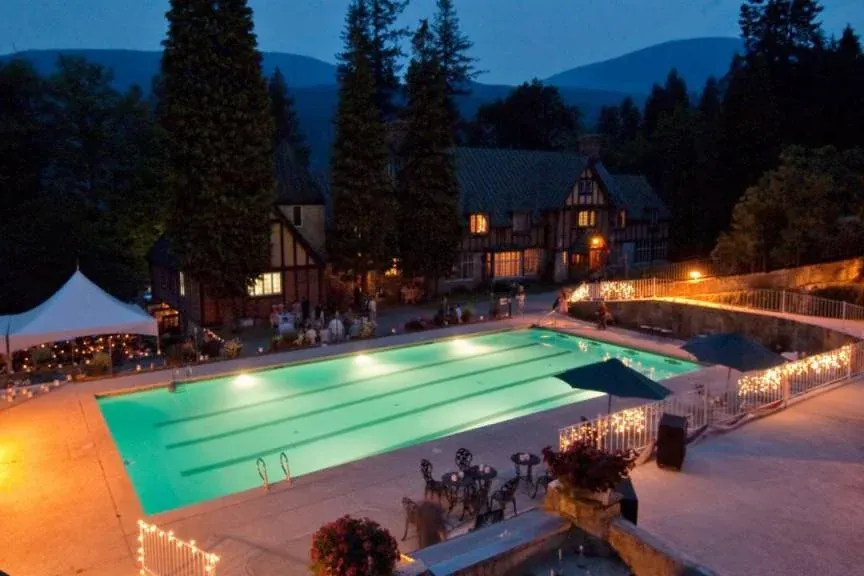
The pivot from baron’s estate to bed-and-breakfast and event venue was not simply a branding choice. It was an economic adaptation to the Kootenays’ post-industrial reality. Where mining once structured the region’s prosperity, tourism and lifestyle now compete to define it. Blaylock’s current promotional language promises “stress free, unpolluted surroundings” and an opportunity “to bring life into balance.” The irony is unavoidable: the original fortune behind the mansion was tied to a smelter once notorious for poisoning crops and denuding hillsides.
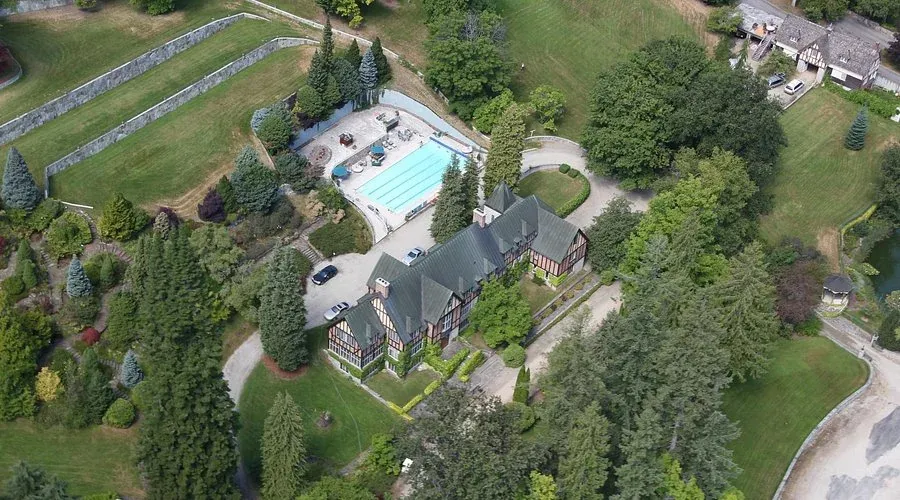
Yet the pivot also reflects a practical truth. Heritage properties survive when they are used. The mansion’s amenities, manicured grounds, pool, tennis court, expansive common areas, and dramatic lake views are not incidental; they are what make operating costs plausible. Weddings and retreats subsidize preservation. Guests pay to inhabit history, even if only for a weekend.
This reinvention has created new forms of labour on the estate: cleaners turning rooms, cooks preparing brunch, groundskeepers maintaining rare plantings, event staff coordinating ceremonies. It is work that echoes the mansion’s original staff wing, but in a different economy, one built on experience rather than extraction. The house has become a theatre where visitors perform their own luxury, with photographers staging shots in gardens designed decades ago for a man who wanted to impress executives and celebrities.
Not everyone celebrates this transformation. Some locals see it as appropriate that a private monument has become accessible. Others see it as a softening, a way of laundering the harder aspects of industrial history into wedding-weekend ambience. The tension is visible in what gets emphasized: carved beams and ghost stories, not labour disputes; arboretums and waterfalls, not lawsuits over pollution.
Ghosts and the War Over Memory
The mansion’s paranormal reputation is not a harmless add-on. It is a competing narrative about what the estate means. Ghost stories thrive in places with large rooms and complicated pasts because they offer a sense of moral accounting: if something unjust happened, surely it left a trace. At Lakewood, the trace becomes footsteps, orbs, and tales of unseen presences.
A recent book, Lost Souls of Lakewood, co-authored by the late caretaker Dan McGauley and journalist Charlie Hodge, leaned hard into this impulse by narrating parts of the mansion’s history through a ghost’s perspective. Even sympathetic reviewers have acknowledged the trade-off. The ghost narrator provides licence to speculate where documents are thin. It also blurs the line between verifiable history and imaginative reconstruction. One critic noted that Hodge devoted chapters to labour leader Albert “Ginger” Goodwin and suggested Blaylock “loaded the gun” behind Goodwin’s killing, a claim no historian has proven. The book also invents intimate details of Blaylock’s personal life that cannot be sourced.
This matters because Lakewood is not only a building; it is a public symbol. When ghost narratives fill gaps, they can either spotlight buried conflicts or distort them. They can amplify the labour story or replace it with melodrama. They can suggest a haunting rooted in class conflict, or they can turn the mansion into a gothic amusement that distracts from the real ghosts: poisoned air, coerced workers, and the secrecy of wartime production.
At the same time, dismissing the ghost economy entirely misses why it flourishes. The Kootenays have long been a region where official records and corporate archives do not always capture lived experience. Workers’ grievances were not always preserved with the same care as executives’ accolades. For a community, the supernatural can function as a folk archive, a way of insisting that something unresolved remains present. The question is not whether ghosts exist. The question is what the ghost story allows people to say about power when direct evidence is hard to access.
What the Mansion Reveals About British Columbia
Lakewood endures because it sits at the intersection of several British Columbia arcs. The first is extraction: mines and smelters that made fortunes and shaped towns. The second is class: the divide between executives who hosted “lavish weekend getaways” and workers who lived under smokestacks. The third is labour: a region where unions were strong enough to produce enduring stories about control, paternalism, and resistance. The fourth is environmental cost: lawsuits, pollution, and contested claims about disease-carrying imports.
Then comes the fifth arc, the one visitors see today: reinvention through tourism, where the aesthetic of wealth is repackaged as heritage. The mansion’s survival is, in a sense, a triumph. Many industrial fortunes leave nothing but ruins. Lakewood remains intact, maintained, and in use. But survival can also be a form of selective remembering. When “unpolluted surroundings” become a selling point, the region’s industrial past is not erased, but it is softened into a background hum.
Accountability is diffuse because the mansion is not a crime scene. It is a legacy site. There is no single institution responsible for ensuring visitors understand its full context. Tourism marketing tends toward enchantment. Corporate histories tend toward heroism. Labour histories tend toward confrontation. Local boosters tend toward pride. The result is a contested memoryscape where the truth is not hidden so much as compartmentalized.
The most honest way to read Lakewood is as a mirror: it reflects what British Columbia has often done. It extracts value from land, concentrates wealth, builds symbols of permanence, then later sells those symbols as experiences when the economic base shifts. The mansion is beautiful, but its beauty is inseparable from the system that paid for it.
The Gardens at Dusk
Near dusk, the estate’s upper gardens quiet down. The last car has gone. The lake below holds a thin band of pink light. From the gazebo, you can see the West Arm stretching toward Nelson and the far shore fading into cloud. The thyme underfoot releases a faint scent when stepped on, a small sensory reward engineered into the landscape. Water runs somewhere, pushed through a cascade that looks natural until you remember it was built.
Standing there, the mansion below resembles its nickname, “Sleeping Beauty’s Castle,” not because it is innocent, but because it appears suspended outside ordinary time. Yet nothing about it is timeless. It is a Depression-era job site, a wartime strategy retreat, a widow’s burden, a con man’s failed dream, a creditor’s unexpected inheritance, a wedding venue, and a myth machine. It contains the ambition of a McGill-trained metallurgist who rode the rise of Cominco and the Trail smelter’s global importance. It contains the resentments of workers who saw paternalism as control. It contains the region’s struggle to reconcile industrial pride with environmental and social cost.
If there is a haunting here, it is not only in creaking boards. It is in the way the estate asks visitors to choose which story they prefer: the baron’s craftsmanship, the workers’ grievance, the gardener’s memory, the pathologist’s warning, the caretaker’s ghost tale, the bride’s photo. All of them coexist on this lakeside slope. The gates still stand, granite and iron. The lake still carries the region’s history the way it carries light: reflecting everything, keeping its depth.
Support This Work
Deep Dives focus on context, analysis, and clarity. If this article was helpful, you can support future pieces with a one-time tip.
Support Deep DivesSource 1 | Source 2 | Source 3 | Source 4 | Source 5 | Source 6