

Based on coverage from Castanet, Times Colonist, National Observer, and CHAT News Today.
A Kelowna teen with a rare, life-threatening immune disorder has been declared cured after becoming the first known patient treated successfully with a new kind of gene editing called “prime editing,” according to reporting tied to a case write-up in the New England Journal of Medicine.
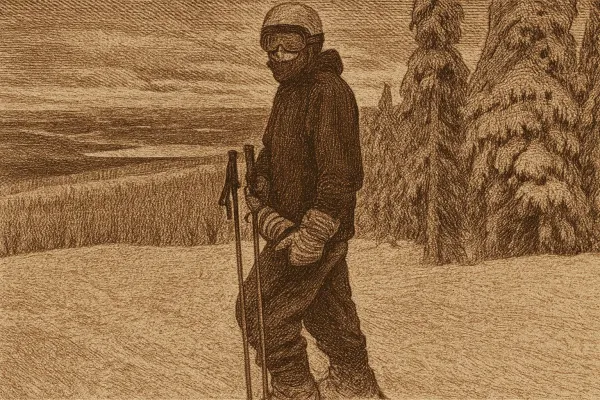
Ty Sperle was diagnosed around age five with chronic granulomatous disease (CGD), an inherited condition that leaves the body far less able to fight certain infections. One source describes him as 18, while The Canadian Press identifies him as 19 and a second-year science student at UBC Okanagan. Either way, the result is the same: after years of managing the disease, he has been able to stop daily medications and get back to everyday life, including skiing and camping.
Kelowna patient cured of CGD
CGD is described as affecting about one in 200,000 children, and it can lead to serious and even fatal infections. Sperle’s complications included frequent skin infections and an invasive bacterial lung infection, according to the background provided with the case.
For years, treatment meant trying to stay ahead of illness rather than fixing the root problem. Dr. Stuart Turvey, a pediatric immunologist who treated Sperle for more than a decade through BC Children’s Hospital in Vancouver, said patients like Sperle often rely on daily antibiotics and antifungal drugs. Turvey described that protection as helpful but imperfect, with the risk of a dangerous infection always hanging over patients and their families.
How prime editing gene therapy worked
Prime editing is a gene modification approach aimed at correcting a specific error in DNA. Turvey compared it to fixing a “spelling mistake” in a person’s genetic code.
Sperle entered a clinical trial where doctors extracted his own blood stem cells, enriched them, and then treated the cells with a gene-editing product designed to target and correct the mutation tied to CGD. The corrected cells were then returned to his body, where they could multiply and start replacing the malfunctioning immune cells. Because the edited cells came from Sperle himself, the hope was to avoid the kind of rejection issues that can come with donor cells.
Turvey called the result a “miracle,” but also framed it as part of a bigger shift in medicine: researchers can now identify precise genetic errors and are starting to translate that knowledge into real treatments.
Montreal clinical trial at CHU Sainte-Justine
While Sperle is from B.C., the only Canadian site offering the trial was CHU Sainte-Justine, a university hospital in Montreal affiliated with the University of Montreal. The trial was set up by U.S.-based Prime Medicine and led by Dr. Élie Haddad, a pediatric immunologist and professor in the university’s Department of Pediatrics.
Sperle spent 24 days in hospital care at Sainte-Justine before being discharged. Doctors report that six months after treatment, his immune system’s antimicrobial activity has stayed durable.
Sperle told The Canadian Press he was “extremely nervous” being the first person to volunteer for the procedure, describing intense stress during the transplant process. He also described “insane shock” when he learned he’d been cured, and said the news changed a day that had started with him feeling hopeless.
What it means for B.C. and Canada
For Sperle, the practical change is huge: he says he no longer lives with the same fear of a serious infection and is off his previous regimen of pills. He also described feeling freer to do normal outdoor activities that once felt risky.
For the health-care system, the case is being treated as proof that gene-editing technology can deliver a true cure, not just symptom management. Turvey also pointed out that while many genetic diseases are individually rare, taken together they are common. At BC Children’s Hospital, he estimated about one in three admitted patients has a rare disease.
B.C. Health Minister Josie Osborne called the outcome a milestone that reflects public health care, research, and global collaboration, and said it offers hope to families dealing with rare conditions.
The next hurdle: access and delivery
Even with the headline-making success, Turvey cautioned that this kind of treatment is not yet routinely available. The next challenge, he said, is figuring out how to deliver complex gene-editing therapies within Canada’s health-care systems, a process he described as ongoing.
Support Independent Canadian News Analysis
The Canada Report is supported by readers like you. If this article helped you understand what’s happening, you can support our work with a one-time tip.
Support The Canada Report