

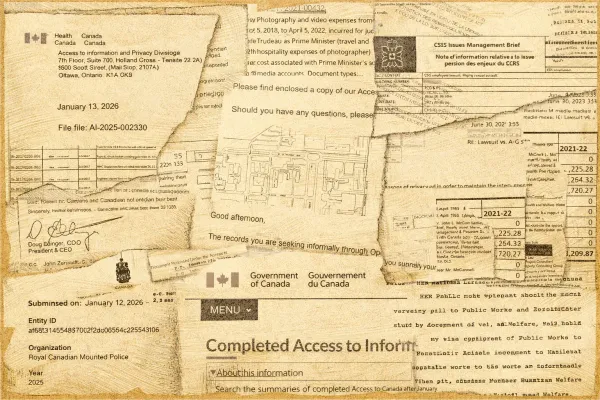
Canada produces an enormous amount of government data every year — internal reports, financial records, briefing notes, policy documents, statistical datasets, and administrative disclosures from federal and provincial institutions.
Much of this information becomes publicly accessible through Canada’s Access to Information (ATI) laws and provincial Freedom of Information (FOI) legislation. These transparency laws allow journalists, researchers, and members of the public to request internal government records that would otherwise remain out of view.
Government Files is a new series from The Canada Report dedicated to examining these public records and explaining what they reveal.
The series analyzes official documents obtained through Canada’s federal Access to Information Act and provincial Freedom of Information laws. Each article reviews the original records, breaks down the key numbers or findings, and provides context about what those documents show.
Rather than relying solely on press releases or official summaries, Government Files examines the source material directly.
New Government Files analyses are published every Tuesday and Thursday.
What Government Files Covers
Government Files focuses on government documents and datasets that reveal how public institutions operate behind the scenes.
These may include:
- internal government financial records and spending reports
- statistical datasets released through ATI or FOI requests
- operational documents from federal or provincial departments
- briefing materials and administrative reports
- internal summaries of government programs and activities
- tax revenue records, operational statistics, and program data
Much of this material is technically public but often difficult to interpret without context.
Government Files aims to make these disclosures easier to understand.
Each article reviews the original records and explains:
- what the documents show
- what the records do not show
- how the information fits into the broader context of Canadian government operations
How the Documents Are Obtained
Most records examined in Government Files come from formal Access to Information requests submitted to federal departments or Freedom of Information requests filed with provincial governments.
Under these laws, public institutions must release many internal records when requested, subject to specific exemptions related to privacy, national security, or cabinet confidence.
When documents are released, they often arrive as large disclosure packages containing spreadsheets, financial tables, administrative reports, or internal summaries.
Government Files reviews these disclosure packages and extracts the key information so readers can understand what the records reveal without having to analyze hundreds of pages of raw material.
Whenever possible, the original documents are also made available, allowing readers to review the source material directly.
Why Public Records Matter
Government transparency laws exist so the public can better understand how institutions operate and how taxpayer money is used.
Public records obtained through Access to Information and Freedom of Information requests often contain details that do not appear in official announcements or news releases.
These documents can reveal:
- operational spending patterns
- internal program statistics
- administrative decisions
- government revenue trends
- changes in public policy implementation
While individual figures may appear small in isolation, they can illustrate broader patterns about how government programs operate and how policies affect everyday life.
By examining these records closely, it becomes possible to identify trends and operational details that would otherwise remain buried in administrative disclosures.
A Commitment to Transparency and Context
Government Files is designed to present public records in a clear, balanced, and evidence-based way.
Each article focuses on:
- what the documents explicitly show
- the limitations of the available data
- the broader context surrounding the records
Whenever documents leave important questions unanswered, that uncertainty is acknowledged.
The goal is not speculation, but clear analysis grounded in the original government records.
Government transparency laws make these documents accessible to the public. Government Files aims to make them understandable.
Explore Government Files
New Government Files analyses are published every Tuesday and Thursday on The Canada Report.
Each article examines government documents obtained through Access to Information and Freedom of Information requests, breaking down the records and explaining what they reveal about Canadian public institutions.
Stay Updated
If you're interested in Canadian public records, government documents, and ATI / FOI disclosures, you can subscribe to The Canada Report below.
Subscribers receive new Government Files analyses alongside our regular Canadian news coverage.