

Based on coverage from Yahoo Finance, CP24, Lethbridge Herald, and CHAT News Today.
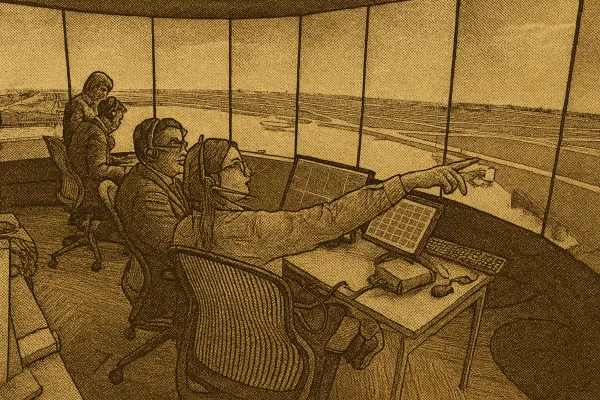
Canada’s air traffic control system is facing a staffing crunch that one aviation expert says is getting worse faster than recruiters can fix it. Even as Nav Canada points to hundreds of newly licensed workers, the pace of retirements and the difficulty of training new controllers are keeping pressure on the system.
The challenges of staffing in critical sectors are not unique to aviation, as similar concerns have been raised regarding the RCMP, where staffing shortages are also threatening public safety nationwide, as reported in a recent audit by the Auditor General.
The issue is getting extra attention after a deadly crash involving an Air Canada flight in New York, though investigators have not linked that incident to staffing.
Canada air traffic controller shortage grows
John Gradek, a faculty lecturer in McGill University’s aviation management program, told The Canadian Press that Canada is short about 1,500 air traffic controllers. He said roughly 150 controllers retire each year, meaning hiring and training need to do more than just add bodies. They also have to replace experienced people walking out the door.
Nav Canada, the organization that hires and certifies what it calls “air traffic service professionals,” declined an interview request about controller shortages and would not provide vacancy rates. Gradek’s view is that the numbers Nav Canada has shared do not keep up with retirements.
The union representing air traffic controllers also declined to comment.
Nav Canada hiring and licensing since 2023
Nav Canada says it’s working on staffing through a multi-year strategy. Spokesperson Gabriel Bourget said that since 2023 the agency has licensed more than 600 air traffic professionals, including more than 300 controllers.
Bourget also struck a reassuring tone on safety, saying the agency is “in solution mode,” focused on strengthening service resiliency, supporting staff, and working with industry partners while maintaining high safety standards.
One key gap: Nav Canada would not say how many of those newly licensed controllers actually took jobs in Canada, beyond saying “a vast majority.”
Why air traffic controller training takes years
Gradek argues this is not a job you can solve with a quick hiring blitz. He described air traffic control as a highly specialized skill set, where controllers don’t just manage aircraft in three dimensions, but also need to constantly think in time: making decisions now to put an aircraft in the right place later.
The training timeline reflects that complexity. The total training time ranges from 10 to 18 months for tower controllers, who handle clearances and separation during takeoff and landing, and 20 to 27 months for area control centre controllers, who issue instructions and keep aircraft safely separated while airborne.
Then there’s the washout rate. Gradek said only about 10 per cent of trainees in Canada make it through to become fully fledged controllers. He added that the U.S. success rate is about three per cent.
Some trainees who don’t qualify as controllers can still work in related roles, such as flight service specialists, who may manage traffic on the ground at smaller airports but do not direct aircraft in the air.
Global competition for Canadian controllers
Even when Canada trains people successfully, Gradek says the rest of the world is hiring too. He pointed to demand in Australia, New Zealand, the U.S., and the U.K., calling it a reminder that controlling “is not a Canadian-only job.”
Pay can be a draw to stay. Nav Canada says a Canadian controller’s salary can top $200,000 a year after full certification, while controllers in training earn about $60,000. Gradek also said Canada’s systems are “second to none,” with leading-edge equipment. Still, he noted, Canadians are free to leave for other opportunities.
Transport Minister MacKinnon seeks recruitment fixes
Transport Minister Steven MacKinnon said Monday he is working with Nav Canada on solutions and has asked the organization to keep developing recruitment approaches to reduce reliance on a smaller number of controllers than Canada would prefer.
Asked about the idea that Canada might be training controllers who then take jobs abroad, MacKinnon said he wasn’t aware it was a problem and would take a closer look.
On Tuesday, MacKinnon emphasized that Canada’s transport systems, including aviation, are among the most rigorous in the world, and pointed to Canada’s collaborative relationship with U.S. counterparts as investigations continue into the Air Canada crash at LaGuardia.
Support Independent Canadian News Analysis
The Canada Report is supported by readers like you. If this article helped you understand what’s happening, you can support our work with a one-time tip.
Support The Canada Report