
| Sourced from 3 independent sources (5 reports) · no points in dispute |
Global News, Yahoo News, and CTV News
Every key fact in this report is confirmed by more than one independent source.
7 key facts · 7 corroborated · none disputed
Why some reports were counted once
CTV News, CJME, and City of Saskatoon — the same report, published near-identically, counted once.
When several outlets publish the identical article — often because they ran the same wire-service story — we count it as one source, not several, so the count reflects independent reporting rather than how widely one story was republished.
This summary is compiled from the independent sources listed above.
Saskatoon is cutting down infected elm trees after confirming 22 cases of Dutch elm disease so far this year, including a striking cluster of mature trees slated for removal in College Park.
City officials say the removals are meant to slow the spread of the disease, which has become a growing threat to neighbourhood streetscapes and the city’s urban canopy.
Elm removals hit College Park
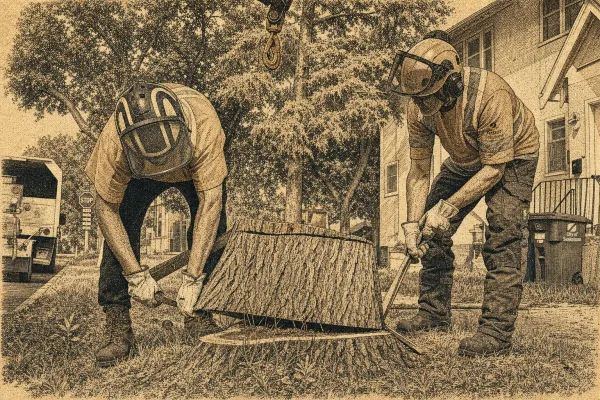
Six infected mature elm trees are located in a row on the 200 block of Carleton Drive in the College Park neighbourhood, making the site one of Saskatoon’s largest Dutch elm disease-related elm-removal groupings to date.
“Seeing six mature elm trees removed from a single block and three on another is a reminder of the very real impact Dutch elm disease is having on our neighbourhoods and urban canopy,” said Thai Hoang, Saskatoon’s director of parks.
Hoang said the trees have been part of the character of those streets for decades.
“While tree removal is never something we take lightly, removing infected trees remains one of the most important actions we can take to help reduce the spread of the disease and protect healthy elms across Saskatoon.”
More cases in Caswell Hill
Three more infected elm trees are being removed on the 800 block of Avenue C North in the Caswell Hill neighbourhood.
Together, the College Park and Caswell Hill removals account for nine of the 22 confirmed cases the city has identified so far this year.
The scale of the removals is part of what makes this year’s response especially visible. A single infected tree can alter the look of a block. A row of mature elms coming down at once changes the feel of a street.
The city says Dutch elm disease activity has increased significantly in recent years, with record case numbers reported in 2025.
City keeps watch nearby
Saskatoon says it will continue monitoring surrounding areas and inspecting nearby properties for stored elm wood.
That inspection work is tied to one of the city’s clearest warnings to residents: elm wood can harbour elm bark beetles that spread Dutch elm disease.
The city is reminding residents that transporting, storing or using elm wood is illegal. Officials say preventing stored elm wood from becoming a hiding place for beetles is part of limiting the disease’s movement through the city.
The message is simple, but it asks for vigilance from residents as well as action from city crews. The city can remove infected trees, but it is also asking people not to keep elm wood on private property or move it around.
What residents should watch for
Residents are being asked to watch elm trees for signs of Dutch elm disease, including wilting, yellowing or browning leaves.
Those symptoms can be easy to overlook from a passing car or sidewalk, especially when a tree is large and only part of it appears affected. But the city’s response depends in part on spotting suspected cases early enough to act before the disease spreads further.
For now, the most visible sign of Saskatoon’s fight against Dutch elm disease will be the removals themselves: six mature trees in a row on Carleton Drive, three more on Avenue C North, and continued inspections in the surrounding areas.
Hoang’s comments framed the removals as both a loss and a public-health measure for the city’s elms.
“Seeing six mature elm trees removed from a single block and three on another,” he said, “is a reminder of the very real impact Dutch elm disease is having on our neighbourhoods and urban canopy.”
Reader-funded. No ads. No paywall.
The Canada Report is independent, reader-funded Canadian news — no advertisers, nothing behind a paywall, kept free for everyone. If you value it, you can help keep it that way.
Support The Canada Report →