

Heads up: some of the links in this post are affiliate links. That means if you click and purchase, we may get a commission. It’s how we keep this site running without cluttering it with ads.
The moment your wipers freeze mid-commute on the 401, you learn a fast (and expensive-looking) lesson: "all-season" blades don't mean "Canadian winter-proof." One minute you're cruising through Toronto slush, the next you hit that gritty highway spray—salt, sand, and half-melted snow misting up the glass—and your blades turn into two stiff popsicle sticks that just smear everything into a grey film. Visibility drops, your shoulders tense, and you're squinting at taillights through a windshield that looks like it's been rubbed with wet newspaper.
Canada makes wiper blades work overtime in ways other places don't. Southern Ontario loves freeze-thaw whiplash (0°C at lunch, -12°C by the drive home), the Prairies can hit -30°C to -40°C with wind that turns any exposed wiper frame into an ice sculpture, and the BC mountain passes dish out wet snow that packs into joints and refreezes by the next switchback. Atlantic Canada adds freezing rain that bonds to rubber overnight—so even a brand-new blade can skip like it's on dry glass.
If you're already fighting morning ice, pairing better blades with a simple windshield cover can save you time and torn rubber edges—our guide to the best windshield snow covers is a smart add-on for driveway parkers and shift workers.
This guide covers everything you need to find the best winter wiper blades for Canadian conditions: budget-friendly options that still handle salty city grime, premium heated models for freezing rain, and heavy-duty picks for trucks and SUVs. We'll walk through proper sizing and fitment (driver, passenger, and rear wiper positions) so you can choose the right blades the first time—and spend less time squinting through streaky glass.
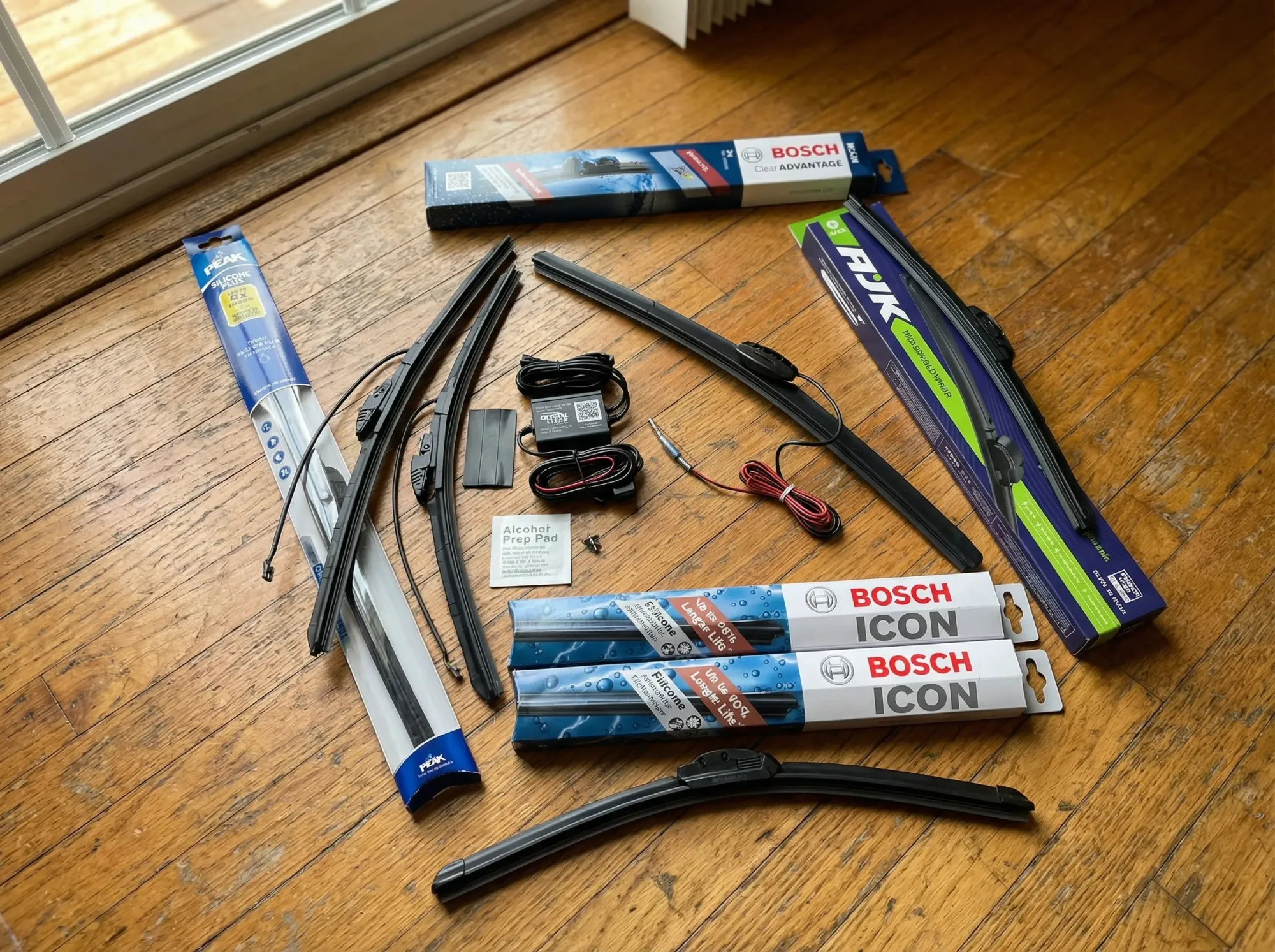
Quick Overview: Our Top Picks
| Product | Best For | Why We Love It | Price |
|---|---|---|---|
| Fleet bulk replacements | Long-lasting silicone glide delivers clear winter visibility at a surprisingly low cost. | $33.38 | |
| Ice-prone highway commutes | Auto-heating melts ice while driving, keeping visibility clear in sudden freezes. | $258.00 | |
| Overnight outdoor parking | Heated silicone helps prevent morning ice lockup for smoother first-start wipes. | $172.62 | |
| BMW iX owners | Plug-and-play heated blades with built-in jets clean evenly in subzero slush. | $120.08 | |
| Windy prairie driving | Spoiler and even pressure reduce lift, delivering steady wipes in crosswinds. | $25.74 | |
| Extreme cold (-30°C) | Durable rubber resists cracking and streaking, lasting longer through harsh Canadian winters. | $65.90 | |
| Small rear-window blades | Beam design keeps consistent pressure for a clean wipe on compact fitments. | $19.09 |
PEAK Silicone Plus 28" All-Weather Hybrid Windshield Wiper Blade, Premium Replacement Front Windshield Wiper Blade with Universal Connector, Pack of 10
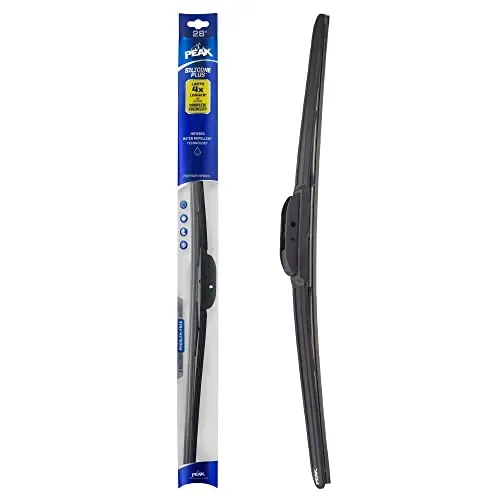
If you're shopping on a budget, this PEAK Silicone Plus 28" hybrid is a practical pick for everyday Canadian winter driving—slushy spray, freezing rain, and gritty road film. The 28-inch length is common on trucks and larger vehicles (double-check your specific sizes before ordering). The tri-layer wipe element uses nano-graphite plus PTFE and MoS2 for a smoother glide and longer wear, and the silicone-infused compound leaves a water-repellent coating that helps shed rain and winter road mist. It's not a full booted "snow blade," but as an affordable all-weather option, it's a solid choice with an easy EZ-SNAP universal connector.
Pros
- Smooth, quiet wipe with water-repellent silicone coating
- Hybrid spoiler helps maintain contact at highway speeds
- EZ-SNAP connector fits most common wiper arms
Cons
- Not a true snow-boot design for heavy ice build-up
- Pack of 10 may be more than most drivers need
Crystal Clear Automatic Heated Windshield-Wipers System - Thermal Graphite Coated Rubber Deicer Blades Melt Ice and Snow - Winter Safety Wipers for Cars and Trucks - 22” Blade + 22” Blade
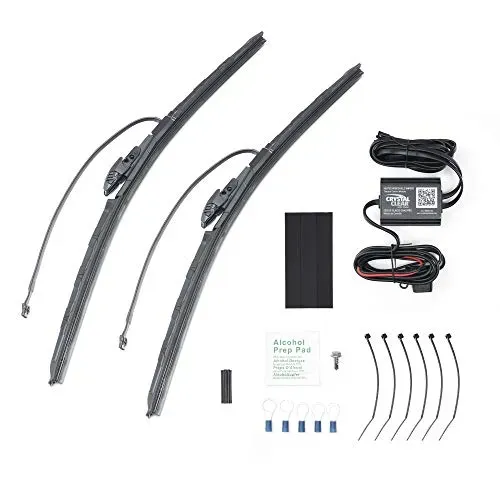
If you're tired of frozen blades and smeary first wipes, this premium kit is a serious upgrade. You get two 22" heated blades plus a control module and 3M mounting hardware, making it a standout option for harsh Canadian winters. Each blade has its own temperature sensor and automatically kicks in at 41°F (about 5°C) and colder—no extra switch to remember on dark, slushy commutes. The graphite-coated rubber squeegee is designed to glide smoothly and wipe clean, while the built-in LED power indicator shows you at a glance that the system is actually powered. For variable freeze-thaw conditions—especially in regions that swing between slush and hard freezes—these are built to keep ice and snow from building up on the blade itself.
Pros
- Automatically heats at ~5°C and below
- LED indicator confirms power at a glance
- Graphite-coated rubber aims for streak-free wipes
Cons
- Very expensive versus affordable winter wiper blade options
- Only includes two 22” blades; fit may be limited
22" THERMALBLADE Heated Silicone Safety Wiper
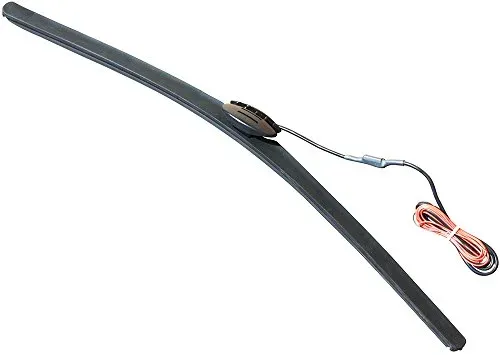
If you're tired of frozen frames and chattering rubber, the 22" THERMALBLADE Heated Silicone Safety Wiper is a premium pick for reliable winter performance. This 22-inch heated blade features a silicone wiping edge, built to keep ice from bonding along the blade so it stays flexible and clears slush cleanly. It's aimed at steady, everyday Canadian winter driving—think wet snow, freezing rain, and highway spray—rather than just occasional storms. The standout feature is the heated design: it helps prevent refreeze at the blade, which is exactly what ruins visibility at -20°C. Pricey, but it delivers consistent performance when you need ice and snow cleared quickly.
Pros
- Heated element helps stop ice buildup on the blade
- Silicone edge wipes smoothly and lasts longer than basic rubber
- Great for winter wiper blades for extreme Canadian conditions
Cons
- More expensive versus affordable winter wiper blade options
- More involved install than standard clip-on winter blades
AJK Wiper Blades with Heated, Premium All Season 3 Pack Heated Driver Side and Passenger Side Front Windshield Wipers Replacement for BMW iX 2022-2025
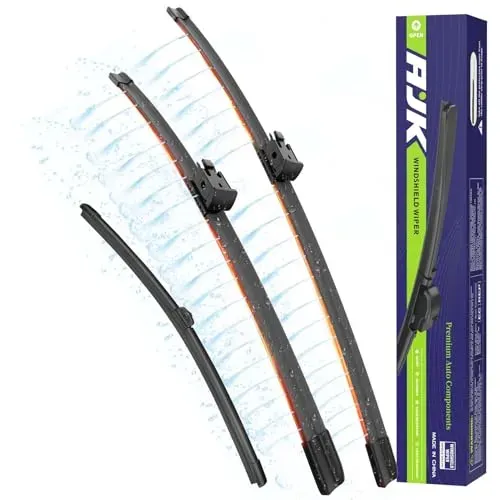
If you drive a BMW iX (2022–2025) and want a tech-forward option, this AJK heated 3-pack is built around fit and fast de-icing. The standout is the integrated heating element that claims to melt ice and snow in about 30 seconds—handy for freezing rain mornings and slushy highway spray. It also includes built-in washer jets that spread fluid along the blade, which can reduce dry wiping and chatter when fighting salt crust. These lean premium rather than budget-friendly, and they're very vehicle-specific—a solid choice for harsh Canadian winters, but only if you own the iX. Be sure to verify fitment for your specific model year before ordering.
Pros
- Heated element helps clear ice faster than standard blades
- Built-in washer jets improve fluid coverage in slush
- Plug-and-play fit for BMW iX 2022–2025
Cons
- Only fits BMW iX; not for trucks or other SUVs
- High price for blades
Bosch 26CA / 3397006510E7W Clear Advantage Beam Wiper Blade - 26" (Pack of 1)
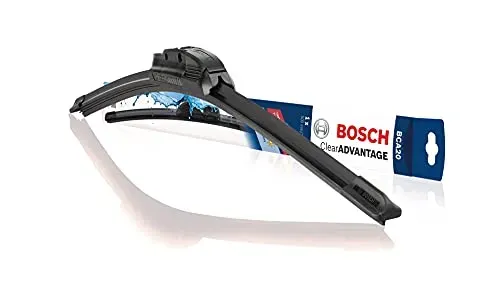
If you're shopping on a budget, the Bosch Clear Advantage 26" is a solid pick for everyday winter use. It's a beam-style blade with a precision-tensioned steel spring that keeps even pressure across the full 26-inch length, helping reduce streaking when slush builds up. The graphite-treated natural rubber edge is designed to cut friction and chatter, which is handy on cold, dry glass. An aerodynamic spoiler adds downforce at highway speeds, so it's less likely to lift in wind. There's no stated temperature rating, and it isn't a full "winter shell" design, but for general Canadian conditions it's an affordable, reliable option.
Pros
- Even pressure along the blade for cleaner wipes
- Graphite rubber reduces chatter and wiping noise
- Pre-mounted multi-adapter makes installation straightforward
Cons
- Not a fully enclosed snow-and-ice winter blade
- Sold as a single blade, not a complete kit
BOSCH 26A22A ICON Beam Wiper Blades - Driver and Passenger Side - Set of 2 Blades (26A & 22A)
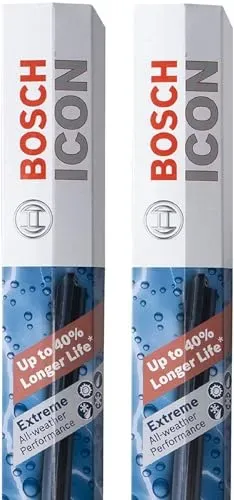
If you want something built for brutal mornings, this BOSCH ICON 26A/22A set is a strong pick for reliable winter performance. These are 26-inch (driver) and 22-inch (passenger) beam blades with Bosch's FX dual rubber, designed to resist ozone cracking and stay flexible in extreme cold (think roughly -30°C to -40°C). The patented tension spring keeps the blade evenly contoured to the windshield, and the asymmetric spoiler helps stop lift at highway speeds—handy in blowing snow. Installation is straightforward on standard hook arms (9x3mm/9x4mm), but it won't fit pinch tab/top lock arms. This sits firmly in premium territory, but the performance in harsh Canadian winters justifies the price.
Pros
- Beam design maintains even contact in snow and slush
- Dual rubber resists cracking and streaking in deep cold
- 2-pack includes common 26"/22" winter wiper blades sizes
Cons
- Not compatible with pinch tab, side lock, or top lock arms
- Pricey versus affordable winter wiper blade options
Trico 19-130 Tech Universal Beam Wiper Blade, 1 Pack, 13 inches
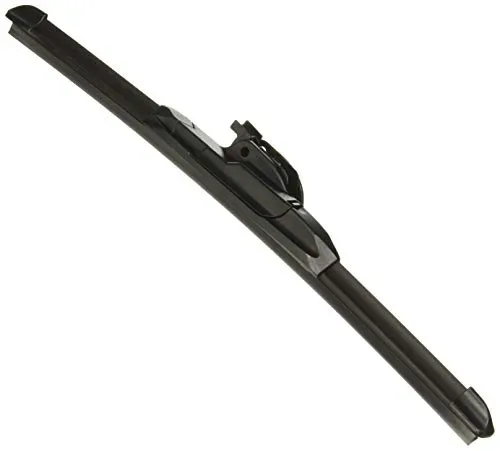
If you're hunting for an affordable option, the Trico 19-130 Tech is a solid budget pick. It's a 13-inch beam-style blade that uses a memory-curve steel beam to keep even pressure across the windshield—handy when slush and light ice try to lift the blade edge. The "Swift Easy Connection" system makes swaps quick, and it's designed to fit a wide range of arms (including 9mm hook, bayonet, side lock, and push button styles), which helps if you're not sure what adapter your vehicle needs. While it's not built for extreme cold conditions, it's a practical choice for general winter use.
Pros
- Beam design resists snow buildup better than framed blades
- Wide adapter support fits many Canadian vehicles
- Good value for a single replacement blade
Cons
- 13-inch size won’t suit most front wiper positions
- No published extreme-cold temperature rating
Winter wiper blades vs all-season wiper blades: Which Do You Need?
Winter wiper blades are built for the messy reality of Canadian winters: slush, freezing rain, road salt, and snow packing around the frame. Most "true" winter blades use a covered frame (or a beam-style design) to reduce ice buildup, so they're less likely to chatter or freeze to the windshield at -20°C to -35°C—common on Prairie cold snaps and in Northern Ontario. The trade-off is that winter blades can be noisier on dry glass and may wear faster if you run them year-round.
All-season blades are the simpler, cheaper alternative. They work well in milder regions (Lower Mainland BC, parts of Southern Ontario) where you see more rain than deep snow, and they're often quieter in shoulder seasons. But in places like Calgary, Edmonton, Montreal, or Halifax during wet snow and freeze-thaw cycles, all-season frames can clog with ice and skip at the worst time. If you drive highways early mornings, park outside, or deal with heavy slush, dedicated winter blades are worth it; if you garage-park and mostly commute in city traffic, all-season can be "good enough."
Budget vs Premium: What's the Difference?
In Canada, budget winter blades typically run about $12–$25 per blade (often found at Canadian Tire, Walmart, or Amazon), while premium options are usually $30–$45+ per blade, with some beam-style "snow & ice" models pushing higher for trucks and SUVs. Paying more usually gets you better rubber compounds that stay flexible in extreme cold, stronger spring tension for consistent contact, and coatings that reduce squeal and streaking when salt film builds up. Premium blades also tend to fit more cleanly with modern wiper arm adapters and are less finicky at high speeds on the 401 or the Trans-Canada.
Budget blades can be totally fine if you replace them more often (every season or two), drive mainly in milder coastal climates, or want a cheap set to get through one winter. The downside is shorter life, more chatter during freeze-thaw, and occasional poor wiping at the edges—especially on larger windshields common to trucks and SUVs. For harsh regions (Prairies, northern climates, Quebec winters) and lots of highway driving, premium options often cost less over time because you're not swapping mid-winter after the first ice storm.
How to Choose the Best Winter Wiper Blades for Canadian Conditions
Shopping for reliable winter blades isn't just about picking a popular brand—it's about matching your wipers to real Canadian weather. Wet snow in Vancouver, freezing rain in the GTA, blowing powder on the Prairies, and salt spray in Atlantic Canada all stress blades differently. Look for designs that resist ice build-up, stay flexible in extreme cold (think -20°C to -40°C), and maintain even pressure across the windshield. Also confirm the right blade sizes for your vehicle, because a great blade in the wrong length won't clear properly. Understanding these differences can save you from noisy chatter and streaks on the first storm.
Key Features to Look For
Winter Blade Style (Beam vs. Winter Frame vs. Hybrid)
The "winter" label can mean different constructions, and it matters in Canadian conditions. Beam-style designs have fewer exposed joints, so they're less likely to pack with snow and freeze up during a Highway 401 slush run or a -25°C morning in Winnipeg. Traditional winter frame blades usually add a rubber boot that covers the linkage; they can be effective for snow and ice, but the boot can tear and trap grime over time. Hybrids split the difference: a frame with an aerodynamic cover. If you're reading reviews, pay attention to ice-up complaints—those usually point to too many exposed moving parts for your region.
Cold-Weather Rubber Compound (Flexibility at -20°C to -40°C)
In winter, rubber that's fine at 0°C can turn stiff and streaky once temperatures drop. For extreme cold conditions (Northern Ontario, the Prairies, much of Quebec), look for blades marketed with a winter-grade rubber compound—often silicone or a premium synthetic rubber blend designed to stay pliable around -30°C and below. The goal is consistent contact so you don't get that one annoying uncleared arc right in your line of sight. Premium options often last longer and resist cracking from road salt and UV, while budget blades may need replacing more frequently if you park outside.
Ice and Snow Shedding (Boots, Covers, and Frame Protection)
Ice build-up is the enemy of clear visibility. Heavy-duty blades for serious commuters tend to focus on preventing snow from accumulating in the blade structure. If you drive through lake-effect snow in Southern Ontario or heavy, wet maritime snow in Halifax, prioritise blades with a sealed design or an effective protective cover that reduces the places slush can freeze. A well-designed spoiler can also help keep the blade pressed down at highway speeds and shed snow as it moves. For mountain routes in B.C. where conditions can change fast, ice-resistant construction can be the difference between smooth wiping and a frozen blade that skips across the glass.
Fitment and Connectors (Size, Adapter Quality, and Vehicle Type)
Getting the correct fit is non-negotiable. Check your owner's manual or a retailer fitment tool for the blade sizes your vehicle requires (driver, passenger, and rear for hatchbacks/SUVs). Many newer vehicles use push-button or pinch-tab connectors, and cheap adapters can pop loose or fit crooked, causing chatter. If you're shopping for a full-size pickup or work truck, look for sturdy connectors and longer lengths that maintain even pressure across flatter windshields. For SUV families, don't forget the rear wiper—road spray and salt fog quickly obscure the back window during slushy school runs.
Value and Buying Options (Singles vs. Kits, Availability, and Warranty)
Decide whether you want a single replacement or complete kits that retailers bundle as pairs (and sometimes rear blades). Kits can be convenient and ensure matched performance side-to-side. As you weigh budget choices versus premium options, think about your driving: daily highway commuting and outdoor parking usually justify spending more for durability and quieter wiping. Also consider warranties and how easy it is to exchange if fitment is wrong. Major auto parts chains, Canadian Tire, dealerships, and online retailers all carry quality options—just confirm authentic listings and exact connector compatibility before ordering.
Related: Best Winter Tires for Canada: Stay Safe and Confident This Winter
Frequently Asked Questions
Q: What are the best winter wiper blades for snow and ice?
You're usually deciding between "strong passive clearing" and "active de-icing." For passive clearing in slush and packed snow, beam-style designs like the BOSCH 26A22A ICON or the Bosch 26CA Clear Advantage tend to resist ice build-up better than exposed-frame designs because there are fewer hinges to freeze. For active melting in freezing rain and overnight icing (common in Southern Ontario and parts of Atlantic Canada), heated options like the Crystal Clear Automatic Heated Windshield-Wipers System or the THERMALBLADE Heated Silicone Safety Wiper can help prevent the "ice brick" effect on the rubber edge. When comparing options, focus on how they handle -20°C to -35°C starts, slushy spray, and highway speeds where icing happens fast.
Q: Heated wipers vs beam wipers: which is better for Canadian winters?
Heated systems excel when ice is the problem, while beam blades excel when snow packing is the problem. Heated options (like Crystal Clear or THERMALBLADE) can actively melt ice along the wipe edge—helpful in freezing rain events around the GTA, Ottawa Valley, and Atlantic coastal storms where ice forms quickly. Beam options like BOSCH ICON and Bosch Clear Advantage rely on their one-piece design and consistent pressure to shed snow and reduce refreeze, often performing well in Prairie cold where the main issue is dry snow and extreme windchill. If you do lots of short trips with frequent warm/cold cycling (parking garages, errands), heated can reduce re-icing between stops. If you rack up highway kilometres in blowing snow, a quality beam set often gives simpler reliability.
Q: What works best for BC vs Prairies vs Ontario vs Atlantic climates?
Regional conditions drive what works best. In coastal BC (Lower Mainland, Vancouver Island), you'll see more wet snow and rain; beam designs like Bosch Clear Advantage or BOSCH ICON can keep steady contact in heavy rain and slushy spray. In the Prairies (Alberta/Saskatchewan/Manitoba), extreme cold mornings (-30°C and below) plus powdery snow often favour sturdy beam blades that don't pack with ice; BOSCH ICON is a common fit for that style of winter. In Southern Ontario and Atlantic Canada, freezing rain and rapid temperature swings can glaze blades and windshields—heated options like Crystal Clear or THERMALBLADE can help maintain wiping when ice forms mid-drive. In Quebec and Northern Ontario where roads are salted and temperatures bounce, prioritize blades that keep even pressure and are easy to clean daily.
Q: Do I need different winter blades for coastal vs prairie conditions?
Often yes, because coastal and prairie winters stress blades differently. Coastal regions (BC coast, parts of Atlantic Canada) have more liquid water, gritty road spray, and "slush cement" at 0°C to -5°C; a dependable beam like Bosch Clear Advantage or BOSCH ICON helps maintain a consistent wipe when the windshield is constantly wet. Prairie conditions are colder and drier, but wind-driven snow can freeze at the blade edges during highway runs; beam blades still help, but if you routinely get ice build-up from rapid temperature changes (warm cabin air + cold exterior), a heated choice like the Crystal Clear system can reduce hard icing on the rubber. If you commute early mornings and park outside, heated can be a bigger advantage anywhere. If you're mostly dealing with heavy rain and slush, a non-heated beam can be the simpler, durable choice.
Q: How do I know the right wiper blade sizes for my vehicle?
Start with the driver-side and passenger-side lengths listed in your owner's manual or a fit guide, typically measured in inches (e.g., 26" driver / 22" passenger is common on many vehicles). Match both length and connector type. For example, BOSCH 26A22A ICON is a paired 26" & 22" set, while Bosch 26CA is a single 26" blade. Some products are very size-specific: the Crystal Clear system comes as 22" + 22", which only fits vehicles that take those lengths on both sides. Also note special applications: the AJK Wiper Blades 3-Pack is designed for BMW iX (2022–2025), so it's not a universal fit. If you're between sizes, don't go longer—an overly long blade can hit trim, lift at speed, or leave chatter in cold snaps.
Q: Will heated wipers work on trucks and SUVs?
Compatibility depends on blade length, connector type, and whether your vehicle can accommodate the heated setup. For trucks and larger SUVs, you'll usually need longer driver-side blades (often 24"–28") and need to account for higher wind exposure at highway speeds. A passive, strong option is the PEAK Silicone Plus 28" if your truck/SUV uses a 28" front blade length. For heated solutions, Crystal Clear's system is a 22" + 22" pair, so it suits vehicles that use equal 22" blades—many trucks won't. The THERMALBLADE is a single 22" size, so it's best when your vehicle specifically takes 22" on at least one side. Always confirm clearance around hood edges and winter bug deflectors, as winter ice can amplify any rubbing issues.
Q: Can I use premium wiper blades with my existing washer fluid and windshield coating?
Yes, but you'll get better results if your washer fluid is rated to Canadian winter temperatures (typically -35°C or -40°C) and you keep the glass clean. Premium blades—like BOSCH ICON or PEAK Silicone Plus 28"—work best when washer fluid can dissolve road salt film quickly, especially in Ontario/Quebec where brine is common. If you use a windshield coating, watch for initial "chatter" during cold mornings; cleaning the glass with proper automotive glass cleaner and wiping the blade edge can reduce skipping. Heated options like Crystal Clear or THERMALBLADE can still benefit from good washer fluid because melting ice doesn't remove greasy spray. Avoid using hot water on the windshield in -20°C conditions—thermal shock can crack glass and also refreeze into rough patches that tear blade edges faster.
Q: How long do winter wiper blades typically last in Canada?
Lifespan varies with kilometres, road salt, and temperature swings, but many drivers find their winter blades last about one season to roughly 6–12 months of regular use. In heavy salt regions (Southern Ontario, Montreal area, Atlantic highways), abrasive spray can wear edges faster, shortening life closer to 6 months if you commute daily. In colder prairie regions, rubber can stiffen and crack if blades are left frozen to the glass, also reducing lifespan. Beam blades like BOSCH ICON and Bosch Clear Advantage often maintain even pressure longer, which can delay streaking. Hybrid designs like PEAK Silicone Plus 28" can also hold up well if kept clean. Heated blades (Crystal Clear, THERMALBLADE) can reduce ice tearing, but they still face abrasion from sand/salt. If reviews mention rapid streaking, it's often due to contamination rather than immediate blade failure.
Q: When should I replace my winter wiper blades during the season?
Replace immediately if you notice persistent streaking that doesn't improve after cleaning, skipping/chatter that worsens below -10°C, or any visible tears, chunks, or bent structure. In Canada, a common mid-season trigger is after a major freezing rain event: if the blade edge gets "nicked" by scraping ice off the glass, performance can drop overnight. Another sign is uneven clearing on the driver's side at highway speed—wind lift can expose a worn or mismatched blade length. Many drivers install fresh blades in late fall (October/November) and reassess after the harshest months (January/February), especially in Ontario/Quebec and Atlantic regions. If you're using a set like BOSCH ICON, replace as a pair when performance diverges, because one new blade and one worn blade can create inconsistent clearing patterns in slush.
Q: How do I clean and care for winter wiper blades to reduce streaking in extreme cold?
Maintenance is simple but matters in -20°C to -35°C conditions. Once a week (or after a storm), lift the blades (if not frozen) and wipe the rubber edge with a microfiber cloth dampened with washer fluid. This removes salt film and road oil that cause smearing—common on 400-series highways in Ontario and major routes in Quebec. Clear packed snow from the blade area before driving; beam blades like BOSCH ICON and Bosch Clear Advantage resist hinge-freeze, but they still collect slush at the ends. Never force a blade that's frozen to the windshield; instead, use the vehicle defroster for a few minutes to release it, which helps any blade type including PEAK Silicone Plus 28". For heated options (Crystal Clear, THERMALBLADE), keep the windshield surface clean so the heat isn't fighting a layer of gritty ice. Avoid scraping directly against the blade edge.
Q: How much does it cost to run/use heated wiper blades in Canada?
The main "running cost" for heated wipers is electrical load rather than consumables. Systems like Crystal Clear or THERMALBLADE draw power from the vehicle when activated, which can slightly increase alternator load—more noticeable on short city trips with lots of defrost, heated seats, and lights running during long winter nights. In practical use, most drivers won't see a dramatic fuel penalty, but you may notice your vehicle works harder during extreme cold starts in places like Winnipeg, Regina, or Edmonton. The bigger cost factor is purchase price and replacement intervals, especially if you're hard on blades with salted highways. If you rarely face freezing rain and mostly deal with snow, a non-heated beam (like BOSCH ICON or Bosch Clear Advantage) can deliver strong winter performance without any ongoing power draw concerns.
Q: Is it worth spending more on premium wiper blades?
It's usually worth it if you drive frequently in storms, commute on high-speed highways, or deal with heavy road spray. Premium options—like BOSCH ICON—often provide more consistent pressure and better high-speed wiping in blowing snow, which is a safety upgrade on Prairie and Northern Ontario highways. If your main issue is ice, paying more for heated solutions like Crystal Clear or THERMALBLADE can be worth it during freezing rain events that make standard blades smear and skip. For value-focused buyers, Bosch Clear Advantage can be a solid compromise in many regions, offering beam-style performance without stepping up to the priciest tier. Also consider fit specificity: the AJK Heated 3-Pack for BMW iX (2022–2025) may be worth it if it matches your exact vehicle and you want a tailored replacement approach. Ultimately, premium pays off most when conditions are unpredictable and visibility is critical.
Q: Crystal Clear heated system vs THERMALBLADE: which is better for extreme cold?
They solve similar problems—ice along the wiping edge—but fit and coverage differ. Crystal Clear is a matched 22" + 22" pair, which is convenient if your vehicle uses equal-length front blades and you want both sides actively de-iced during freezing rain. The THERMALBLADE is a single 22" blade, so it's better when only one side needs 22" or you're replacing one blade at a time (though many drivers still prefer replacing in pairs for consistent wiping). In extreme cold conditions (often -30°C and colder), heated blades can help keep the rubber edge pliable and reduce ice re-freeze during highway driving, but they don't replace proper defrosting—your windshield still needs warm airflow to prevent interior fogging and exterior glazing. Choose based on your required blade lengths and whether you need a full set (both sides) or a single replacement for a specific position.
Q: Where can I buy these specific models?
Availability depends on the exact model and your vehicle fit. Start by searching the full product name and confirming blade length and connector type before ordering. For example, BOSCH 26A22A ICON is a two-blade set (26" & 22"), while Bosch 26CA Clear Advantage is a single 26" blade—so confirm you're purchasing the right quantity for your front windshield. For trucks/SUVs needing a longer blade, verify your vehicle spec before choosing PEAK Silicone Plus 28". Heated models like Crystal Clear and THERMALBLADE require extra attention to fit and installation requirements, especially in colder provinces where you'll rely on them most. If you drive a BMW iX (2022–2025), the AJK heated 3-pack is explicitly application-targeted—confirm model year match. Always double-check return policies in case the connector type differs from your wiper arm.
Final Thoughts: Making the Right Choice for Canadian Conditions
Finding the right winter blades comes down to matching the technology to the actual conditions you drive through—the kind of cold, slush, and ice your windshield faces daily. Consistent visibility in winter isn't just about wiping power; it's about preventing ice buildup and maintaining even pressure across the glass.
For most drivers, the PEAK Silicone Plus 28" All-Weather Hybrid is our top pick because it balances four-season durability with winter-ready performance. The hybrid frame resists clogging from slush, while the silicone element glides smoothly and outlasts basic rubber—ideal for daily commuting and highway driving when spray and road salt are constant. If you want one set you can install and rely on through unpredictable shoulder seasons, this is the safest all-around choice.
If you regularly face hard freezes and ice storms—think Ottawa mornings or Prairie cold snaps—the Crystal Clear Automatic Heated Windshield System is worth the investment for its built-in heating that reduces ice adhesion and refreezing between wipes. For a more targeted heated upgrade, the THERMALBLADE Heated Silicone Wiper delivers heat plus silicone wiping, making it a strong fit for frequent short trips where blades ice up quickly.
Before you order, confirm your exact blade sizes (driver, passenger, and rear), verify connector compatibility, and plan to install fresh blades before winter peaks. Then top up your winter washer fluid and clean your windshield to minimize chatter. Pick the best match for your driving conditions, install them this week, and test them in your driveway before the next storm hits.
You'll be glad you upgraded when the next lake-effect blast rolls through and you're driving with clear, confident visibility.