
Heads up: some of the links in this post are affiliate links. That means if you click and purchase, we may get a commission. It’s how we keep this site running without cluttering it with ads.
A slick Toronto sidewalk in late January doesn’t look dangerous at first glance. The temperature’s hovering around -4°C, there’s a dusting of snow, and traffic on Yonge Street hums along as usual. But for Marie, 74, that thin layer of black ice between the condo and the grocery store is the scariest part of her week. Her old wooden cane skids as she steps off the curb, and her heart jumps—not because of the cold, but because she knows a bad fall could change everything.
Across the country, Jim in North Vancouver has the opposite problem. At 68, he still loves walking the Stanley Park Seawall and tackling short trails above Lynn Valley, but his single cane feels clumsy on hills and gravel. It sinks into soft dirt, catches between roots, and offers little help on wet leaves when the coastal rain rolls in at a damp 8°C. Meanwhile, in Regina, a neighbour his age has the same worries on windswept sidewalks when the windchill hits -30°C and snow packs into uneven ruts.
Regular canes weren’t really designed for all of this—steep paths, icy driveways, slushy parking lots, and those surprise freeze–thaw cycles Ontario and the Atlantic provinces know too well. That’s where modern walking poles for seniors come in. Lightweight trekking poles for elderly walkers can feel like adding a second (or third) set of legs, spreading your weight, easing cranky knees on hills, and giving extra confidence when footing is iffy. The right senior walking aids can turn a 500‑metre “white‑knuckle” shuffle to the mailbox into a relaxed daily routine again.
This guide breaks down the best walking sticks for seniors available in Canada—budget‑friendly options you can actually order here—so you can match the right style to your life. From adjustable walking poles for park paths and cottage trails to compact folding canes that tuck under a VIA Rail seat, we’ll help you choose the safest, most comfortable support for your corner of Canada.
Quick Overview: Our Top Picks
| Product | Best For | Why We Love It | Price |
|---|---|---|---|
| Seniors tackling hilly trails | Stable, sweat-wicking cork grips and tough aluminum make steeper Canadian walks easier. | $49.99 CAD | |
| Budget-conscious casual hikers | Comfortable EVA grips and rugged aluminum support longer walks without straining joints. | $37.94 CAD | |
| Occasional travel and sightseeing | Packs small yet offers solid, non-slip support on uneven sidewalks and paths. | $25.99 CAD | |
| Short-to-tall multi-user households | Wide height range and ultralight design suit different family members sharing one pole. | $27.99 CAD | |
| Arthritic hands needing comfort | Extra-wide ergonomic handle and pivot tip reduce hand strain on daily outings. | $39.99 CAD | |
| Indoor use and quick errands | Self-standing, 360° pivot base and secure rubber grip simplify stops and starts. | $24.99 CAD |
TREKOLOGY Hiking Poles Collapsible
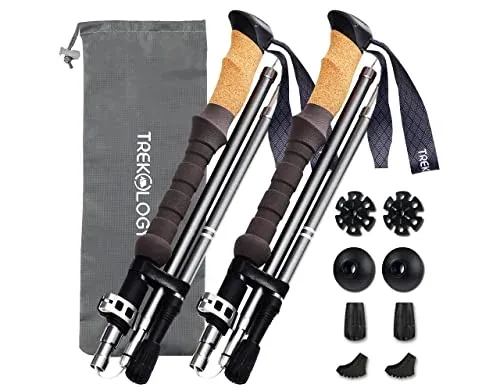
The Trekology Trek-Z are a solid budget pick if you want walking poles for seniors that feel sturdy without being heavy. Built from aircraft‑grade 7075 aluminium, they’re tougher than many carbon-fibre options, which is reassuring on rocky Canadian trails or icy sidewalks. Each pole weighs about 330 g and collapses down to just 38 cm, so they tuck easily into a daypack or carry-on when you’re travelling across Canada. The adjustable walking poles cover 110–130 cm, suiting users roughly 157 cm to 196 cm, and the flip‑lock system is easy to operate, even with gloves in colder weather. A cork grip helps wick sweat in summer, while the EVA foam extensions give you extra hold on steep or uneven terrain. For seniors looking for general-use trekking poles for around town, cottage paths, or light hiking, these are a practical, affordable senior walking aid option for Canadian shoppers.
Pros
- Very compact tri-fold design, easy to pack and travel with
- Sturdy 7075 aluminium construction feels secure on uneven terrain
- Cork and foam grip combo is comfortable in warm or cool weather
Cons
- Length range may be too tall for users under 5'2"
Overmont 7075 Aluminum Trekking Poles
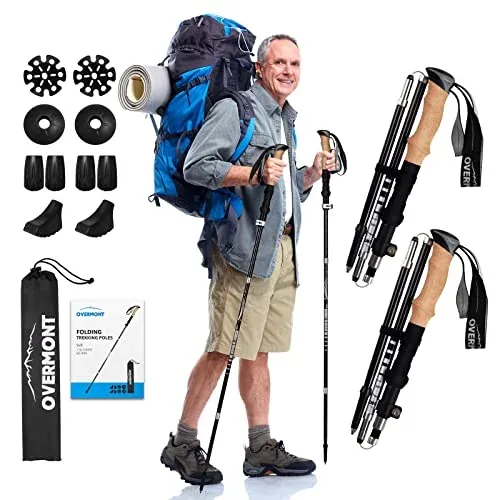
If you’re looking for budget-friendly walking poles for seniors that can handle Canadian conditions, this Overmont set is worth a look. Made from 7075 aircraft-grade aluminium, these trekking poles for elderly walkers are tougher than many carbon fibre options, especially in cold weather where cheaper poles can get brittle. They use a tri-fold design and collapse down to about 38 cm, so they’re easy to tuck into a daypack or suitcase. The adjustable walking poles use a metal flip-lock system with about 15 cm of height adjustment, making them workable for most adults, though not as flexible as fully telescopic poles. The EVA foam grips are sweat-absorbing with wrist straps to reduce hand fatigue on longer walks. With multiple rubber tips and baskets included, these hiking poles for seniors in Canada can transition from city sidewalks to muddy park trails or light snow without buying extra accessories.
Pros
- Affordable two-pole set with carry bag and full tip kit
- 7075 aluminium handles cold Canadian weather better than cheap carbon
- Compact tri-fold design fits easily in packs and luggage
Cons
- Limited 15 cm adjustment range compared with full telescopic poles
Collapsible Trekking Pole Folding Walking Stick by CLINE
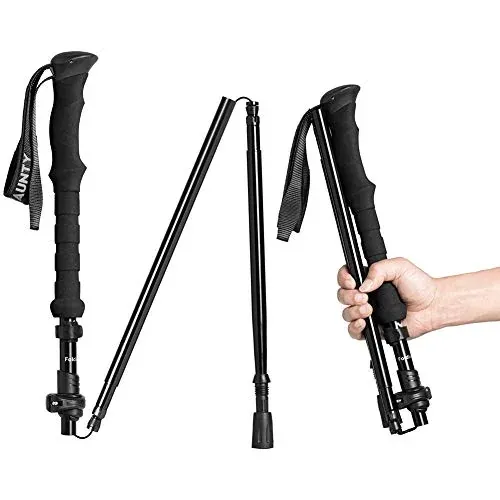
This budget-friendly CLINE folding trekking pole is a handy option if you want basic walking poles for seniors without spending much. It’s made from aerospace-grade 7075 aluminium alloy, so it’s sturdier than most discount canes, with an EVA foam handle that stays grippy even when it’s damp or cold. The height adjusts from about 84–130 cm, so it can work as a general senior walking aid or a lightweight trekking pole for elderly walkers on local trails. The non-slip rubber foot adds traction on sidewalks, paths, and light gravel, which suits most urban and suburban conditions in Canada. At just 310 g and folding down to 41.9 cm, it’s easy to tuck into a daypack or carry-on bag, making it a practical backup pole or travel-friendly walking stick.
Pros
- Very lightweight and compact for travel or day trips
- Wide height range suits many seniors and caregivers
- Comfortable EVA foam grip with basic shock absorption
Cons
- Sold as a single pole, not a pair for balance
- Rubber tip may wear quickly on rough Canadian sidewalks
A ALAFEN Walking Stick
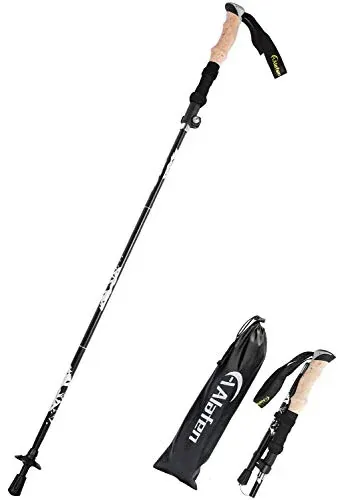
If you’re looking for budget-friendly walking poles for seniors in Canada, this single A ALAFEN pole is a solid everyday option. It uses a 7075 aircraft-grade aluminium shaft, so it’s light in the hand but still sturdy enough for neighbourhood walks, park trails, or moderate hikes. The EVA foam handle is a nice touch for older hands—soft, sweat-absorbent, and shaped with grooves to help your grip even in damp, chilly weather. As an adjustable walking pole, it extends from 110 cm to 124 cm and is designed to suit users from about 155 cm to 188 cm tall, which covers most Canadian seniors. Folded, it shrinks to about 36 cm, so it slips easily into a daypack, carry-on, or even a larger purse. A tungsten steel tip under the rubber foot adds extra security on gravel paths or icy patches, making it a practical senior walking aid for four-season use across Canada.
Pros
- Very affordable price for a sturdy aluminium trekking pole
- EVA foam handle is comfortable and grippy, even when damp
- Compact 36 cm folded length fits easily in backpacks
Cons
- Sold as a single pole, not a pair
- Limited height range may not suit shorter or taller users
Rehand All Terrain Walking Cane
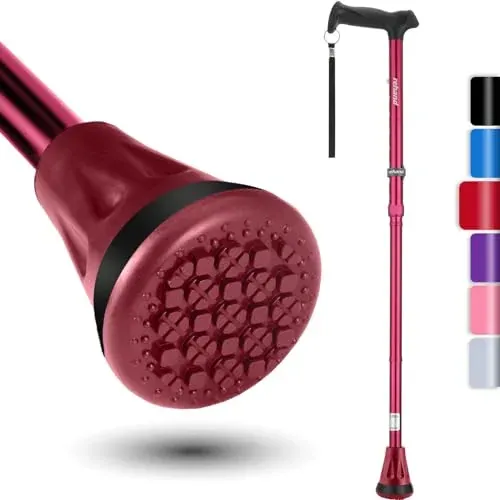
The Rehand All Terrain Walking Cane is a good budget-friendly option if you need senior walking aids for day-to-day support rather than full-on backcountry trekking. Instead of traditional hiking poles for seniors Canada shoppers might use on trails, this is a single adjustable walking cane with a wide, ergonomic grip and a clever pivoting base. The aluminium shaft is lightweight yet sturdy, and it folds down quickly to tuck into a purse, carry-on, or wheelchair bag—handy for travel across Canada or appointments in the city. The multi-layer rubber tip is designed to absorb shock and maintain contact on uneven sidewalks, bus steps, and parking lots, even in typical shoulder-season slush (though you’ll still want care on ice). With eight height settings, it suits users from about 152 cm to 196 cm, making it a flexible pick among the best walking sticks for seniors at this price.
Pros
- Very lightweight, foldable design for easy storage and travel
- Wide ergonomic handle reduces palm pressure and hand fatigue
- Pivoting shock-absorbing base feels stable on uneven sidewalks
Cons
- Single cane, not a pair of trekking poles for elderly hikers
ZELECKS Walking Cane for Women & Men
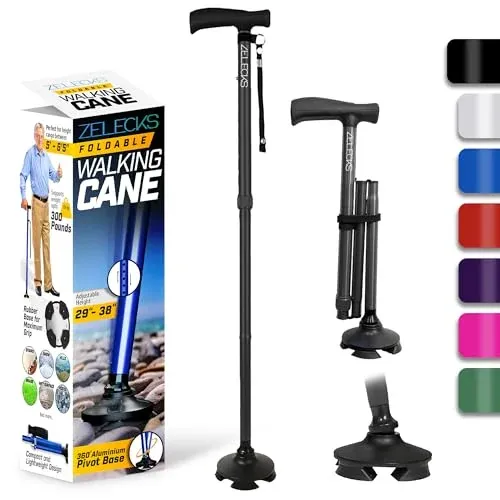
If you’re looking for budget-friendly senior walking aids rather than full trekking poles for elderly hikers, the ZELECKS folding cane is a solid everyday option. It’s a lightweight, adjustable walking pole-style cane (about 500 g) with an aluminum shaft and a 360° pivoting rubber base that helps keep more of the foot in contact with the ground on uneven sidewalks or parking lots. The self-standing design is handy in Canadian settings where you’re juggling grocery bags, transit cards, or winter gloves and don’t want your cane sliding to the floor. Height adjusts to suit users roughly 152 cm to 198 cm, and it supports up to about 136 kg, making it suitable for most seniors. It folds down small enough to tuck into a bag or suitcase, so it’s a practical walking pole for travel and general use.
Pros
- Very affordable option for everyday stability and balance
- Self-standing 360° pivot base is convenient in shops and transit
- Lightweight and folds compactly for travel and storage
Cons
- Single cane design, not suitable as trekking poles for elderly hikers
Walking Poles for Seniors vs Canes: Which Do You Need?
For many older Canadians, the choice isn’t “walking poles or nothing” – it’s often walking poles vs a traditional cane. A cane is a true mobility aid: it supports body weight, helps if one leg is weaker, and is accepted in clinical settings and on most transit systems without question. It’s compact, usually under $50, and fine for short trips on flat sidewalks or inside malls and grocery stores.
Walking poles for seniors (often used as trekking poles for elderly walkers) are different. They’re designed to improve balance and posture, engage the upper body, and reduce joint impact during longer walks. In places with hills, trails, or icy paths, adjustable walking poles give you two extra “points of contact” and often feel more stable than a single cane. The trade-off: they’re bulkier, usually sold in pairs, and not ideal if you need to bear a lot of weight through one side of your body. If your main goal is rehab or serious balance issues, a cane or walker comes first. If you’re reasonably steady but want extra confidence and support for fitness walking or light hiking, walking poles are usually the better choice.
Budget vs Premium: What's the Difference?
For walking poles in Canada, budget options typically run $30–$70, while premium trekking poles for seniors land in the $120–$250 range per pair. Budget poles are fine for occasional neighbourhood walks on mostly flat, dry sidewalks. You’ll usually get heavier aluminium shafts, simpler flip locks, and basic rubber tips. The downsides show up over time: weaker locking mechanisms that can slip, plastic components that don’t love -20°C winters, and limited or no warranty support if something snaps.
Premium walking poles for seniors cost more but bring lighter materials (better aluminium or carbon fibre), stronger locks, ergonomic cork or foam grips, and higher-quality wrist straps. They’re noticeably nicer if you walk several times a week, tackle hills, or deal with mixed conditions in places. Tips and baskets tend to last longer, and brands often back them with 1–3 year warranties and easy access to spare parts. If you’re testing the waters or only walk in summer, a budget pair is reasonable. If you rely on your poles as senior walking aids year-round, especially on ice, snow, or rough trails, paying more up front usually saves frustration and replacements later.
How to Choose the Best Walking Poles for Canadian Conditions
Choosing the best walking poles for seniors in Canada means thinking beyond basic stability. Our terrain ranges from flat urban paths in Mississauga to rocky trails in the Rockies and icy sidewalks in Winnipeg, so trekking poles for elderly walkers need to handle a bit of everything. Look for adjustable walking poles that can adapt to different heights, boots and slopes, and make sure the grips feel comfortable with or without gloves. In a country where conditions swing from +30°C in July to -20°C in January, the right senior walking aids should offer reliable traction, secure locking mechanisms and a weight that feels supportive but not tiring on longer walks.
Key Features to Look For
Grip Design and Comfort
For hiking poles for seniors in Canada, the handle is one of the most important comfort points. Seniors often walk for shorter but more frequent outings, so a grip that feels natural and reduces hand fatigue is essential. Cork grips are excellent if you walk in varied temperatures; they stay comfortable from about -5°C to +25°C and gradually mould to your hand. Foam grips feel soft and absorb sweat in warmer weather, while rubber grips offer better insulation on very cold days but can feel hot in summer. Look for an ergonomic shape with a slight palm flare, and consider poles with extended lower grips if you walk up and down hills in places like Vancouver’s North Shore or Gatineau Park.
Adjustability and Locking Mechanism
Adjustable walking poles are ideal senior walking aids because they let you fine-tune height for city sidewalks, forest trails and steeper paths. Telescoping poles with clear height markings make it easier to set both poles evenly. In Canadian conditions, where temperatures can drop below -15°C, twist locks can be harder to manage with gloves and may freeze. Lever or flip-lock systems tend to be more reliable and easier to operate with cold hands. If you share your poles with a partner or alternate between hiking boots and winter boots, adjustability also helps maintain the proper elbow angle at roughly 90 degrees.
Shaft Material and Weight
The best walking sticks for seniors balance stability with a weight that isn’t tiring to lift thousands of times per walk. Aluminium poles are durable, budget-friendly and handle knocks from rocks and curbs—good for mixed use. They’re slightly heavier but often feel more solid and confidence-inspiring. Carbon fibre poles are lighter, which can reduce shoulder and wrist fatigue, especially if you enjoy longer walks in parks or gentle trails. However, they can be more expensive and may not tolerate hard impacts as well. For most walking poles for seniors, a mid-range aluminium or a reinforced carbon blend is a sensible choice for both urban and light trail use across Canada.
Tips, Baskets and Year-Round Traction
Ground contact is crucial in a country where surfaces change by the season. Look for carbide or tungsten tips for grip on dirt trails and gravel paths, plus removable rubber tip covers for sidewalks and indoor use. For winter, consider trekking poles for elderly walkers that either include or are compatible with ice tips or “spike” attachments to help on packed snow and icy patches. Small trekking baskets are helpful on softer trails, while slightly larger snow baskets prevent poles from sinking into deep snow. Having a small kit with different tips and baskets lets you adapt your walking poles Canada-wide, from beach boardwalks to snowy park paths.
Shock Absorption and Joint Protection
Many seniors appreciate built-in shock absorption, especially if they have sensitive knees, hips or wrists. Some walking poles for seniors include internal springs that compress slightly with each plant, reducing impact on joints when descending hills or walking on hard pavement. This can be particularly helpful on the steep streets of St. John’s or hilly neighbourhoods in Vancouver. However, too much “bounce” can feel unstable. Look for poles with adjustable or moderate suspension, or consider models with a slight natural flex in the shaft instead of a full spring system. Pairing shock-absorbing poles with supportive footwear makes everyday walks more comfortable, even on colder days when joints can feel stiffer.
Frequently Asked Questions
Q: Are walking poles for seniors actually helpful, or just for serious hikers?
Walking poles for seniors can be useful for everyday stability, not just mountain hiking. In Canada, many older adults use poles on city sidewalks, park trails, and cottage roads. Lightweight trekking poles like the TREKOLOGY Hiking Poles Collapsible or Overmont 7075 Aluminum Trekking Poles provide extra balance on uneven paths, packed snow, or gravel. For those who want more of a “cane” feel, the Rehand All Terrain Walking Cane, ZELECKS Walking Cane, or A ALAFEN Walking Stick offer single-point support that’s better for indoor use, shopping, or short outdoor walks. Think of trekking poles as great for exercise and hiking, and canes as senior walking aids for day‑to‑day mobility. Many Canadians keep a pair of hiking poles for trails and a folding cane in the car or travel bag for errands and appointments.
Q: Is it worth spending more on premium trekking poles for elderly Canadians?
Paying a bit more for quality trekking poles for elderly users is often worthwhile, especially in Canadian conditions. Poles built with 7075 aluminum, like the Overmont 7075 Aluminum Trekking Poles and A ALAFEN Walking Stick, offer an excellent strength‑to‑weight ratio, important on icy sidewalks or rocky trails. The TREKOLOGY Hiking Poles Collapsible add features like cork grips, which stay comfortable in warm summers and don’t get as cold as bare metal in winter. Premium folding canes such as the Rehand All Terrain Walking Cane and ZELECKS Walking Cane provide pivoting or self‑standing bases that improve grip on uneven Canadian sidewalks and bus steps. For occasional, short walks, a basic cane may be fine. But if you walk daily, travel, or hike in mixed terrain, the extra comfort, adjustability, and durability of higher‑quality poles usually pays off over years of use.
Q: How long do trekking poles and walking sticks for seniors typically last?
With normal use, good walking poles Canada‑wide can easily last 3–7 years or more. Trekking poles like the TREKOLOGY Hiking Poles Collapsible and Overmont 7075 Aluminum Trekking Poles use durable aluminum sections that tolerate frequent height adjustments and folding. The CLINE Collapsible Trekking Pole and A ALAFEN Walking Stick are also built around sturdy metal shafts that resist bending under typical senior walking loads. Folding canes such as the Rehand All Terrain Walking Cane, and ZELECKS Walking Cane can last just as long, provided the joints and pivot base are kept clean and dry. The parts that wear fastest are rubber tips and pivot bases, especially on rough sidewalks or salted winter surfaces. Replacing these inexpensive components when they flatten or crack can significantly extend the life of the pole or cane.
Q: When should I replace my walking poles or cane?
Replace your walking poles when safety or stability starts to decline. Warning signs include: deeply worn or cracked rubber tips; wobbling sections that won’t stay locked; bent shafts from a fall; or handles that have become loose or uncomfortable. For trekking poles like the TREKOLOGY, Overmont, CLINE, and A ALAFEN models, check that each segment locks firmly and doesn’t slide when you put weight on it. For canes such as the Rehand All Terrain Walking Cane and ZELECKS Walking Cane, inspect the 360° or all‑terrain base for uneven wear and any side‑to‑side play. In Canadian winters, road salt can speed corrosion, so check metal parts every spring. If you depend on the pole for balance and feel even a slight instability, err on the side of safety and replace it.
Q: Can I use trekking poles for elderly users instead of a cane, or do I need both?
It depends on how and where you walk. Trekking poles for elderly users, such as the TREKOLOGY Hiking Poles Collapsible and Overmont 7075 Aluminum Trekking Poles, work best as a pair for active walking, fitness, and hiking—great on park paths in Ottawa, forest trails in BC, or cottage roads in Muskoka. They distribute weight between both arms and can reduce joint impact. Single-point supports like the A ALAFEN Walking Stick, Rehand All Terrain Walking Cane, and ZELECKS Walking Cane function more like traditional senior walking aids, ideal for indoor use, malls, or short outdoor distances. Many Canadians choose both: trekking poles for exercise walks and nature outings, and a folding cane kept in a handbag, car, or suitcase for everyday errands and travel through airports or cruise terminals.
Q: Will adjustable walking poles work for my height and arm length?
Most adjustable walking poles are designed to fit a broad range of Canadian seniors. The A ALAFEN Walking Stick specifically fits users from about 155 cm to 188 cm, covering most adults. Collapsible trekking poles like the TREKOLOGY and Overmont models typically offer similar adjustability ranges, letting you fine‑tune the length for flat walking, uphill climbs, or downhill descents. A simple guideline: when the pole tip is on the ground near your foot, your elbow should be bent to about 90°. For canes like the Rehand All Terrain Walking Cane and ZELECKS Walking Cane, adjust until your wrist crease aligns with the top of the handle when standing straight. If you’re very petite or taller than 188 cm (6'2"), check the maximum/minimum length specs carefully before choosing.
Q: What type of walking supports work best for harsh Canadian winters?
For winter walking, stability and grip are critical. Trekking poles for seniors like the TREKOLOGY Hiking Poles Collapsible and Overmont 7075 Aluminum Trekking Poles offer two‑point support and can be fitted with winter baskets or grippy tips, making them suitable for packed snow in Quebec or icy sidewalks in the Prairies. The CLINE Collapsible Trekking Pole and A ALAFEN Walking Stick also provide solid traction when paired with appropriate tips. All‑terrain canes such as the Rehand All Terrain Walking Cane feature heavy‑duty, pivoting bases that adapt to uneven surfaces and curb cuts, helpful in slushy conditions. The self‑standing ZELECKS Walking Cane is convenient at doorways but still relies on good tip contact, so be cautious on pure ice and consider traction attachments where permitted.
Q: Cork vs EVA handles and pivot bases vs fixed tips: what’s the difference?
Cork grips, like on the TREKOLOGY Hiking Poles Collapsible, mold slightly to your hand, stay cooler in summer, and don’t feel as cold in winter. EVA foam handles, as on the Overmont 7075 Aluminum Trekking Poles, are soft, light, and absorb sweat well—great for longer hikes. Fixed tips on trekking poles (TREKOLOGY, Overmont, CLINE, A ALAFEN) offer precise planting on dirt, gravel, and packed snow. In contrast, pivoting bases on the Rehand All Terrain Walking Cane, and the 360° pivot base of the ZELECKS Walking Cane allow the tip to stay flat as you move, improving grip on sloped sidewalks, bus steps, and uneven indoor flooring. For mixed city walking, a pivot base cane is highly practical; for exercise walking or hiking, traditional trekking pole tips give better control.
Q: What specifications should I look for when choosing hiking poles for seniors in Canada?
Focus on adjustability range, material, grip, and portability. Trekking poles for seniors like the TREKOLOGY Hiking Poles Collapsible and Overmont 7075 Aluminum Trekking Poles use lightweight aluminum, ideal for longer walks on Canadian trails. Ensure the collapsed length fits in your suitcase or daypack if you travel—folding options like the CLINE Collapsible Trekking Pole are excellent for this. For seniors who want a single support, the A ALAFEN Walking Stick, Rehand All Terrain Walking Cane, and ZELECKS Walking Cane offer foldable designs that tuck into a handbag or under a restaurant chair. Look for secure, easy‑to‑use adjustment mechanisms and handles that feel comfortable.
Q: Which is better for everyday use in Canada: trekking poles or a folding cane?
For daily errands in Canadian cities—grocery runs, medical appointments, transit—a folding cane is usually more convenient. The Rehand All Terrain Walking Cane, and ZELECKS Walking Cane all fold compactly, fit into a bag, and work well on indoor flooring and sidewalks. They’re discreet senior walking aids that you can bring into cafés, taxis, or family gatherings. Trekking poles like the TREKOLOGY, Overmont, CLINE, or A ALAFEN models shine for exercise and nature walks, where two‑handed support and rhythm matter. Many seniors choose a hybrid approach: trekking poles for fitness walks on waterfront or park trails, and a stylish folding cane for daily urban activities and travel through airports or train stations.
Q: Are collapsible and folding walking poles strong enough for heavier seniors?
Modern collapsible walking poles Canada‑wide are designed to be robust when properly adjusted and locked. Trekking poles such as the TREKOLOGY Hiking Poles Collapsible, Overmont 7075 Aluminum Trekking Poles, CLINE Collapsible Trekking Pole, and A ALAFEN Walking Stick use sturdy aluminum sections that can support significant weight during normal walking and light hiking. Folding canes like the Rehand All Terrain Walking Cane, and ZELECKS Walking Cane are marketed as heavy‑duty mobility aids, with reinforced shafts and broad, stable bases or pivot tips. For heavier users, the key is to follow the manufacturer’s height and weight guidelines, ensure all segments click or lock fully, and test the pole indoors on a stable floor before venturing onto rough terrain or icy sidewalks.
Final Thoughts: Making the Right Choice for Canadian Conditions
Choosing the right walking poles for Canadian conditions comes down to comfort, stability, and how well they fit your everyday routes. For most seniors, the TREKOLOGY Hiking Poles stand out as the best overall choice, especially for mixed urban and trail use. Their easy adjustability, ergonomic grips, and reliable locking mechanisms make them ideal for seniors walking regularly on everything from paved paths in Toronto parks to rolling trails in the Okanagan.
If you’re planning more rugged outings or need extra confidence on steep terrain, the Overmont 7075 Aluminum Trekking Poles shine with their durable construction and strong aluminium shafts. They’re a smart pick for seniors who enjoy hillier hikes, uneven cottage roads, or exploring rockier paths. For those who want something compact and travel-friendly, the Collapsible Trekking Pole Folding Walking model is a solid option, folding down small enough for a daypack yet still offering dependable support for city walks, cruises, or visits with family across the country.
Before making your final decision, think about where you walk most often, how much weight you’re comfortable lifting, and whether you need extra adjustability for different family members. Whenever possible, test your pole height and grip indoors first, then gradually increase distance outdoors, especially in icy Prairie winters or wet coastal conditions.
Take the next step by choosing the pair that best matches your lifestyle, ordering them, and planning your first walk with them this week. With the right walking poles, you can move with more confidence, explore more of your community, and keep enjoying Canada’s pathways and trails for years to come.