
Heads up: some of the links in this post are affiliate links. That means if you click and purchase, we may get a commission. It’s how we keep this site running without cluttering it with ads.
The first warm weekend after a -30°C cold snap, your hose is either a hero—or it’s the reason you’re standing on the deck in wet socks, yanking out a kink that’s frozen into a perfect elbow. In Ontario and Québec, early-spring thaw is a messy mix of mud, salt grit, and temperature swings that turn “quick watering” into a leak-hunting chore. Out in the BC mountains, steady rain and mossy patios punish cheap fittings; on the Prairies, a hot, windy July can pull moisture out of soil fast enough that a weak spray pattern barely keeps up. A bad hose doesn’t just waste water—it drags down lawn care, adds trip hazards, and turns storage into a wrestling match.
This guide matches the right setup to Canadian realities: lot size, watering style, and where you’ll stash it when frost returns. If you’re also building beds to make the most of short seasons, our raised bed picks for short summers pair perfectly with a smart hose system. Next comes the quick comparison table—so you can choose the reel, expandable, soaker, or cart that won’t quit mid-season.
Quick Overview: Our Top Picks
| Product | Best For | Why We Love It | Price |
|---|---|---|---|
| Small patios and balconies | Expands fast, shrinks small, and stays kink-free for easy everyday watering. | $42.98 | |
| Busy homeowners who hate rewinding | Smooth auto-rewind and 180° swivel keep your yard tidy and hassle-free. | $127.90 | |
| Raised beds and veggie gardens | Delivers slow, targeted watering that saves water and boosts plant health. | $31.49 | |
| Neat freaks with tight storage | Locks at any length and retracts cleanly, preventing tangles and prolonging hose life. | $119.99 | |
| Large properties and long runs | Heavy-duty steel cart hauls big hose capacity and handles tough Canadian weather. | $174.99 |
TheFitLife Expandable Garden Hose
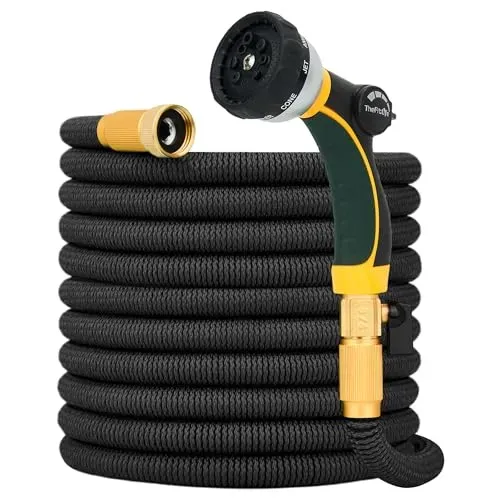
If you want a lightweight garden hose for everyday lawn care without spending a ton, this 50 ft TheFitLife expandable hose is a practical pick. It starts around 17 ft and expands up to 50 ft under water pressure (about 40 psi), then shrinks back down when you shut the tap off—handy for smaller yards and tight storage. The inner tube uses multiple latex layers, paired with upgraded “antioxidant” reinforcement, and it’s tested for repeated expand/contract cycles under higher pressure (up to 10 bar). You also get solid 3/4-inch standard metal fittings (US standard) and an 8-pattern spray nozzle with thumb control for quick switching between mist, shower, and jet. For Canadian spring cleanup, it’s nice not wrestling a heavy rubber hose.
Pros
- Expands to 50 ft, then contracts for easy storage
- Lightweight (2.82 lb) and simple to carry around
- Includes 8-pattern nozzle with handy thumb control
Cons
- Expandable hoses can be less rugged than thick rubber
- Needs draining after use to prevent wear and tangles
VEVOR Retractable Hose Reel
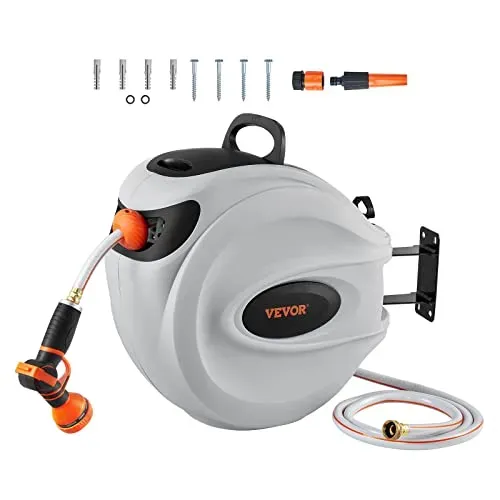
If you’re tired of wrestling a soggy garden hose after watering the lawn, this VEVOR wall-mounted reel is a tidy, set-and-forget upgrade. It comes pre-installed with a 100 ft x 1/2 inch hose and a 180° swivel bracket, so you can swing it to cover beds, driveway, and side yard without dragging the reel around. The auto-rewind is the star: give it a slight tug and it retracts slowly, which feels a lot safer than the snap-back reels that can smack shins. The hose itself is a 3-layer PVC design with a brass lead-in, pressure-tested up to 200 PSI (600 PSI burst). For Canadian winters, you’ll want to remove it and store it somewhere freeze-proof.
Pros
- Slow auto-rewind feels safe and prevents hose tangles
- 180° swivel bracket makes watering around corners easier
- Locks at any length for controlled lawn care
Cons
- Needs seasonal removal/storage to avoid freeze damage
- Wall mounting takes time and a solid surface
Drip Soaker Irrigation Tubing
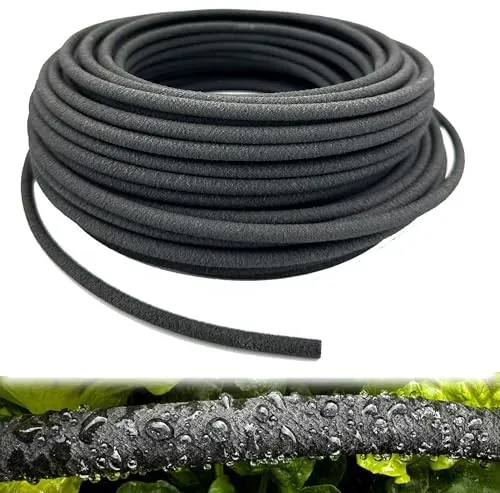
If you’re after a budget-friendly way to keep garden beds evenly watered, this 1/4-inch soaker hose kit gives you a full 100 ft run plus a helpful pile of connectors for simple DIY layouts. It’s designed to seep water slowly along the line, targeting the root zone instead of spraying the whole yard—handy during dry Canadian summers when you’re trying to cut back on water use. The brand claims up to 70% savings and rates flow at about 0.75 gallons per hour per 15 feet at 25 PSI, which suits gentle, steady watering for vegetables, shrubs, and flower beds. You can run it on the surface or tuck it under mulch, and it’s easy to move as your lawn care needs change.
Pros
- 100 ft length covers decent-sized garden beds
- Includes accessories for quick, custom hose setups
- Slow, steady watering helps reduce wasted water
Cons
- No temperature rating listed for Canadian winter storage
- Not ideal for high-pressure, spray-style watering tasks
SUNPOW Retractable Hose Reel
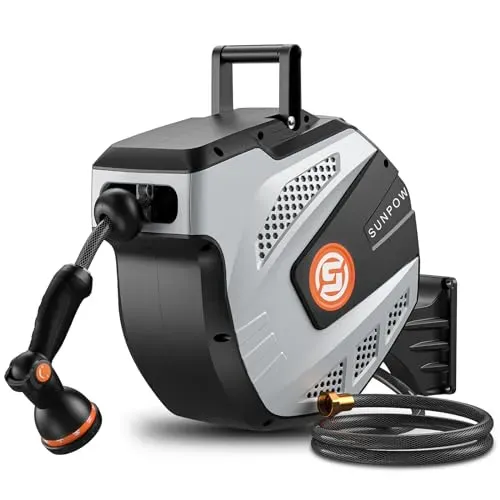
If you’re tired of wrestling a hose into a messy pile after watering, the SUNPOW retractable reel is a tidy, wall-mounted upgrade for everyday lawn care. You get a 1/2-inch x 50 ft hose that pulls out smoothly and clicks to lock at virtually any length, so you’re not dragging extra hose across the patio. When you’re done, a gentle tug activates the auto rewind and the pulley guide rail keeps the line feeding back in without kinks or tangles. The 180° swivel bracket helps you cover more of the yard from one mounting point, and the 3/4-inch brass fitting feels like a solid, leak-resistant choice for Canadian outdoor taps. It also includes a 10-function sprayer nozzle for quick switching between mist, shower, and jet.
Pros
- Keeps hose stored neatly, reduces kinks and tangles
- Auto rewind makes cleanup fast and safer
- 180° swivel helps reach around corners and garden beds
Cons
- Wall mounting requires sturdy studs or masonry anchors
- 50 ft length may be short for larger yards
FDW Hose Reel Cart
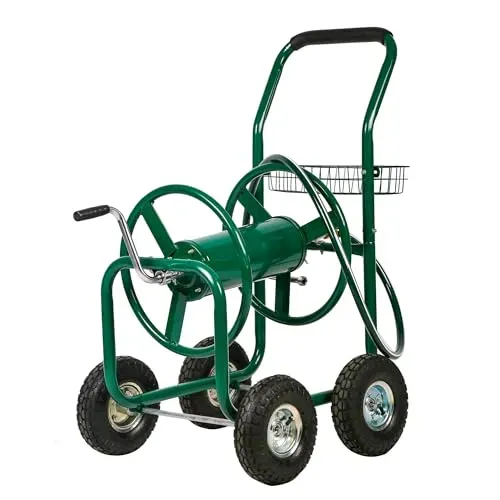
If you’re tired of wrestling a tangled garden hose after watering the lawn, the FDW Hose Reel Cart is a solid premium-style upgrade. It’s built around a reinforced, heavy-duty steel frame with a powder-coat finish designed to resist rust and handle wet Canadian weather. The reel is sized for up to 300 ft of hose, which is handy for larger yards where you need to reach the far corners without dragging the hose across the driveway. Assembly is straightforward (FDW suggests about 50 minutes with included tools), and the foam-padded handle with non-slip grip makes it easier on the hands—especially if you’re moving it around the yard regularly.
Pros
- Holds up to 300 ft of garden hose
- Powder-coated steel frame helps resist rust
- Foam-padded handle is comfortable to push and pull
Cons
- Assembly takes time compared with wall-mounted reels
- No published dimensions or temperature rating details
Standard Garden Hose vs Expanding Hose: Which Do You Need?
A standard garden hose (rubber, vinyl, or hybrid) is the dependable choice for most Canadian lawn care, especially if you deal with hot summers and cold shoulder seasons. They handle higher water pressure, dragging across a driveway, and the odd kink or tug better than most “expanding” fabric hoses. In places like Southern Ontario or the Prairies, where summer heat can make cheaper plastics stiff or brittle, a quality standard hose is usually the better long-term buy. Expanding hoses shine for convenience: they’re light, compact, and easy to store in a condo garage or small shed, and they’re pleasant for quick watering of planters or a small lawn. The trade-off is durability—fabric jackets can snag, fittings can leak, and leaving them pressurized or out in UV can shorten their life. Cost-wise, expanding hoses often seem cheaper up front, but replacements add up. If you winterize properly (drain fully and store indoors), either style can work, but standard hoses tolerate Canadian wear-and-tear better.
Budget vs Premium: What's the Difference?
In Canada, budget garden hoses typically run about $20–$50 for 25–50 ft, while premium options are often $70–$150+ depending on length, diameter, and materials. Spending more usually gets you thicker rubber or hybrid construction (better in fluctuating temperatures), stronger fittings (solid brass or anodized aluminum), and kink resistance that actually holds up when you’re moving sprinklers around the yard. Premium hoses also tend to have better burst ratings and more reliable couplers—important if your municipal pressure is high or you use a timer. Warranties can be a tell: budget hoses may be 90 days to 1 year, while better models often offer multi-year coverage. If you’re watering a small urban lawn or doing light garden use a few times a week, a mid-range hose can be plenty—just store it out of the sun and don’t leave it charged overnight. For larger lots, rough surfaces, or frequent use (think Vancouver’s long growing season or Alberta’s sun and wind), premium hoses usually cost less over time because they leak and split less.
How to Choose the Best Garden Hose for Canadian Conditions
Shopping for a hose in Canada is less about “will it water my plants?” and more about how it handles our weather swings, storage realities, and the kind of lawn care you actually do. A hose that’s great in a mild coastal backyard can crack, kink, or become a frozen mess after a Prairie cold snap or an early spring in Ottawa. Think about your season length, whether you’re hauling it across a large lot or a small townhouse patio, and if you’re using it for quick watering, car washing, or heavier jobs like filling a pool. Durability, flexibility, and leak-free connections matter more here than almost anywhere.
Key Features to Look For
Cold-Weather Flexibility and Temperature Tolerance
Canadian mornings can start near 0°C in spring and fall, even if afternoons feel warm, and hoses that go stiff at low temperatures are frustrating to drag around corners or coil neatly. Look for models that remain flexible around 0°C to 5°C and that are rated to handle both cool weather and hot tap water in summer. If you’re in the Prairies or Northern Ontario, where shoulder seasons can include surprise frosts, a tougher hose that won’t crack from occasional exposure to sub-zero temperatures (around -10°C) is a smart choice—especially if you’re the type who forgets to disconnect right away. Even with a good hose, plan to drain and store it before sustained freezing.
Material and Construction (Rubber vs. Hybrid vs. Vinyl)
The material affects everything: durability, flexibility, weight, and how well it resists kinks. Heavy-duty rubber hoses are excellent for demanding lawn care and frequent use, and they tend to tolerate temperature swings and rough handling better—handy for larger properties in Alberta or Saskatchewan where you’re pulling the hose over gravel or around decks. Hybrid polymer hoses (often “rubber-like” blends) can be a great middle ground: lighter than full rubber but more robust than basic vinyl. Thin vinyl hoses are budget-friendly and fine for light use on a small patio, but they’re more likely to kink, split, or stiffen in cooler weather. If you store your hose in a sunny spot, choose UV-resistant materials to slow down cracking and fading.
Hose Diameter and Flow Rate for Real-World Tasks
Diameter directly impacts water flow, which matters more than people expect. A 1/2-inch hose is lighter and easier to manage, making it a favourite for small yards, balcony planters, or quick watering in Vancouver or Halifax where you may not need maximum output. For most suburban lawns and gardens, a 5/8-inch hose is the versatile sweet spot, offering strong flow for sprinklers while still being manageable to coil. If you’re running longer lengths or powering higher-demand tools (like certain sprinklers, nozzle sprayers, or filling a pool), a 3/4-inch hose can help maintain pressure—especially if you’re working with a long driveway setup or a large lot outside Calgary or in the GTA suburbs.
Length, Weight, and Storage (Reels, Hangers, and Winter Prep)
Buy the shortest length that comfortably reaches your farthest watering point, because extra hose adds weight, tangles, and kinks. For many Canadian homes, 50 ft works well for front-yard or backyard coverage, while 75–100 ft makes sense for corner lots, rural properties, or when the tap is inconveniently placed. Consider storage early: a wall-mounted hanger suits lighter hoses and tight spaces, while a reel makes daily use easier and protects the hose from UV and abrasion. In regions with harsh winters like Manitoba or Quebec, storage isn’t optional—plan for a spot in the garage, shed, or basement, and choose a hose that coils without fighting you when temperatures dip in late autumn.
Fittings, Leak Resistance, and Nozzle Compatibility
Most hose headaches come from the ends, not the middle. Look for solid fittings (brass or high-quality anodized aluminum) and reinforced collars to reduce kinking right at the connection point. If you’ve dealt with slow leaks, consider hoses with crush-resistant couplings and well-made washers; having spare washers on hand is a simple Canadian household win. Standard connections are typically 3/4-inch GHT, so compatibility with common nozzles, sprinkler timers, and quick-connect kits is usually straightforward, but quality varies. For frequent lawn care routines—like moving a sprinkler around—quick-connects can save time and reduce wear on threads, especially if you’re disconnecting often during short watering windows.
If you're planning your beds around frost dates and zone-specific timing, our Canadian gardening zones and planting schedule guide can help you line up watering with your growing season.
Frequently Asked Questions
Q: What hose type gives the best value for everyday lawn care?
For basic watering, focus on leak-free fittings, kink resistance, and how easy it is to store—those reduce frustration and replacement costs. Expandable hoses can be good value if you want a lightweight option that packs small; the TheFitLife Expandable Garden Hose 50FT includes solid metal fittings and a spray nozzle, which can save you from buying extras. For larger yards, budgeting for a reel can improve convenience but increases upfront cost.
Q: How do I choose the right length and fittings for Canadian homes?
Measure the farthest point you need to reach (around the back yard, garden beds, driveway) and add a little slack so you’re not stretching connectors. Most Canadian outdoor taps use standard hose-thread connections; confirm your accessories match. If you want fewer splices, a longer setup like the VEVOR Retractable Hose Reel (100 ft x 1/2 inch) can cover many suburban lots. Also check your nozzle and sprinkler connection sizes before buying adapters.
Q: What should I do differently in winter to prevent hose damage in Canada?
Before the first freeze, shut off the outdoor water supply (inside shutoff if you have one), disconnect the hose, and drain it fully. Stored water expands and can split hoses, fittings, and even your hose bib. Keep hoses in a garage or shed rather than outside on the ground. With wall-mounted reels, retract the line, then drain and protect the reel from ice exposure as much as possible.
Q: When does a soaker/drip line make more sense than a regular hose?
Use a soaker or drip line when you want deep, consistent watering at the root zone—great for garden beds and hedges, and helpful during summer watering restrictions in many Canadian municipalities. It reduces evaporation and overspray compared to hand watering. The 1/4 inch Soaker Hose Tubing for Drip Irrigation (100FT) is designed for bed layouts and includes accessories to route lines cleanly. Avoid using soaker lines for washing cars or quick spot rinses.
Q: What are the most common mistakes people make when buying a hose reel or cart?
The big mistakes are underestimating length, mounting a wall reel to weak siding, and ignoring swivel range—leading to kinks and awkward pulls. Make sure you can anchor into studs or solid backing for wall-mounted units, and confirm the reel locks at useful lengths for your yard. If you prefer mobility across a larger property, a cart like the FDW Garden Hose Reel Cart can reduce strain, but it needs storage space.
Q: What's the best expandable garden hose for Canadian weather?
Look for an expandable hose with multiple latex layers inside and solid metal fittings—those hold up better through temperature swings from cool spring mornings to hot July afternoons. The TheFitLife Expandable Garden Hose is a strong option because its reinforced inner tube is pressure-tested up to 10 bar and the 3/4-inch brass connectors resist the corrosion you get from hard Canadian tap water. The main thing to watch with any expandable hose in Canada is draining it completely before storing for winter; trapped water can split the inner tube when it freezes. If you're in a milder coastal area like Vancouver or Victoria, expandable hoses can last several seasons with minimal fuss. On the Prairies or in Northern Ontario, plan to treat them more carefully and store indoors once nights dip below freezing.
Q: Are retractable hose reels worth it in Canada?
Retractable reels are worth the investment if you water regularly and hate coiling a soggy hose by hand. They keep your yard tidy, reduce kinks, and protect the hose from UV damage between uses. The trade-off is installation—you need a solid mounting surface (studs, brick, or concrete) and you'll want to remove wall-mounted units before hard freezes in most of Canada. For suburban homes in the GTA, Ottawa, or Calgary, a retractable reel like the VEVOR or SUNPOW models can save real time over a season of daily watering. They're less practical for renters or anyone who moves frequently, since you're committing to a fixed mounting point. Budget around $100–$150 for a quality unit that includes a hose and nozzle.
Q: How long should a garden hose be for a typical Canadian yard?
For most urban and suburban Canadian homes, 50 feet covers front or backyard watering comfortably. If your outdoor tap is on the opposite side of the house from your garden beds—common with newer builds—you may need 75 feet to avoid stretching. Corner lots, rural properties, or homes with long driveways often benefit from 100 feet. The key rule: buy the shortest length that reaches your farthest watering point with a bit of slack. Extra hose beyond what you need adds weight, creates more kink points, and makes storage harder. Measure from your spigot to the farthest corner you'll water, then round up to the nearest standard length (25, 50, 75, or 100 feet).
Q: Can I leave my garden hose outside in winter?
In most of Canada, no. Water left in a hose expands when it freezes and can crack the hose, split fittings, and even damage your outdoor hose bib. Before the first sustained freeze—usually October or November depending on your region—shut off the indoor water supply valve for your outdoor tap, disconnect the hose, and drain it completely. Store it in a garage, basement, or shed where temperatures stay above freezing. Even "freeze-resistant" hoses are designed to tolerate brief cold snaps, not a full Manitoba or Quebec winter sitting on frozen ground. Wall-mounted reels should be retracted, drained, and ideally covered or brought inside if possible.
Q: What's the difference between rubber, hybrid, and vinyl hoses?
Rubber hoses are the heaviest and most durable option—they resist kinking, handle temperature extremes well, and typically last the longest. They're ideal for larger Canadian properties where you're dragging the hose over gravel, decks, or rough terrain. Hybrid hoses blend rubber and polymer for a lighter feel with better flexibility than pure rubber, making them a popular middle ground for most suburban yards. Vinyl hoses are the lightest and cheapest, fine for occasional light watering on a small patio, but they kink easily, stiffen in cooler weather, and tend to crack after a season or two of Canadian sun exposure. For most Canadian homeowners doing regular watering from May through September, a hybrid or rubber hose offers the best balance of weight, durability, and value.
Q: Do expandable hoses work in cold Canadian springs?
They can, but with caveats. Expandable hoses rely on water pressure to stretch the inner latex tube, and most work fine once your outdoor tap is flowing—even on cool spring mornings around 5–10°C. The bigger concern is overnight freezing: if you leave an expandable hose pressurised and temperatures drop below zero, the trapped water can damage the inner layers. In regions where spring nights still hit -5°C or lower—common in the Prairies, Northern Ontario, and parts of Quebec into April—disconnect and drain the hose after each use until overnight temps reliably stay above freezing. Once you're past that frost window, expandable hoses are convenient and easy to handle for the rest of the season.
Q: What garden hose diameter is best for low water pressure?
If you have low municipal water pressure or use a well, a 1/2-inch diameter hose actually delivers better perceived pressure than a wider hose because the narrower opening concentrates the flow. A 5/8-inch hose is the standard for most Canadian homes and works well for typical city pressure (40–60 PSI). If your pressure is strong—common in newer suburban developments—a 3/4-inch hose maximises flow for sprinklers, filling pools, or running multiple attachments. The easiest test: if your current hose dribbles at the far end, try a shorter length or narrower diameter before buying a booster pump. Also check for kinks, partially closed valves, or old washers at the fitting—these cause more "low pressure" complaints than actual municipal supply issues.
Final Thoughts: Making the Right Choice for Canadian Conditions
Finding the right garden hose for Canadian conditions really comes down to how you water day to day—quick patio rinses, regular lawn watering, or careful moisture control for beds—plus how much you want to wrestle with storage. For most households, choosing a hose that’s easy to handle and dependable through sudden weather swings makes all the difference.
Our #1 pick is the TheFitLife Expandable Garden Hose 50FT because it’s lightweight, coils down small, and is genuinely pleasant to use when you’re bouncing between tasks. It’s an ideal fit for a typical suburban use case: watering planters on the deck, topping up garden beds, and washing off muddy boots after a wet spring day in Southern Ontario—without dragging a heavy, kink-prone hose across the yard.
If you want the tidiest, most hassle-free setup, the VEVOR Retractable Hose Reel is a strong choice for anyone who’s tired of tangles and wants one-handed rewind after watering the front yard. For gardeners focused on efficient, plant-first watering, drip soaker irrigation tubing is better suited to slow, targeted irrigation in vegetable rows or shrub borders, helping reduce evaporation during hot Prairie afternoons.
Before you buy, measure the farthest tap-to-bed distance, confirm your faucet and fitting compatibility, and think about where the hose will live (garage, shed, or mounted outside). Then match length and storage style to your routine so you’re not fighting your gear all season.
Pick the option that fits your space, order it today, and set it up before peak summer watering begins—you’ll be ready to keep your yard thriving with less effort and more confidence.