Heads up: some of the links in this post are affiliate links. That means if you click and purchase, we may get a commission. It's how we keep this site running without cluttering it with ads.
By the time a Pearson-to-Vancouver flight begins its descent, hours of sitting can leave ankles puffy and calves oddly heavy. The same thing happens after a 12-hour hospital shift or a long commute: you want support for everyday fatigue and mild swelling, not a sock that pinches by lunch. The useful dividing line is pressure—15–20 mmHg suits lighter daily support, while 20–30 mmHg delivers firmer graduated compression for flights, standing work and active days. For people who spend hours in work boots, our boot sock guide can also help with the layer underneath.
This curated shortlist weighs listed specs, prices and thousands of shopper ratings to find worthwhile options from $11.99 to $39.99 CAD. Our top recommendation, the CAMBIVO 20–30 mmHg two-pack, costs $18.99 CAD and earns a 4.3-star rating from nearly 6,800 reviews—the best value among the firmer 20–30 mmHg picks. The comparison table below shows how the leading picks stack up.
Quick Overview: Our Top Picks
| Product | Best For | Why We Love It | Price |
|---|---|---|---|
| Firmer everyday support | Two pairs offer 20–30 mmHg compression at a reasonable price for regular wear. | $18.99 CAD | |
| Tight budgets | Four pairs provide affordable 15–20 mmHg support for work, running, or daily circulation needs. | $16.93 CAD | |
| Cushioning and moisture control | Coolmax, bamboo viscose, cushioning, and anti-blister construction suit active use and longer outings. | $35.99 CAD | |
| Low-cost ankle support | An affordable ankle-height option with cushioning for athletic activities and plantar-fasciitis-focused support. | $11.99 CAD | |
| Firmer travel support | Medical-style 20–30 mmHg compression and three pairs suit flights, travel, running, and hiking. | $39.99 CAD |
CAMBIVO Compression Socks
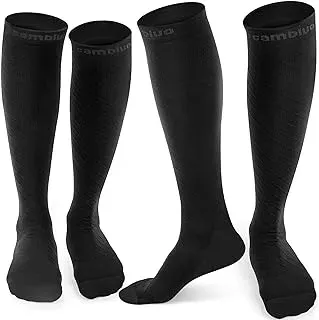
Firmer 20–30 mmHg support is why this two-pair set earns our top-pick spot. These CAMBIVO compression socks suit adults seeking more substantial everyday support than lighter 15–20 mmHg options. At $18.99, two pairs make practical sense for regular rotation through work shifts, flights, commutes, indoor training and days spent standing. The 4.3-star average from nearly 6,800 ratings also gives this affordable set more buyer feedback than many similarly priced options.
Pros
- Firmer 20–30 mmHg support for daily leg fatigue
- Two pairs offer strong value at $18.99
- 4.3-star rating from nearly 6,800 customer reviews
Cons
- Firmer compression may be harder to put on
- Listing does not provide material or detailed sizing information
Everyday Compression Socks
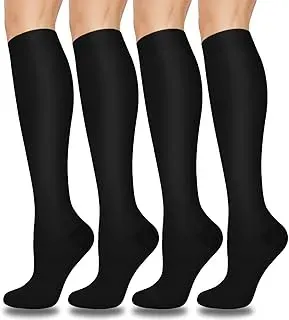
For shoppers who need an affordable rotation for standing shifts, commutes, running, or long flights, these four-pair compression socks suit a tight budget well. The listing specifies 15–20 mmHg support, a lighter level than firmer 20–30 mmHg options and a sensible choice for everyday leg-support needs rather than people seeking stronger compression. At $16.93 CAD, the four-pair pack leaves room to keep clean pairs ready for workdays, indoor training, and travel. It holds a 4.2-star rating from 2,700 customers, suggesting broad buyer confidence at this price. The retailer does not provide material or detailed sizing information, so check the listing carefully before ordering.
Pros
- Four pairs offer useful rotation for daily wear
- 15–20 mmHg support suits many everyday needs
- Low price for a multi-pair pack
Cons
- Less support than firmer 20–30 mmHg options
- Material and detailed sizing specifications are not provided
Juclise Women's Running Socks
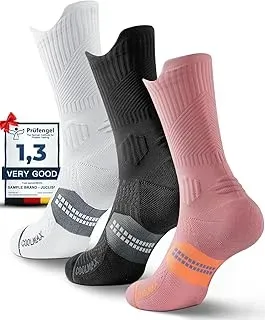
At $35.99 CAD, these are a premium-priced pick for shoppers who value cushioned, moisture-managing socks for active days more than the lowest possible cost. The Juclise Running Socks combine Coolmax and bamboo viscose with cushioning and an anti-blister construction, a useful mix for indoor training, runs, hikes and long workdays on your feet. That moisture-wicking focus can also suit Canadian travel days, from airport walks to long flights, when dry feet matter as much as leg comfort. They carry a strong 4.5-star average from 1,200 customer ratings. One caveat for this guide: the listing does not state a mmHg compression rating, so shoppers seeking graduated circulation support should confirm that detail before treating these as an alternative to medical-style compression stockings.
Pros
- Coolmax and bamboo viscose target moisture control
- Cushioning and anti-blister construction suit active outings
- Strong 4.5-star rating from 1,200 customers
Cons
- No mmHg compression level is stated
- Pricier than basic daily compression sock options
IRAMY Ankle Compression Socks
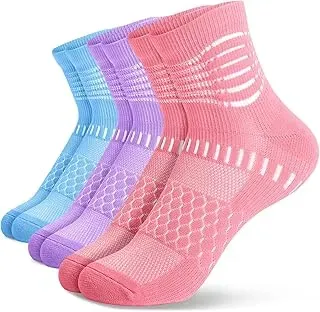
Unlike the knee-high graduated options in this guide, IRAMY’s ankle-height socks lean toward cushioned athletic wear rather than full-calf circulation coverage. That makes the IRAMY ankle socks a practical low-cost choice for Canadians wanting added support in running shoes, at the gym, or through an active commute, particularly when plantar-fasciitis-focused relief is part of the brief. The listing offers 3- or 5-pair options and includes cushioning, handy for people rotating socks between training and workdays. At $11.99, this is the least expensive pick here, with a 4.3-star average from 4,200 customer ratings. It is not a substitute for firmer 20–30 mmHg knee-high socks on a long flight.
Pros
- Affordable multi-pair ankle-height option
- Cushioning suits athletic shoe use
- 4.3-star average from 4,200 ratings
Cons
- Ankle height cannot replace knee-high travel coverage
- No listed compression level for comparison
NEWZILL Medical Compression Socks
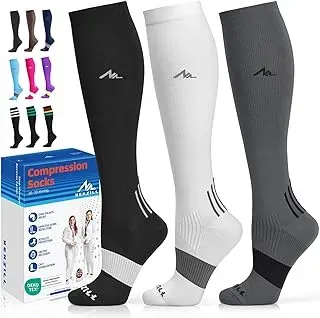
Medical-style 20–30 mmHg support makes these a stronger choice when lighter 15–20 mmHg socks may not provide enough firmness for long flights, standing shifts or active days. The NEWZILL Medical Compression Socks come as three knee-length pairs in black, white and grey, giving Canadian travellers and workers useful spares for a suitcase, gym bag or laundry rotation. Made from 65% nylon and 35% spandex, they are designed as athletic socks for running and skating, while the manufacturer also positions them for hiking and flights. At $39.99, they sit at the higher end of this guide’s price range, though their 4.2-star rating from 9,000 buyers suggests wide appeal.
Pros
- Firmer 20–30 mmHg support for travel and standing work
- Three pairs simplify regular wear and washing
- Knee-length nylon-spandex construction suits active use
Cons
- Needs a gentle cycle and air drying
- Firmer compression may not suit every wearer
Compression Socks vs Compression Sleeves: Which Is Better for Travel, Work and Exercise?
Compression socks cover the foot and lower leg, while sleeves stop at the ankle. For flights, commutes and standing shifts, socks are usually the more practical choice because they support the ankle and foot as well as the calf. That matters when feet tend to feel tired or mildly swollen after hours in a seat or on a hard floor. Sleeves suit runners, cyclists and gym users who prefer their own moisture-wicking socks or need easier access to the foot. They can also be simpler to pull on. The trade-off is less foot coverage and potentially more shifting during long days. For everyday circulation support, compression stockings and socks with 15-20 mmHg are often a gentler starting point; 20-30 mmHg can make more sense for people who want firmer support for travel, active use or demanding work. Persistent pain, one-sided swelling, skin changes or suspected varicose veins deserve medical advice rather than a stronger pair of socks.
What Does Spending More on Compression Socks Actually Buy You?
The useful price range here is broad but still reasonable: from $11.99 to $39.99. At the low end, the ankle compression socks cost $11.99 and may be enough for short runs, indoor workouts or plantar-fasciitis-focused cushioning, but ankle styles are not a substitute for calf-length compression socks during a long flight or standing shift. Spending about $17 on the four-pair 15-20 mmHg set makes sense when lighter daily support and spare pairs for laundry are the priority. The best value for firmer support sits near $19: the CAMBIVO two-pack delivers 20-30 mmHg compression without pushing into premium pricing. Spending closer to $36 gets you the running crew socks’ Coolmax and bamboo-viscose blend, cushioning and anti-blister focus—features that may justify the difference for frequent training, not necessarily desk work. At $39.99, the NEWZILL medical compression socks may appeal to shoppers who specifically want 20-30 mmHg for travel, nursing or hiking, but its 4.2-star rating does not automatically make it better value than the top pick. Higher prices can mean more technical fabric or cushioning, not guaranteed longer life. Check the listed warranty and care instructions before paying extra; rotation and gentle washing often matter more to total ownership cost.
Compression Level, Fit and Fabrics That Matter in Daily Use
15-20 mmHg Versus 20-30 mmHg Support
The mmHg number indicates the level of pressure a compression sock is designed to provide. Socks in the 15-20 mmHg range are a sensible starting point for general daily support, desk work, walking, running and standing shifts. The four-pair 15–20 mmHg set in this guide, priced at $16.93 CAD, fits this lighter-support category. A 20-30 mmHg option provides firmer compression and may suit frequent flyers, nurses, retail staff and people seeking more substantial support during long periods upright. CAMBIVO and NEWZILL both list 20-30 mmHg models; NEWZILL’s three-pair set costs $39.99 CAD. If you have circulation concerns, ask a clinician which level is appropriate.
Fit Is More Than Your Shoe Size
A correctly fitted pair should feel snug and evenly supportive, not numb, pinching or painfully tight at the top band. Check each seller’s sizing guidance before ordering, especially if your calf measurement falls between sizes. Compression stockings and socks work best when the pressure is distributed as intended, so stretching a too-small pair over a wider calf can make all-day wear unpleasant. This matters on a Toronto-to-Vancouver flight, during an eight-hour shift in Calgary, or while sitting through a long winter commute in Montréal. If you are new to compression, prioritize a practical multipack so you have clean pairs available while the others are in the wash.
Match the Sock Height to the Activity
Knee-high compression socks are the common choice for travel, standing work and broader lower-leg support. They are the format to consider for long-haul flights, nursing shifts and days when ankles and calves tend to feel tired. Delays add to the sitting, too: when an Air Canada flight veered off a taxiway in Montréal, 162 passengers faced a three-hour wait before they were evacuated. Ankle compression socks serve a different purpose: they are more like athletic socks with targeted foot and ankle coverage. IRAMY’s cushioned ankle compression socks cost $11.99 CAD and are positioned for running and plantar-fasciitis relief. They can be useful for gym sessions or short runs, but they do not provide the same calf coverage as knee-high compression socks. Choose the height based on where support is needed, not just on price.
Moisture Management and Cushioning for Workouts
For running, hiking and active jobs, fabric details can matter as much as compression. A sock with moisture-wicking material and cushioning can be more practical inside work boots, running shoes or hiking footwear, where damp fabric and rubbing may lead to discomfort. Juclise’s crew-height running and hiking socks list Coolmax, bamboo viscose, anti-blister construction, moisture wicking and cushioning; they are priced at $35.99 CAD. Those features make more sense for active use than for someone who mainly wants firmer support on a flight. Consider how warm your footwear runs indoors as well, particularly in Canadian workplaces where winter boots may stay on for a full shift. If your boots already fit snugly, our picks for winter boots for wide feet leave more room for a cushioned sock.
When Leg Symptoms Need Medical Advice
Compression socks can be part of a daily comfort routine, but they are not a substitute for medical assessment. Speak with a doctor or pharmacist before choosing stronger compression stockings if you have diagnosed artery disease, diabetes-related circulation issues, heart conditions, skin ulcers, sudden swelling or unexplained leg pain. Seek prompt care for one-sided swelling, redness, warmth, chest pain or shortness of breath. Anyone buying compression for varicose veins should also get advice if veins are painful, skin changes are developing, or swelling persists despite rest. For uncomplicated tired-leg support, a comfortable 15-20 or 20-30 mmHg pair is often a more practical place to start.
Frequently Asked Questions
When should I wear compression socks when flying?
Put them on before leaving for the airport, ideally before your legs begin to swell, and keep them on through the flight and airport walking. Graduated socks can support circulation during long periods of sitting; get up, flex your ankles and drink water when practical. For a long-haul flight, 15–20 mmHg suits many travellers, while 20–30 mmHg may be appropriate if a clinician has advised firmer compression. Ask a health professional first if you have arterial disease, diabetes-related circulation concerns or a history of blood clots.
Should I choose 15–20 mmHg or 20–30 mmHg compression socks?
Choose 15–20 mmHg for lighter everyday support, commutes, standing shifts, running and many flights. It is usually easier to put on and more comfortable for first-time buyers. Choose 20–30 mmHg when you need firmer support for noticeable fatigue or swelling, extended travel, or long workdays on your feet—provided it is suitable for your health needs. The CAMBIVO two-pack is the best value among the 20–30 mmHg picks at $18.99, with a 4.3-star rating from nearly 6,800 reviews.
How do I get the right fit in compression stockings and socks?
Use the brand’s size chart, not your usual shoe size alone. Measure ankle circumference at its narrowest point and calf circumference at its widest, preferably in the morning before swelling builds; also check calf length if the chart requests it. A proper pair feels snug and evenly supportive, with no numbness, pinching, deep top-band marks or folds behind the knee. Do not size down to force stronger compression. If you fall between sizes or have unusually wide calves, follow the manufacturer’s guidance or ask a pharmacist.
What compression socks work best for nurses, standing jobs and running?
For long standing shifts, prioritize graduated 15–20 mmHg compression, a top band that stays put without digging in, and fabric that manages sweat inside work shoes. The four-pair 15–20 mmHg set in this guide is a practical lower-pressure option for these uses. Runners may also prefer a sport-focused pair with cushioning and moisture-wicking fibres. Compression can reduce the heavy-leg feeling for some people, but it does not replace supportive footwear, breaks or recovery.
When should varicose vein symptoms be assessed by a doctor?
Compression socks and stockings may help manage mild aching, heaviness or swelling associated with varicose veins, but they are not a substitute for diagnosis. Book a medical assessment for persistent or worsening symptoms, skin colour or texture changes, itching with eczema-like skin, sores near the ankle, or swelling mainly in one leg. Seek urgent care for sudden one-sided swelling, warmth, redness, severe pain, chest pain or shortness of breath. A clinician can confirm the cause and recommend an appropriate compression level.
Choosing the Right Compression Socks for Your Routine
The best choice for most Canadians is the 20–30 mmHg Two-Pack. At $18.99, it pairs firmer graduated support with a 4.3-star rating from nearly 6,800 reviews, which makes it the strongest value for long flights, standing shifts, demanding commutes and days when leg fatigue or mild swelling tends to build. Choose this level when you want noticeably more support than a light everyday sock, but confirm that 20–30 mmHg is appropriate for your needs before ordering.
There are good reasons to go lighter or more sport-specific. The 15–20 mmHg Four-Pack, priced at $16.93, is the smarter starting point for daily wear, nursing shifts, running or first-time compression-sock buyers who want gentler support and more pairs in rotation. For training, hiking and moisture management, the Coolmax Bamboo Running Socks cost $35.99 and have a 4.5-star rating; they are worth considering when cushioning and anti-blister materials matter as much as compression.
Before buying, measure your ankle and calf first thing in the morning, then use the seller’s size chart rather than assuming your shoe size will be enough. A sock that is too loose cannot provide reliable graduated pressure, while one that causes pain, numbness, colour changes or deep marks is not the right fit. Persistent swelling, painful varicose veins, skin changes or a sudden one-sided swollen leg warrant advice from a Canadian health professional before self-treating with compression.
Pick the pressure level that matches your routine, order the right size, and give your legs a little more support on the days they work hardest.