
Based on coverage from Yahoo News, The Globe and Mail, Winnipeg Free Press, and Weekly Voice.
Thomson and Weston Families Secure Hudson's Bay Charter
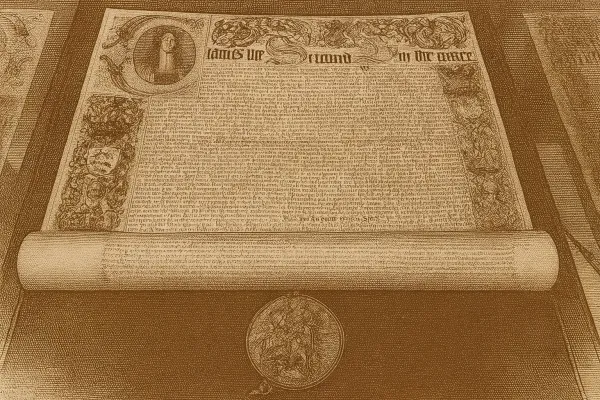
The Hudson's Bay charter, a pivotal document in Canadian history, is set to remain in public hands following an $18-million bid by the Thomson and Weston families. This move ends months of uncertainty surrounding the charter's fate after the Hudson's Bay Company (HBC) sought creditor protection in March due to $1.1 billion in debt. The families' joint bid ensures the charter will be donated to four Canadian institutions: the Archives of Manitoba, the Manitoba Museum, the Canadian Museum of History, and the Royal Ontario Museum.
Historical Significance and Indigenous Impact
Signed by King Charles II in 1670, the charter granted the Hudson's Bay Company a trading monopoly over a vast area of northern Canada, disregarding the rights of Indigenous Peoples. This document is considered foundational to Canadian colonial history, as it used the doctrine of terra nullius to claim lands without Indigenous consent. Historians and Indigenous leaders have emphasized the importance of keeping the charter accessible to the public to acknowledge its role in shaping Canada's colonial past.
Financial Backing and Indigenous Consultation
The Thomson and Weston families' bid includes a $5-million donation to preserve the document and fund consultations with Indigenous communities. This initiative aims to present the charter in a way that acknowledges its historical context and impact on Indigenous Peoples. Raymond Frogner from the National Centre for Truth and Reconciliation supports this approach, highlighting the need for a reset in how Canadians understand and engage with their colonial history.
Public Institutions to Share the Charter
The charter will be housed across four institutions, each offering unique expertise in preserving and presenting the document. Kathleen Epp, keeper of the Hudson's Bay Company Archives, expressed relief that the charter will remain in public hands, ensuring its accessibility to Canadians. The virtual auction, scheduled for Wednesday, is expected to confirm the Thomson/Weston bid, with court approval anticipated on December 11.
Broader Implications for Canadian Society
The public debate over the charter's future has underscored its significance beyond monetary value. Cody Groat, a professor at Western University, noted that the process forced decision-makers to view the charter as a national treasure rather than a corporate asset. The discussions have highlighted the need for Canada to confront its colonial legacy and work towards a society based on respect, equality, and historical truth.
The successful bid by the Thomson and Weston families not only preserves a key piece of Canadian history but also sets a precedent for how historical documents should be handled in the future. By involving Indigenous communities in the process, the initiative aims to foster a more inclusive understanding of Canada's past and its ongoing impact.
Source 1 | Source 2 | Source 3 | Source 4 | Source 5
The coverage of the Hudson's Bay charter acquisition by the Thomson and Weston families was largely consistent across the sources, with all outlets mentioning the $18-million bid and the intention to donate the document to Canadian cultural institutions. However, Yahoo News uniquely highlighted the historical context of the charter's impact on Indigenous Peoples, an angle not emphasized by the others. The Globe and Mail and Winnipeg Free Press both referenced the lack of competing bids and the auction process, with The Globe and Mail providing additional details about the conditions for bidders and the need for court approval. Weekly Voice included a distinctive mention of a $5-million contribution for preservation and Indigenous consultations, adding depth to the families' commitment beyond the purchase itself.