

Based on coverage from The New York Times, Global News, and The Globe and Mail.
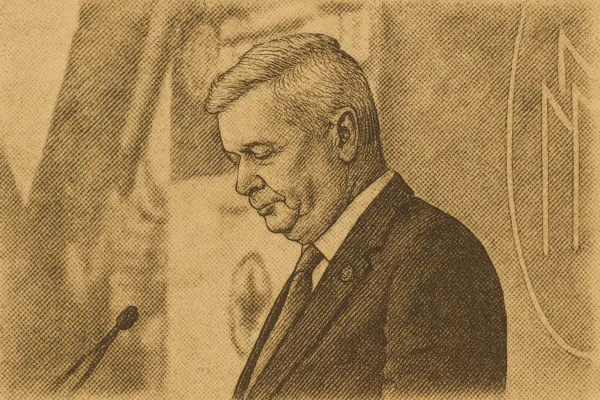
Air Canada CEO Michael Rousseau says he’ll step down, with the airline promising that French fluency will be part of the test for whoever replaces him. The timing is hard to miss: his retirement announcement landed just days after a backlash over an almost entirely English condolence message following a deadly crash involving an Air Canada plane in New York.
The recent resignation of Air Canada CEO Michael Rousseau underscores ongoing tensions surrounding language and identity in Quebec, a topic that has been prominently featured in discussions such as the Quebec leadership debate on immigration and language. As the airline prepares for a leadership transition, these issues remain at the forefront of public discourse.
Rousseau, 68, has led the Montreal-headquartered airline since February 2021. Air Canada says he will retire by the end of the third quarter of 2026, and that he’ll continue to lead the company and sit on the board until then.
Air Canada CEO retirement timeline details
Air Canada’s statement frames the move as the next step in long-running succession planning. The airline says its board has been working for more than two years on an internal development program for “high potential executives.” It also says an external global search began in January 2026 to find additional candidates.
At the same time, the company is clearly signalling that language will matter in the final choice. Air Canada said directors will evaluate CEO candidates on several factors, “including the ability to communicate in French.”
LaGuardia runway crash and pilot deaths
The leadership controversy comes in the shadow of a tragedy. On March 22, an Air Canada Express flight from Montreal collided with an airport fire truck after landing at New York’s LaGuardia Airport. The crash killed both pilots and injured dozens of people, according to the reporting summarized here. One of the pilots killed was from Quebec.
Rousseau recorded a nearly four-minute video condolence message and operational update for the public. In that video, he spoke almost entirely in English, using only brief French words at the beginning and end, including “bonjour” and “merci.”
French language backlash in Quebec and Ottawa
That video touched a nerve, especially in Quebec, where Air Canada’s bilingual obligations are a live political issue as well as a service expectation. Canada has two official languages, and Air Canada is required to offer services in both. Critics argued that even in a crisis, Canadians should hear from the head of the national airline in both English and French.
The reaction was swift. Quebec lawmakers voted unanimously for a motion calling for Rousseau’s resignation. Prime Minister Mark Carney also weighed in, saying he was “very disappointed.” Carney criticized the English-only approach as “a lack of judgment and a lack of compassion,” and stressed that Air Canada has a responsibility to communicate in both official languages “regardless of the situation.”
Rousseau later apologized, saying his language limitations shifted attention away from grieving families and the work of airline employees responding to the emergency.
What Air Canada says about French fluency
Air Canada’s retirement announcement tries to put the focus back on governance: a planned succession process, a formal search, and a defined timeline. Still, the inclusion of French communication skills in the criteria reads like a direct response to the blowback.
The company also emphasized its identity as “Canada’s national airline,” and pointed to its headquarters in Montréal, Québec, language that will resonate differently depending on where you live. In Quebec, it reinforces expectations about French. Outside Quebec, it may read as a reminder that Air Canada operates under national standards, not just market preferences.
What happens next for Air Canada leadership
For now, Rousseau remains in charge until late 2026 while the board works through its candidate list. The immediate question for Canadians is whether the airline can keep public attention on the victims and the safety investigation, while also managing a high-profile leadership change that has turned into a broader argument about what bilingual service and respect should look like in a national institution.
Support Independent Canadian News Analysis
The Canada Report is supported by readers like you. If this article helped you understand what’s happening, you can support our work with a one-time tip.
Support The Canada Report