

Heads up: some of the links in this post are affiliate links. That means if you click and purchase, we may get a commission. It's how we keep this site running without cluttering it with ads.
Finding the best yoga mat in Canada starts with your floor, your joints, and the kind of practice you actually do—not the colour printed on the surface. A thin, grippy mat can make sense for standing flows and a walk to class; a thick foam mat can be far kinder for knees during home Pilates, stretching, and floor work. Those are different jobs, and one mat rarely does both perfectly.
We selected these six options based on published specifications, prices, features, and large volumes of third-party buyer feedback. The list spans slim PVC mats, deeply cushioned NBR exercise mats, and a cork-and-natural-rubber choice with more room for longer bodies and wider movement. Several include a carrying strap, but their bulk differs sharply.
For most Canadian home workouts, the practical questions are simple: Is the basement floor cold or hard? Will the mat live under a bed, travel on transit, or stay rolled beside the sofa? Do you need stable footing for yoga, or padding for knees and elbows? This guide separates those needs so you can buy for your routine rather than pay for features you will not use.
Quick Overview: Our Top Picks
| Product | Best For | Why We Love It | Price |
|---|---|---|---|
| Extra cushioning on a budget | Thick padding, a carrying strap, and a non-slip surface support comfortable home workouts. | $20.99 CAD | |
| Lightweight everyday practice | Lightweight construction, sticky texture, and 6P-free PVC make it practical for regular routines. | $29.47 CAD | |
| More cushioning, still budget-friendly | Extra cushioning and a sticky surface offer comfortable support without making the mat overly heavy. | $30.50 CAD | |
| Maximum joint cushioning | One-inch NBR foam provides substantial cushioning, while the ribbed surface helps maintain stability. | $37.65 CAD | |
| Soft support at home | Soft NBR cushioning suits yoga, Pilates, stretching, and floor exercises, with a convenient carrier strap. | $32.09 CAD | |
| Spending more for grip | Cork grip strengthens with sweat, while the natural rubber base and larger surface add support. | $109.00 CAD |
CAP Thick Exercise Mat
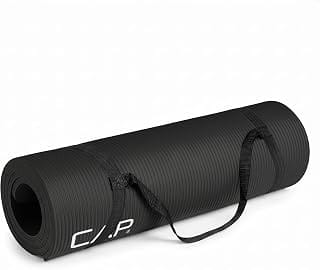
The CAP Barbell mat is the straightforward comfort pick for beginners, home stretchers, and anyone who finds a bare floor hard on the knees. Its 12 mm high-density NBR foam sits well above standard yoga-mat thickness, while the 68-by-24-inch footprint remains familiar and easy to place in a bedroom or living room. A carrying strap is included, and the surface is listed as non-slip and easy to wipe down. Buyers frequently mention the cushioning and practical rolled storage. The honest limitation is precision: a thick foam mat is less likely to satisfy someone who wants a close, firm base for demanding balance work. It is also shorter than the 71- and 72-inch options here. It's best for gentle yoga, mobility work, planks, and floor exercise where affordable padding matters more than a slim studio roll.
Check CAP Thick Exercise Mat on Amazon for current availability.
Pros
- 12 mm NBR foam provides substantial cushioning
- Includes a carrying strap and wipes down easily
- Non-slip surface is designed for home exercise and yoga
Cons
- 68-inch length may be short for taller users
- Thick foam is less ideal for balance-focused flow practice
Gaiam Print Yoga Mat
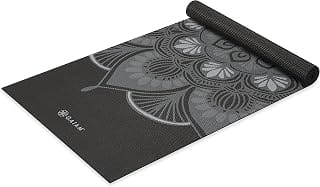
Gaiam’s 4 mm Print Yoga Mat suits the person who wants a light, conventional mat for yoga classes, apartment workouts, or occasional fitness sessions. At 68 by 24 inches and 948 g, it is the compact choice in this group, with a textured sticky PVC surface intended to support traction without adding much bulk. The PVC is listed as 6P free, and a downloadable yoga workout is included. Buyers often like its grip, slim roll, and printed design; some flag that it feels thin, which is exactly the trade-off for easy transport. The manufacturer also recommends airing it out for two to three days after unwrapping because an initial odour may be present. Go with this one if portability is your priority and your joints are comfortable with modest cushioning.
Check Gaiam Print Yoga Mat on Amazon for current availability.
Pros
- Lightweight 4 mm profile is easy to roll and carry
- Textured sticky surface is designed for traction
- Listed as free of six specified phthalates
Cons
- Limited cushioning on hard floors
- May need airing out after unpackaging
Gaiam Premium Print Mat
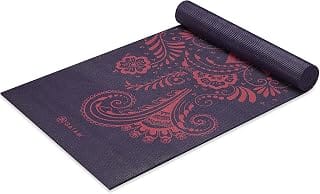
The Gaiam Premium Print Yoga Mat is the better middle-ground Gaiam option for a home yogi who likes a traditional sticky PVC mat but wants more protection than a 4 mm model provides. Its 6 mm thickness offers noticeably more cushioning than the lighter Gaiam Print mat, while the 68-by-24-inch dimensions keep it in familiar yoga-mat territory. The textured surface is designed for grip, and the mat is listed as 6P free. Buyer feedback often praises the comfortable feel, attractive print, and easy-cleaning nature; a few reviews mention initial odour or some slipperiness. Printed surfaces can also be a cosmetic compromise if appearance is your main reason for choosing it. Choose this one for regular home yoga and floor routines when you want balanced cushioning rather than deep foam padding.
Check Gaiam Premium Print Mat on Amazon for current availability.
Pros
- 6 mm thickness offers a useful cushion-to-stability balance
- Textured sticky PVC surface is intended for yoga traction
- Includes a downloadable yoga workout
Cons
- Initial odour may require airing out
- Some buyers mention mild slipperiness or concern about print wear
ProsourceFit Thick Exercise Mat
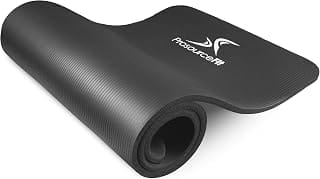
The ProsourceFit extra-thick mat is made for comfort-heavy home fitness, not minimalist studio yoga. Its 25 mm high-density NBR foam is the deepest cushioning among these picks, and the 71-by-24-inch size gives a little more length than a standard mat. It is particularly worth considering for Pilates, stretching, ab work, kneeling mobility exercises, and anyone working on a firm basement or hardwood floor. The mat is described as water-resistant, with a ribbed non-slip design, a carrying sling, and a limited lifetime warranty. Buyers regularly mention the generous padding and that it rolls out easily. That plushness is also the drawback: it creates a bulky roll and may feel too soft for users who want a stable, low-to-the-ground base for challenging standing poses.
Check ProsourceFit Thick Exercise Mat on Amazon for current availability.
Pros
- 25 mm foam offers exceptional joint cushioning
- Water-resistant NBR can be wiped clean and air dried
- Includes a carrying sling and limited lifetime warranty
Cons
- Bulky compared with standard yoga mats
- Deep foam may be too soft for balance-intensive practice
Gaiam Essentials Thick Mat
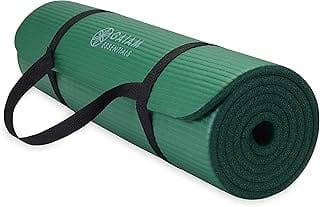
Gaiam Essentials is a sensible all-purpose option for a buyer who wants more room and cushioning than a standard yoga mat without stepping up to the ProsourceFit’s 25 mm thickness. This NBR foam mat measures 72 by 24 inches and is 2/5 inch thick, giving tall users welcome length for stretching, yoga, and floor exercise. It includes an easy-cinch carrier strap and is positioned for use around the house as well as in a studio. Reviewers often mention the soft support, useful length, and convenient storage strap. The key compromise is compression: one buyer notes that knees can sink somewhat during use, a normal concern with softer foam. Choose it for everyday mobility work, gentle yoga, and floor workouts where comfort is more important than a thin, highly responsive surface.
Check Gaiam Essentials Thick Mat on Amazon for current availability.
Pros
- 72-inch length provides more room than standard mats
- Soft NBR foam supports yoga, Pilates, and floor exercise
- Easy-cinch carrying strap is included
Cons
- Foam can compress under knees or feet
- Less compact than thin PVC yoga mats
Satori Concept Cork Mat

The Satori Concept cork mat is for the committed yoga practitioner who wants more space, a natural-material construction, and a surface intended for sweaty sessions. It measures 72 by 26 inches and is 4 mm thick, combining a cork top with a natural-rubber base. That wider-than-standard footprint is useful for broad stances and home workouts where you do not want to work near the edge. The cork surface is designed to become more grippy with sweat, and a carrying strap is included. Buyers often comment on the natural appearance, low smell, and quality, while also noting that it is heavier than a basic mat. Hand-wash-only care is another consideration. It makes the most sense for regular yoga, especially warmer or sweatier practice, rather than for someone who simply needs maximum cushioning for occasional floor exercise.
Check Satori Concept Cork Mat on Amazon for current availability.
Pros
- Cork surface is designed to improve grip with sweat
- 72-by-26-inch format offers extra practice space
- Natural cork and rubber construction with included strap
Cons
- Hand-wash-only care requires more attention
- Heavier and less cushioned than a basic foam exercise mat
Choosing the Right Yoga Mat in Canada
Start by deciding whether you need a yoga mat in the traditional sense or an exercise mat with yoga-friendly dimensions. Traditional mats tend to be thinner, more compact, and better suited to practices where balance, contact with the floor, and secure transitions matter. Thicker NBR foam mats prioritize cushioning for stretching, Pilates, core work, and kneeling exercises, though soft foam can feel less precise in standing balance poses.
Canadian homes make this distinction especially useful. Hardwood, tile, concrete basement floors, and cool garage spaces can make a slim mat feel unforgiving. A thicker option may be the more sensible pick if discomfort stops you from exercising. Conversely, apartment dwellers who put a mat away after every session may prefer a lighter 3 mm or 4 mm model that rolls into a narrow bundle.
Measure the space before ordering. Standard 68-by-24-inch mats suit many people, but a 72-inch length gives taller users more room in savasana and floor exercises. Look beyond star ratings as well. Read recurring buyer comments about grip, smell, compression, rolling flat, and long-term wear. Those details reveal the compromises hidden behind a product photo.
Yoga Mat Thickness, Cushioning, and Joint Support
Thickness is the fastest way to narrow the field. Around 3 mm is a portable, close-to-the-floor choice for yoga practitioners who want a stable base and do not need much padding. At 4 mm to 6 mm, mats offer a middle ground: enough material to soften ordinary hard flooring while remaining manageable for standing work. Thick foam mats in the 10 mm to 25 mm range are made for comfort first.
Sensitive knees, wrists, hips, and elbows often benefit from extra cushioning, particularly for low lunges, tabletop work, sit-ups, and restorative movement. The trade-off is compression. A very plush mat may allow knees or feet to sink, which some people dislike in balance postures. It also creates a larger roll for storage.
The floor beneath you matters as much as the number on the listing. A 6 mm mat may be ample on carpet or a rug but insufficient on tile. If your practice combines vinyasa with longer kneeling stretches, a medium-thickness mat plus a folded towel or knee pad can be a more versatile answer than buying the thickest model available. For home fitness that is mostly floor work, thick NBR foam is often the clear fit.
Material Types: Natural Rubber, PVC, TPE, and More
Material affects grip, feel, care, scent, and the mat’s intended use. PVC remains common in affordable yoga mats because it can be made with a textured, sticky surface and rolled compactly. The Gaiam PVC options here are listed as 6P free, meaning they are free from six specified phthalates. New PVC mats may still have an unpackaging odour, and airing them out for a few days is a sensible first step when the manufacturer recommends it.
NBR, or nitrile butadiene rubber foam, is the cushioning specialist in this group. It is used in the CAP, ProsourceFit, and Gaiam Essentials mats. These products are better thought of as padded exercise surfaces than ultra-thin studio mats. Their comfort is useful on hard household floors, while their soft structure can be less appealing for people who demand a very firm platform.
Cork paired with natural rubber offers a different approach. Cork has a natural texture and is marketed for sweat-responsive traction, while a rubber base helps keep the mat grounded. It also tends to cost more and can weigh more than a slim PVC mat. TPE is not represented among these picks, but it is another material shoppers will encounter; always verify the exact material rather than assuming every “eco” label means the same thing.
Grip and Traction: Staying Stable During Practice
Grip has two parts: traction between the mat and the floor, and traction between your hands or feet and the top surface. A mat can stay put on hardwood yet still feel slick under sweaty palms. Check product descriptions for textured surfaces, ribbing, sticky finishes, or cork construction, then use buyer feedback to identify patterns rather than relying on a single review.
Textured PVC is a practical choice for dry to moderately sweaty yoga. It is intended to provide a tacky contact surface and is generally easier to roll and transport than thick foam. Some buyers of printed PVC mats mention a break-in period, initial slipperiness, or a chemical smell that improves after airing out. Those are manageable compromises, but they are worth knowing before a first hot-room session.
For very sweaty practice, the cork-and-rubber model is the more purpose-built option in this selection: its cork surface is designed to gain grip with moisture. Thick NBR mats use non-slip or ribbed surfaces and can work well for general exercise, but their main advantage is padding, not the locked-in feel many dedicated vinyasa practitioners want. Keep the mat and the floor beneath it clean. Dust, lotion, and moisture can defeat even a textured surface.
Size, Weight, and Portability for Home or Studio
The familiar 68-by-24-inch yoga-mat format is compact and works for many routines, but it is not generous. Taller people may find their head or heels nearing the edges during floor poses. A 71- or 72-inch mat offers a more comfortable margin, while a 26-inch-wide mat provides welcome room for hands and feet during home strength and mobility sessions.
Portability involves more than listed weight. Thickness changes the diameter of the rolled mat, which matters in a small condo closet (if you're kitting out a small space, see our quiet apartment workout equipment picks), a gym locker, or on a packed bus. A 3 mm PVC mat is the logical option for frequent studio trips. A 25 mm foam mat can be carried with its strap, but it is a home-workout item first because of its bulk.
A strap is genuinely useful for keeping a roll closed and carrying it hands-free, and every foam option in this guide includes one. It should not be mistaken for a full protective case. If the mat will be stored in a damp basement or transported through slushy weather, let it dry thoroughly before rolling it up and consider a bag that protects it from grit. For a mat that stays at home, added length and cushioning can be more valuable than minimal weight.
Cleaning, Care, and Odour Management
Care instructions should match the material. NBR foam mats are relatively straightforward: the ProsourceFit model is described as water-resistant and can be wiped with a wet cloth or sponge, then air dried. The CAP mat is also listed as easy to wipe down. Avoid storing any foam mat while damp, since trapped moisture and odour are more likely when it is rolled tightly.
PVC mats generally benefit from a gentle wipe and full air drying. New-mat odour is a recurring consideration with the two Gaiam PVC choices; the manufacturer advises unrolling and airing them out for two to three days. Place the mat in a well-ventilated room rather than trying to mask the smell with heavily scented sprays.
The cork-and-rubber mat has hand-wash-only care listed, so it deserves a gentler routine than a wipe-clean foam mat. Follow the maker’s instructions and avoid treating natural materials like indestructible gym flooring. Across all materials, clean after sweaty sessions, let both sides dry flat when possible, and keep the mat away from prolonged direct heat. Canadian winter heating can dry indoor air quickly, but a closed closet is still a poor place for a damp roll.
Durability and Warranty: What to Look For
Durability is not just a question of material thickness. Look for the type of wear your routine creates. Repeated pivots and sweaty standing practice can challenge a printed surface. Regular kneeling and bodyweight work can compress soft foam. A mat used only for gentle stretching will usually face far less stress than one used for daily burpees, planks, and lunges.
Buyer feedback can be useful when it describes use over months or years, but treat it as individual experience rather than a guarantee. The Gaiam Premium Print mat has reviews that mention continued regular use and easy cleaning, while some reviewers of printed mats wonder whether designs may eventually rub off. Thick NBR models receive frequent praise for cushioning, though softness itself is a trade-off if you dislike noticeable compression.
Warranty coverage is one concrete signal, but it varies. The ProsourceFit extra-thick mat includes a limited lifetime warranty. Other products in this guide don't list comparable warranty coverage on their Amazon.ca listings, so don't assume you get the same protection. Keep proof of purchase, inspect the surface and edges early, and use the mat on a clean floor. Grit trapped below a mat can cause premature wear regardless of brand.
Best Yoga Mat Options by Practice Type
For gentle yoga, stretching, Pilates, and floor-based home workouts, extra cushioning has real value. The ProsourceFit offers the deepest padding here at 25 mm, while the CAP and Gaiam Essentials are also comfort-led NBR choices. They make particular sense for people exercising on hard floors or looking to reduce pressure at the knees and elbows.
For general yoga where portability and a closer connection to the floor matter, the two Gaiam PVC mats are stronger fits. Choose the 4 mm Print Yoga Mat for a slimmer, lighter roll and the 6 mm Premium Print Yoga Mat for more cushioning. Both use a sticky textured finish intended for traction, though the thicker one better suits people who find thin mats unforgiving.
For sweatier sessions and people wanting a larger practice area, the Satori Concept cork mat is the distinctive pick. Its 72-by-26-inch dimensions exceed the standard footprint, and its cork surface is designed to become more grippy with sweat. Its premium positioning and hand-wash-only care make it less casual than the foam choices. Buy according to the dominant activity, not the occasional one: a thick exercise mat is not automatically the best mat for fast standing flows.
Budget vs Premium: How to Get the Best Value
The lowest-priced mat is not always the best value, but a modest budget can still buy a useful home-workout surface. Affordable PVC mats make sense when portability, basic traction, and a slim roll are the priority. They are also a practical entry point for someone trying yoga classes before committing to a specialized material.
Spend more when the added feature solves a real problem. Extra-thick NBR foam can be worth it for chronic discomfort on hard floors. Extra length and width may matter more than another decorative pattern for tall users. A cork-and-natural-rubber construction can justify a higher spend for people who specifically want a sweat-oriented surface and natural-material combination.
Do not pay for thickness you cannot store or carry. A 25 mm mat may be excellent beside a home workout area and annoying for studio travel. Similarly, a 3 mm mat can offer good value for someone who wants a lightweight class mat but poor value for someone whose knees hurt on tile. Consider how often you will use it, where it will live, and whether a strap is enough for your transport needs. Those answers usually point to the sensible price tier.
Where to Buy Yoga Mats in Canada
Beyond Amazon.ca, you'll find yoga mats at Canadian Tire, Sport Chek, MEC, Decathlon and Walmart Canada, plus Vancouver-born Lululemon if you're shopping at the premium end. Online shopping offers a broad selection and access to buyer feedback, but read the dimensions carefully because photos can make a 24-inch-wide mat look larger than it is. Confirm the exact thickness as well; product families may include several variants.
When buying online, check the return policy before opening or using the mat, especially if odour, thickness, or portability is a concern. Inspect the listing for what is included. A carrying strap is useful, but not every mat comes with one. If a mat needs airing out, make space to do that before your first practice.
Buying locally lets you assess the rolled size and, at some stores, compare materials directly. Stock can be inconsistent, particularly for specific colours and printed designs. For Canadian shoppers, delivery timing also matters in winter: avoid leaving a package outdoors for long periods if possible, and give a tightly rolled mat time to lie flat indoors after arrival. Choose a seller with clear support and return information rather than chasing a small discount on a product that does not suit your routine.
Frequently Asked Questions
Is a thicker mat worth choosing for sensitive joints?
Usually, yes. Extra thickness can reduce pressure on knees, wrists, hips, elbows, and the spine during floor work, especially on tile, hardwood, or concrete. The compromise is that very soft foam can compress under feet and knees, making balance-focused yoga feel less stable. For mainly Pilates, stretching, and kneeling exercises, a thick NBR mat is a sensible choice. For frequent standing flows, a 4 mm to 6 mm mat may provide a better balance.
Should I choose a lightweight mat or extra cushioning?
Choose lightweight if you regularly carry the mat to classes, commute with it, or need it to fit into limited storage. A slim 3 mm PVC mat rolls more compactly than thick foam. Choose extra cushioning if the mat will primarily stay at home and hard floors make floor exercise uncomfortable. A carrying strap helps, but it does not make a thick 10 mm to 25 mm mat as convenient as a thin studio mat.
Is cork or textured PVC better for sweaty practice?
Cork is the more targeted choice for sweaty practice in this group because its surface is designed to gain grip as moisture increases. Textured PVC is a practical option for dry or moderately sweaty sessions and is typically lighter and easier to transport. Some PVC mats may need airing out when new and can feel different during an initial break-in period. Pick cork for sweat-responsive traction; pick textured PVC for a compact, conventional yoga mat.
Which mat size offers enough room for home workouts?
A 68-by-24-inch mat works for many people and fits smaller spaces well. Taller users, people doing floor exercises, and anyone who dislikes working close to the edges should consider 71- or 72-inch lengths. A 26-inch width also gives more lateral room than the standard 24 inches. Before ordering, mark out the dimensions on your floor with tape or a towel to see how the mat fits your available workout space.
Which yoga mats include straps for carrying and storage?
The CAP Barbell mat, ProsourceFit extra-thick mat, Gaiam Essentials thick mat, and Satori Concept cork mat are listed with carrying straps. A strap keeps a rolled mat together and makes it easier to carry, but thick mats still take up considerably more room than slim PVC models. The two Gaiam printed PVC mats in this guide list a downloadable yoga class, not a carrying strap.