

Heads up: some of the links in this post are affiliate links. That means if you click and purchase, we may get a commission. It’s how we keep this site running without cluttering it with ads.
Slush has a special way of finding the one gap in your boot—usually right when you hop off the TTC at Bloor-Yonge and land in that grey, salty soup that Ontario sidewalks become by February. If you’ve got wide feet, the problem doubles: cram your toes into a “standard” winter boot and you’ll feel the pinch within a block; size up and your heel starts swimming, your socks bunch, and suddenly you’re sliding on ice like you’re auditioning for the Leafs. In real Canadian winter, comfort isn’t a luxury—it’s circulation, warmth, and staying upright.
Wide-fit winter boots matter more than most guys realize because winter changes your feet. Thick socks take up space, cold can make pressure points feel sharper, and long days can bring a bit of swelling—especially if you’re commuting, standing at a rink, or walking the dog twice a day. (A basic fit check: you want roughly a thumb’s width—about 1 to 1.5 cm—of toe room in front, even with winter socks on.) And speaking of socks, pairing the right boot with the right layer is half the battle—our best winter-boot socks guide breaks down warm, dry options that won’t crowd your forefoot.
Then there’s the regional reality check. In Vancouver, it’s that wet cold—constant rain, puddles, and freeze-thaw slush that sneaks through seams. Out on the Prairies, the windchill can hit -30°C to -40°C, and waiting 10 minutes for a bus in Winnipeg feels like an endurance sport. Meanwhile, Ontario throws everything at you in one day: snowbanks in the morning, slush by lunch, and polished ice at the crosswalk by dinner. Head to the BC mountains near Banff/Kicking Horse, and traction becomes non-negotiable on packed snow.
This guide cuts through the marketing and zeroes in on what actually works: the best winter boots for wide feet — from office-friendly commuter pairs to deep-snow tanks. (For our full roundup across all fits, see our best winter boots for Canada guide.)
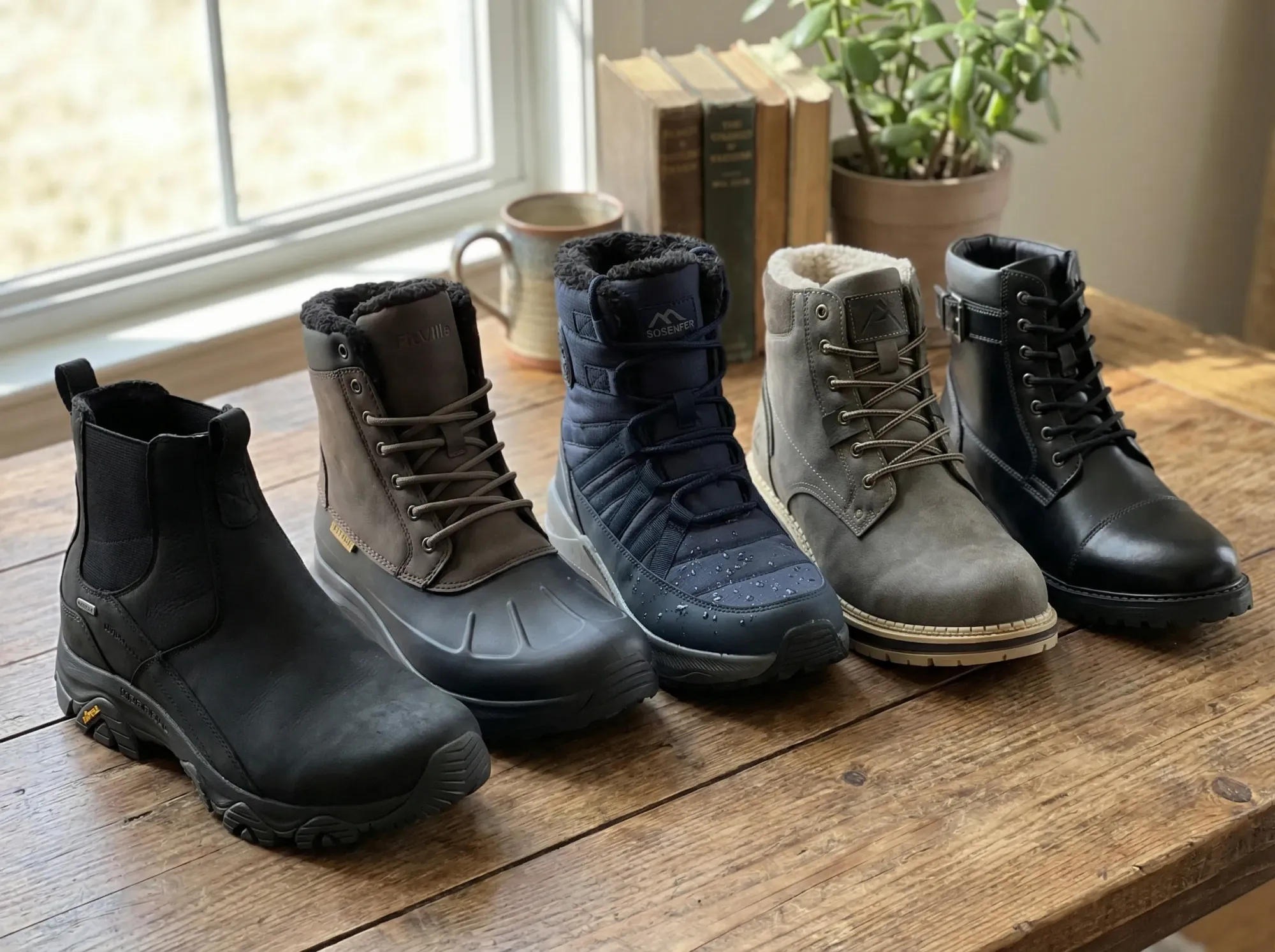
Quick Overview: Our Top Picks
| Product | Best For | Why We Love It | Price |
|---|---|---|---|
| Premium waterproof commuters | Premium leather and breathable waterproofing keep wide feet dry on slushy commutes. | $160.99 | |
| Ski trips and travel | Plush fur warmth and rugged build handle snowy getaways without freezing your toes. | $78.99 | |
| Extra-wide toe box comfort | Roomy toe box plus -25°C insulation delivers cozy, pressure-free winter wear. | $48.99 | |
| Rain-to-snow wet conditions | Waterproof protection and Sherpa lining stay warm, even when sidewalks turn to slush. | $68.79 | |
| Cold-weather city style | Warm fur lining and sleek combat look upgrade winter outfits without sacrificing comfort. | $51.19 |
Merrell Men's Moab Adventure 3 Chelsea Polar Wp Winter Boot, Black, 11 W US
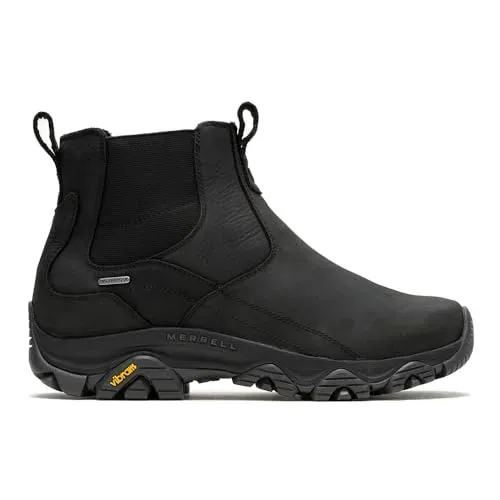
If you want mens boots that don’t fight your forefoot, the Moab Adventure 3 Chelsea Polar WP is a strong premium pick for winter boots for wide feet. It uses a waterproof membrane to seal out slush while still letting moisture escape, paired with a waterproof full-grain leather upper that feels sturdier than most pull-ons. The double stretch gore makes them genuinely easy to slip on at the door—handy when you’re heading out for errands or walking the dog in wet Canadian winter conditions. Underfoot, the Vibram TC5+ outsole with 5 mm lugs gives confident grip on packed snow and icy sidewalks. They’re not ultralight (about 490 g per half pair), but the trade-off is a more supportive, trail-capable feel for wide feet.
Pros
- Wide fit option suits many wide feet comfortably
- Waterproof leather and membrane handle slush and puddles
- Vibram outsole grips well on winter sidewalks
Cons
- Chelsea style can feel less locked-in than lace-up boots
FitVille Men's Winter Boots Wide Snow Boot Waterproof Insulated Duck Boots Slip Resistance Warm Fur Liner High-top Shoes Winter Shoes For Men Outdoor Hiking Shoes Mid Calf Boot - V10
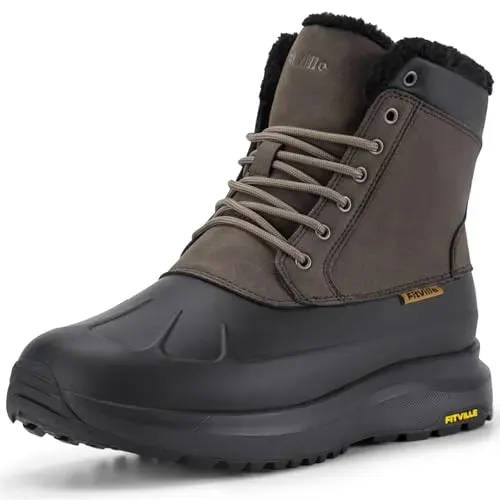
If you’re hunting for winter boots for wide feet that don’t squeeze your toes by January, the FitVille V10 is a practical pick. It’s a mid-calf, duck-boot style mens boots option with a roomy wide toe box and reinforced toe cap—handy when you’re kicking through crusty snowbanks or banging into ice at the curb. Inside, the plush fur liner adds serious insulation for deep-winter cold (FitVille positions it for about -30°C to -40°C conditions), while the cushioned footbed keeps things comfortable for longer walks. The shell is designed to be waterproof for slush and wet sidewalks, and the slip-resistant outsole gives extra grip on packed snow. Just keep snow below the boot top to avoid seepage.
Pros
- Wide toe box prevents cramping for wide feet
- Warm fur lining for harsh Canadian cold
- Slip-resistant outsole grips snowy, icy sidewalks
Cons
- Waterproofing can fail if snow goes over the top
Sosenfer Mens Extra Wide Winter Boots Waterproof Insulated Snow Boots – Warm Fur Lined Cold Weather Boots with Wide Toe Box, Anti-Slip Outdoor Winter Shoes for Men Canada
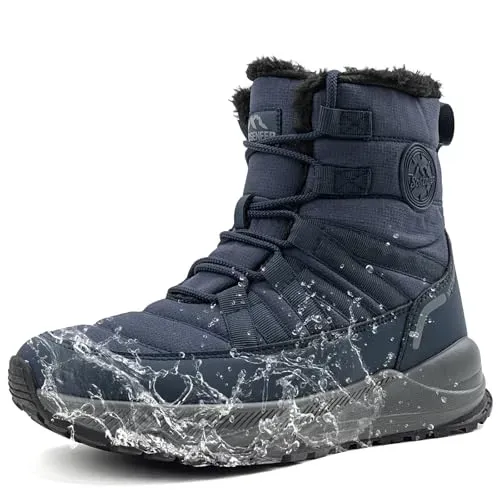
If you’re hunting for winter boots for wide feet on a tight budget, these Sosenfer mens boots focus on the basics: space, warmth, and traction. The standout is the wide toe box and wide width fit, which helps reduce toe pinch for men with wide feet—handy if you wear thicker wool socks. Up top, the waterproof leather/oxford-style upper and seam-sealed build aim to keep slush and wet snow from soaking through, while the fur-lined interior adds softness and insulation. The brand claims warmth to about -25°C, which suits most Canadian cold snaps, though it’s marketed for extreme cold conditions. A high-top profile adds ankle support, and the deep-tread rubber outsole is designed for grip on icy sidewalks.
Pros
- Wide toe box feels roomier for extra wide feet
- Waterproof upper helps in slush and wet snow
- Deep tread outsole improves traction on ice
Cons
- Temperature claims may be optimistic for -40°C
CC-Los Men's Winter Snow Boots with Sherpa Fleece Lining Waterproof Slip-Resistant Insulated Grey Size 11.5 Wide
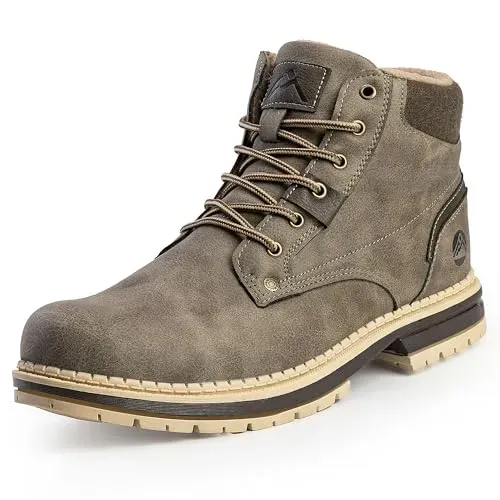
If you’re shopping for winter boots for wide feet on a budget, these CC-Los snow boots are aimed at classic Canadian slush-and-snow days. The Sherpa fleece lining gives that soft, warm “slippers inside” feel, while the insulated build is meant to keep your toes comfortable during everyday errands and neighbourhood walks. The upper is reinforced with firm stitching to help prevent cracking where cheaper mens boots often fail first. Underfoot, the rubber+TPR outsole balances grip and flexibility, which is handy on wet sidewalks and packed snow. There’s no stated temperature rating or shaft height, so I’d treat them as general winter-use boots rather than extreme-cold gear—but for $68.79, the comfort-for-cost is the main draw for wide feet.
Pros
- Sherpa fleece lining feels warm and cosy quickly
- Rubber+TPR outsole offers traction on wet pavement
- Reinforced stitching helps the upper hold its shape
Cons
- No temperature rating or waterproof spec details listed
Bruno Marc Men's Motorcycle Combat Oxford Boot Fur Lining Warm Zipper Boots,Size 10,Black,ENGLE-05
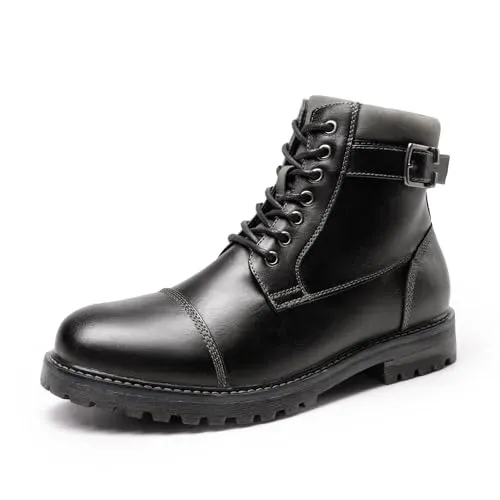
These Bruno Marc ENGLE-05 boots are a budget-friendly pick for Canadian winters when you want warmth without a bulky snow-boot look. They’re built with premium synthetic leather (nice gloss, smooth feel) and a well-made fur lining that adds cozy insulation for everyday errands, commuting, and cold sidewalks. The lace-up front lets you fine-tune the fit—handy for mens boots that need to accommodate wide feet—while the side zipper makes them quick to get on and off. Underfoot, a cushioning insole helps with all-day walking, and the durable TPR outsole gives reliable traction on packed snow and slushy pavement. There’s no official temperature rating or waterproof spec listed, so think general winter use rather than deep-freeze, deep-snow adventures.
Pros
- Fur lining adds noticeable warmth for daily winter wear
- Lace-up plus zipper makes fit and entry easy
- TPR outsole offers dependable grip on slick sidewalks
Cons
- No stated waterproofing or temperature rating for extreme cold
Insulated winter boots vs winter hikers: Which Do You Need?
If you’re shopping for winter boots for wide feet, the closest alternative is a pair of “winter hikers” (lighter, more flexible hikers with some insulation). Traditional insulated mens boots with wide widths (or roomy toe boxes) are built for standing around, shovelling, and long commutes in real cold—think Prairie mornings at -25°C to -35°C, or damp -5°C slush in Southern Ontario. They typically offer more insulation, taller shafts for snowbanks, and thicker rubber outsoles that stay grippy on icy sidewalks. The downside: they’re heavier, can feel clunky for long walks, and often cost more.
Winter hikers make sense if you walk a lot, travel, or want something that feels closer to a running shoe. They’re usually easier to break in and less tiring, but their insulation and waterproofing can be less forgiving in deep snow or when you’re stationary (waiting for the bus, coaching, tailgating). If you run warm and stay moving in coastal B.C. or in-city Montreal, a winter hiker can be enough; for prolonged cold, deeper snow, or wide feet that need stable support, insulated boots win.
Budget vs Premium: What's the Difference?
In Canada, budget wide-fit winter boots commonly land around $80–$150 CAD, while premium pairs are often $200–$350+ CAD. Spending more usually gets you better waterproof construction (sealed seams, higher-quality membranes), warmer and more consistent insulation, and outsoles that grip better on packed snow and freeze-thaw ice—useful in Ottawa, Calgary, and the Maritimes where conditions change daily. Premium models also tend to have sturdier eyelets, better heel hold for wide feet, and removable liners or insoles that dry faster (a big deal if you’re out daily).
Budget options can be perfectly fine for short errands, mild winters (coastal B.C.), or if you drive everywhere and only spend brief periods outdoors. Where they fall short is durability and comfort: cheaper rubber can crack sooner, insulation packs down, and wide feet may feel squeezed once thick socks are added. Premium boots often last multiple seasons with better warranties and fewer mid-winter replacements—lower total cost of ownership if you’re hard on footwear or regularly face -20°C and below.
How to Choose the Best Winter Boots for Men with Wide Feet for Canadian Conditions
Shopping for winter boots for wide feet in Canada is a bit different than grabbing any pair of mens boots off the shelf. You’re balancing warmth, traction, and weather protection—while also making sure the toe box and midfoot don’t pinch once you add thick socks. Think about where you’ll actually wear them: slushy sidewalks in Vancouver, deep cold in Winnipeg, freezing rain in Halifax, or packed snow in the GTA. The best choice keeps your feet warm around -20°C (or lower), stays dry in wet snow, and fits comfortably in wider widths without hot spots.
Key Features to Look For
Wide Fit Options and Toe Box Shape
For wide feet, the most important “feature” is a boot that’s built on a wider last—not just a standard boot sized up. Look for brands offering true wide widths (often labelled 2E/EE or 3E/EEE) and pay attention to toe box shape: a rounded or anatomical toe gives your toes room to splay, which helps warmth and comfort on long walks. If you’re in Alberta or Saskatchewan where cold snaps can hit -30°C, cramped toes get cold faster. Try boots on later in the day (feet swell) and with the socks you’ll actually wear to avoid buying a boot that only fits in theory.
Insulation and Temperature Range (Realistic for Your Region)
Canada’s winter is not one-size-fits-all, so match insulation to your climate and activity level. For urban commuting in Southern Ontario or coastal B.C., moderate insulation is often enough, especially if you’re moving. For Prairie winters or northern Ontario, look for heavier insulation and designs built for sustained cold. Many boots cite temperature “ratings,” but treat them as a guideline—your circulation, socks, and fit matter more. As a practical range, aim for comfort around -10°C to -20°C for city use, and closer to -30°C if you’ll be outdoors for long periods (ice fishing, outdoor work, long waits at the bus stop).
Waterproofing and Slush Management
In much of Canada, winter is as wet as it is cold. In places like Vancouver, Victoria, Halifax, or Montréal during freeze-thaw cycles, slush and puddles can soak a boot quickly. Prioritize true waterproof construction (sealed seams and a waterproof membrane) over “water-resistant” labels. A tall rubber lower (or full rubber shell) is excellent for deep slush, while a gusseted tongue prevents meltwater from sneaking in at the laces. Also consider how easy the lining is to dry—removable liners are great for cottage weekends, snowstorms, or anyone who’s out daily.
Traction and Outsole Design for Ice
Traction is where good mens boots earn their keep—especially on black ice in the GTA, icy sidewalks in Ottawa, or wind-polished surfaces in the Prairies. Look for deep lugs that shed snow, plus a rubber compound designed to stay grippy in the cold (some soles get harder and slicker as temperatures drop). Wider-foot boots should also feel stable: a broader outsole platform and a supportive heel help prevent ankle rolls on rutted sidewalks. If you regularly walk on glare ice, consider models that accept ice cleats easily or include built-in traction systems for extra confidence.
Support, Cushioning, and Room for Winter Socks
A comfortable wide-fit boot isn’t just about width—it’s about how the boot supports your foot over long days. Look for a supportive midsole (EVA or PU), a firm heel counter, and enough underfoot cushioning for concrete sidewalks and long commutes. Removable insoles are a bonus because you can swap in an orthotic or a higher-volume insole to fine-tune fit. Make sure there’s still circulation room with a thicker merino or wool-blend sock; if the boot feels tight across the instep or forefoot, you’ll lose warmth quickly. This matters most in colder regions like Manitoba and northern Québec, where you’ll feel every compromise.
Related: Best Winter Boots for Canada: Stay Warm and Dry This Winter
Frequently Asked Questions
Q: How do I know if I’m choosing the right winter boots for wide feet?
Start by matching both width and toe-box shape to your foot. If you regularly feel pressure at the pinky toe or get numbness after 10–15 minutes, prioritize true wide sizing and a roomy forefoot. Options like the FitVille Men's Winter Boots Wide Snow Boot (V10) and the Sosenfer Mens Extra Wide Winter Boots (wide toe box) are designed for wide feet, which can help if standard “wide” still feels tight. For men who want a simpler slip-on fit, the Merrell Men's Moab Adventure 3 Chelsea Polar Wp (in 11 W US) can work well, but check that the instep isn’t too snug for high-volume feet. In Canada, plan sock thickness into sizing: if you wear a medium merino sock in Ontario or the Prairies, you may need a bit more interior volume than you’d use in shoulder seasons.
Q: What winter boot specs should I prioritize for Canadian conditions (traction, insulation, waterproofing)?
For Canadian winter, prioritize three things: waterproofing for slush, insulation for prolonged cold, and outsole grip for freeze–thaw ice. In coastal BC and southern Ontario, slush and wet sidewalks are constant, so waterproof builds like the Merrell Moab Adventure 3 Chelsea Polar Wp and the waterproof FitVille V10 help keep feet dry on rainy-snowy commutes. For colder prairie cold snaps (often below -20°C), insulated designs with warm linings such as the Sosenfer (warm fur lined) or CC-Los Men's Winter Snow Boots (sherpa fleece lining) can feel more comfortable for long outdoor time. For traction, look for deeper lugs and slip-resistant outsoles—especially if you’re walking on packed snow and polished ice in Calgary, Winnipeg, or Ottawa. If your day includes lots of indoor stops, consider boots that are warm without overheating; a mid-calf insulated boot can be great outdoors but may run warmer inside.
Q: What works best for BC vs Prairie vs Ontario vs Atlantic climates?
BC’s Lower Mainland often means wet cold (0°C to 5°C) and heavy slush, so waterproofing and quick on/off for errands matter. The Merrell Men's Moab Adventure 3 Chelsea Polar Wp is a practical pick for wet sidewalks and short commutes, while the FitVille V10 adds a taller, more protective profile for deeper puddles and slushy parking lots. The Prairies bring sustained cold and wind, so insulation and coverage matter more—boots like the Sosenfer Mens Extra Wide Winter Boots (insulated, warm fur lined, wide toe box) or CC-Los Men's Winter Snow Boots (sherpa fleece lining) can be more comfortable when temperatures drop well below -15°C. Ontario swings between wet slush and cold snaps, so waterproof + good traction is key; the FitVille V10 is a strong “all-round” style for mixed conditions. Atlantic Canada often adds freezing rain and coastal dampness, so prioritize waterproofing and slip resistance—CC-Los and FitVille are worth considering for their waterproof and traction-focused design.
Q: Do I need different mens boots for coastal vs prairie conditions?
Often, yes—because coastal winter is mostly wet, while prairie winter is mostly cold and dry with wind-chill. Coastal conditions (Vancouver Island, Halifax waterfront) punish non-waterproof materials: slush and puddles soak boots quickly, then your feet feel cold even at -2°C. Waterproof options like the Merrell Moab Adventure 3 Chelsea Polar Wp or the waterproof FitVille V10 help prevent that “wet chill” during long walks on salted sidewalks. Prairie conditions (Regina, Saskatoon, Edmonton) demand more insulation and coverage for extended outdoor time; insulated, fur- or sherpa-lined styles like the Sosenfer Extra Wide or CC-Los Sherpa Fleece boots can be more comfortable for long dog walks or waiting for transit at -20°C. If you’re travelling between regions, choose based on the worst-case scenario: wet slush needs waterproofing first, while deep cold needs insulation and wind-blocking coverage. Many men keep one slush boot and one deep-cold boot for wide feet comfort.
Q: FitVille V10 vs Sosenfer Extra Wide: which is better for wide feet and warmth?
If your main issue is forefoot crowding, the Sosenfer Mens Extra Wide Winter Boots stand out because they specifically note a wide toe box, which can reduce rubbing on the little toe and help prevent blisters on long walks. If you need a wide-focused fit plus a higher boot profile for snowbanks and slush, the FitVille Men's Winter Boots Wide Snow Boot (V10) is built as a wide snow boot and mid-calf style, which can help keep snow out when you’re shoveling in Ottawa or walking through plowed piles in Winnipeg. For warmth, both lean toward insulated comfort, but your warmth depends on keeping moisture out and maintaining circulation—boots that are too tight can feel colder even if insulated. If you’re between sizes, wide feet often do better with enough toe room to wiggle. If your winter is mostly wet-snow and slush, prioritize waterproofing and height; if it’s mostly cold and you need space up front, prioritize the wide toe box feel.
Q: Merrell Chelsea winter boot vs taller snow boots: what’s the difference in real use?
A Chelsea-style winter boot like the Merrell Men's Moab Adventure 3 Chelsea Polar Wp is typically quicker to put on and take off—useful for condo life, school drop-offs, and office commutes in Toronto or Vancouver where you’re going indoors often. The trade-off is coverage: a Chelsea cut usually sits lower than a mid-calf snow boot, so it can be easier for snow to fall in when stepping through deeper drifts or snowbanks. Taller options like the FitVille V10 or the CC-Los Men's Winter Snow Boots provide more shaft height, which helps when you’re shoveling a driveway in the Prairies or walking through unplowed sidewalks after a heavy dump. Taller boots can also feel warmer by reducing drafts around the ankle, but they may run warmer indoors. For wide feet, consider how the upper fits around the instep and ankle—slip-on styles can feel snug there, while lace-up or zip styles may offer more adjustability for thickness of socks and swelling.
Q: Can I use winter boots for wide feet with ice cleats or traction aids?
Yes—most men’s winter boots can be paired with stretch-on traction aids, but the boot’s outsole shape and heel profile affect stability. Wider boots like the FitVille V10 or Sosenfer Extra Wide can provide a broader platform, which can make traction aids feel more stable on black ice common in southern Ontario and Atlantic coastal cities. Check that the boot has a defined heel edge so a traction device doesn’t slide forward. Also consider shaft height: mid-calf boots like the FitVille V10 can help keep snow out while you walk, but traction aids still need to sit flat under the sole. If you commute on mixed surfaces—salted sidewalks, wet slush, then indoor tile—choose a boot with solid slip resistance first, such as the CC-Los Men's Winter Snow Boots (slip-resistant) or FitVille V10 (slip resistance), and add traction aids only on icy days. Practical tip: bring a small bag to store traction aids indoors to avoid damaging floors and to keep melted snow contained.
Q: Will these winter boots work with common Canadian setups like heated insoles or thick merino socks?
They can, but sizing and interior volume matter more for wide feet. Thick merino socks (common for -10°C to -25°C days) add bulk; if your toes already touch the front, adding thick socks can reduce circulation and make feet colder. Wide models like the FitVille V10 and Sosenfer Extra Wide often accommodate thicker socks better. Heated insoles add both thickness and a bit of stiffness, so ensure your boot isn’t already tight across the instep—Chelsea styles like the Merrell Moab Adventure 3 Chelsea Polar Wp can feel snug for high insteps once you add an insole. For boots with warm linings, such as the CC-Los (sherpa fleece) or Bruno Marc ENGLE-05 (fur lining), you may not need extra-thick socks for city commutes, especially in milder coastal climates. If you plan to use heated insoles, try them with your intended socks and leave about a thumb’s width of space in front of your longest toe for comfort on downhill steps and icy curb edges.
Q: How do I know what size and width to order for mens boots if my feet swell in winter?
Measure your feet at the end of the day, when they’re slightly swollen—this mirrors real winter use after walking and standing. For wide feet, also measure across the ball of the foot; if you’re consistently cramped, choose boots explicitly offered in wide or extra wide designs. The Merrell Men's Moab Adventure 3 Chelsea Polar Wp is listed in 11 W US, which is useful if you know your true wide size. If you need more room in the toe box, the Sosenfer Extra Wide Winter Boots emphasize a wide toe box, which can help when feet swell in cold weather or after long indoor days. For snow-boot fits like the FitVille V10, plan for a winter sock: try to preserve toe wiggle room and avoid heel lift. A simple at-home check: with your winter sock on, you should be able to slide a finger behind your heel when unlaced (if applicable), then tighten to lock the heel. Too tight across the forefoot means colder feet and faster fatigue.
Q: How do I clean and care for winter boots for wide feet after salt and slush?
Salt and grit are the biggest boot-killers in Canadian cities like Montreal, Ottawa, and Toronto. After a slushy day, wipe boots down the same evening with a damp cloth to remove salt residue—especially along seams and around the outsole edge. For waterproof pairs like the Merrell Moab Adventure 3 Chelsea Polar Wp and FitVille V10, regular wiping helps maintain the waterproof barrier and prevents cracking or stiffness. For lined boots such as the CC-Los (sherpa fleece) and Bruno Marc ENGLE-05 (fur lining), pull out the insole (if removable) and air-dry overnight in a warm, ventilated area—avoid direct heat vents or baseboard heaters, which can warp materials and shrink linings. If the inside gets damp from sweat, alternate pairs when possible to fully dry between wears. Practical Canadian tip: keep a small boot mat by the door to catch meltwater; it reduces re-soaking and helps boots dry faster.
Q: What maintenance do insulated, fur-lined or sherpa-lined winter boots require?
Lined boots feel cozy, but they need consistent drying to prevent odour and matting. For the Sosenfer Extra Wide (warm fur lined), CC-Los (sherpa fleece lining), and Bruno Marc ENGLE-05 (fur lining), focus on moisture management: after heavy use, loosen closures (zip/laces) and open the boot as much as possible to air out. If you’re in the Atlantic or coastal BC where humidity stays high, drying can take longer—plan a full 12–24 hours. Avoid blasting with direct heat; instead, use room-temperature airflow and a boot dryer on low if you already own one. Brush off packed snow and grit before it melts into the lining. If the lining starts to compress, wearing a thinner sock can restore some interior room without squeezing wide feet. Also inspect the outsole for embedded gravel, which reduces traction on ice. Regular care is especially important in Canadian freeze–thaw cycles, where damp boots refreeze and feel stiff the next morning.
Q: How much does it cost to run/use winter boots for wide feet each winter?
Most ongoing “running cost” is care and minor supplies rather than energy use. Budget a small annual amount for cleaning materials (a cloth/brush and gentle cleaner) and, in salt-heavy cities, extra time for wipe-downs. If you add thick socks or replace insoles, that’s the other recurring cost. The bigger cost driver is premature wear from neglect: leaving slush and road salt on waterproof boots like the Merrell Moab Adventure 3 Chelsea Polar Wp or FitVille V10 can shorten their usable life, meaning you pay for replacement sooner. Lined boots like CC-Los or Bruno Marc ENGLE-05 may also need more drying attention to avoid odour buildup; if you end up buying extra insoles or rotating pairs, that increases your seasonal cost. A realistic Canadian approach is to treat boots like winter tires: a little seasonal maintenance prevents early replacement. If you walk daily on salted sidewalks, your “cost to use” rises mainly because outsoles and seams wear faster than for someone who drives everywhere.
Q: Is it worth spending more on premium mens boots for wide feet?
It can be worth it if the boot actually fits your wide feet correctly and matches your winter conditions—fit and waterproofing usually matter more than brand perception. A better-fitting wide option can reduce hotspots and improve warmth because your toes can move and blood circulates. If you do a lot of walking or transit commuting, a waterproof, easy-on option like the Merrell Moab Adventure 3 Chelsea Polar Wp (wide size) can pay off in comfort and convenience during slushy shoulder-season days. If you need extra toe room and insulation for longer outdoor time, a purpose-built wide/extra-wide design like the FitVille V10 or Sosenfer Extra Wide can be “premium” in practical value even if the goal is simply reliable warmth and space. In Canada’s freeze–thaw cycle, traction and water resistance are the features that prevent miserable days, not just aesthetics. If your winter is mostly short car-to-store trips, you may not need to “spend up,” but if you’re outside for 30–60 minutes daily, paying for better fit, insulation, and slip resistance is usually worthwhile.
Q: How long do winter boots for wide feet typically last in Canada?
Lifespan varies with how often you wear them and where you walk. In Canadian cities with heavy salting and lots of wet slush, outsoles and seams can wear faster than in drier, colder prairie conditions. As a general expectation, a frequently worn pair (daily commuting and errands) may show noticeable outsole wear within 1–3 winters, while a pair used mainly for occasional storms may last longer. Waterproof models like the Merrell Moab Adventure 3 Chelsea Polar Wp and FitVille V10 can maintain performance longer if you routinely wipe off salt and let them dry fully. Lined boots such as the CC-Los (sherpa fleece), Sosenfer (fur lined), and Bruno Marc ENGLE-05 (fur lining) can last well structurally, but the lining may compress over time, making them feel less warm even if the outer still looks fine. Wide feet also accelerate wear if the boot is too tight—stress at flex points can lead to cracking. Rotating between two pairs and drying properly typically extends life more than any single “hack.”
Q: When should I replace my winter boots for wide feet?
Replace boots when they stop keeping you safe, dry, or warm—especially in Canadian winter where conditions change quickly. Key signs: water leaks after short exposure to slush, the outsole tread is worn smooth (you slip more on icy sidewalks), or the midsole feels packed down and your feet ache sooner. For lined styles like the CC-Los sherpa fleece or Bruno Marc ENGLE-05 fur lining, replacement may be needed when the lining is matted and you can’t stay warm at temperatures you used to handle (for example, you were fine at -10°C last year but now your feet go cold quickly). For wide feet, also watch for new pressure points: if the boot has stretched unevenly or the toe box has collapsed, you may start getting blisters or numbness. In Ontario and Atlantic freeze–thaw cycles, repeated wetting and drying can crack materials; if you see splitting near flex points, it’s often better to replace before a deep-freeze day. If traction is the issue, replacing sooner is a safety investment.
Final Thoughts: Making the Right Choice for Canadian Conditions
Finding winter boots that actually fit wide feet—and still handle real Canadian weather—comes down to balancing room in the toe box, dependable traction, and insulation that matches where you live. The right pair should feel secure without pinching, whether you’re navigating slush in Southern Ontario or dry, biting cold on the Prairies.
For most men, the Merrell Men’s Moab Adventure 3 Chelsea is the top pick because it blends all-day comfort with practical winter performance in a wide-foot-friendly fit. It’s an especially strong choice for commuters and everyday wear: easy pull-on convenience, supportive underfoot feel, and a build that works well for city sidewalks, packed snow, and quick trips where you still want stable footing.
If you need more dedicated cold-and-snow protection, the FitVille Men’s Winter Boots Wide Snow Boots is worth a close look for its wide sizing focus and winter-ready design—ideal for longer time outdoors, dog walks, or shovelling after a fresh dump. For shoppers who prioritize maximum width and a straightforward, roomy fit, the Sosenfer Mens Extra Wide Winter Boots can be a practical option when comfort and toe space are the top concern.
Before you buy, measure your feet at the end of the day, confirm width options (2E/4E if available), and plan sock thickness so the fit stays warm without becoming tight. Choose tread for ice, not just snow, and test the boot indoors to confirm heel hold and toe wiggle room.
Pick the pair that matches your winter routine, then order your best size and width today so you’re ready before the next cold snap—your feet will thank you all season long.