

Heads up: some of the links in this post are affiliate links. That means if you click and purchase, we may get a commission. It's how we keep this site running without cluttering it with ads.
Finding the best blender in Canada starts with deciding what will actually live in your kitchen. A compact personal model can make more sense for one daily protein shake than a large 2.1 L pitcher, while an immersion blender is often the sensible answer for puréed soups directly in the pot. Canadian shoppers also tend to ask more of a blender during long winters: frozen Okanagan cherries, ice, thick smoothies, a pot of squash soup in a Winnipeg January, sauces and batch cooking all put different demands on the motor, jar and controls.
This curated guide is based on published specifications, listed features, prices, and third-party buyer ratings and feedback. The seven picks cover personal smoothie makers, full-size countertop machines, heated blenders and immersion sets. There is no single right answer. The best choice is the one whose capacity, format and cleaning routine match the meals you make most often.
Quick Overview: Our Top Picks
| Product | Best For | Why We Love It | Price |
|---|---|---|---|
| Everyday smoothies | Compact personal blender with 900W power for ice, frozen fruit, and single servings. | $99.98 | |
| Soups and small batches | Variable-speed control, pan protection, and a blending jar suit everyday kitchen tasks. | $79.98 | |
| Large family batches | Large pitcher, 1100W motor, and included cups handle family drinks and individual smoothies. | $179.99 | |
| One-touch ice crushing | Auto-iQ programs simplify ice crushing, while manual speeds provide control over texture and consistency. | $149.99 | |
| Blended soups | Combines high-speed blending with precision heating, letting you prepare soups directly in the pitcher. | $229.99 | |
| Budget kitchen versatility | Budget-friendly five-piece set offers variable-speed blending, whisking, chopping, and scratch-conscious pot protection. | $59.99 | |
| Flexible everyday prep | Fifteen speeds, turbo boost, and dishwasher-safe attachments provide useful control for smoothies, soups, and more. | $49.99 |
Ninja Nutri Pro Personal Blender
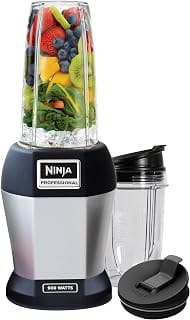
The Nutri Ninja Pro is our pick for the commuter, student or solo smoothie drinker who wants a compact machine rather than a family-size pitcher. Its 900-watt base and Pro Extractor blade assembly are intended for ice, frozen fruit, seeds, skins and stems, while the included 18 oz (532 mL) and 24 oz (710 mL) cups can go straight from blending to a leak-resistant spout lid. Buyers frequently mention smooth protein shakes, including thicker recipes with peanut butter, and appreciate the removable blade assembly for cleanup. The trade-off is clear: this is a single-serve system. It does not replace a large countertop blender for shared batches, soup or sauces. Choose it when a daily smoothie needs to be quick, portable and contained in one cup.
Check Ninja Nutri Pro Personal Blender on Amazon for current availability.
Pros
- 900-watt personal blender designed for ice and frozen fruit
- Includes 18 oz and 24 oz to-go cups with sip-and-seal lids
- Dishwasher-safe cups and removable blade assembly support a simple daily routine
Cons
- Single-serve format is not suited to family-sized batches
- Basic controls offer less flexibility than a full-size blender with multiple speeds
KitchenAid Variable Speed Hand Blender

KitchenAid’s corded hand blender is the sensible choice for cooks who mostly make soup, sauces, hummus or small smoothies and do not want a bulky pitcher on the counter. The removable 8-inch blending arm uses a four-point stainless-steel blade, and its variable-speed trigger gives direct control in a pot or the included 3-cup (710 mL) BPA-free jar. The removable pan guard is a meaningful extra for people using coated cookware. Buyer feedback often praises its straightforward cleanup and suitability for soups. The 180-watt rating tells the honest story about its role: it is a practical immersion tool, not an ice-crushing powerhouse for frozen fruit-heavy drinks. Prefer it for hot, cooked ingredients and everyday small jobs, especially in a compact Canadian kitchen.
Check KitchenAid Variable Speed Hand Blender on Amazon for current availability.
Pros
- 8-inch removable arm and pan guard suit pot blending
- Variable-speed trigger helps control texture and splashing
- Includes a lidded 3-cup BPA-free blending jar
Cons
- Not the best format for large smoothie batches or frequent hard ice
- Fewer attachments than the multi-piece immersion sets
Ninja Professional Blender with Nutri Cups (BL660C)
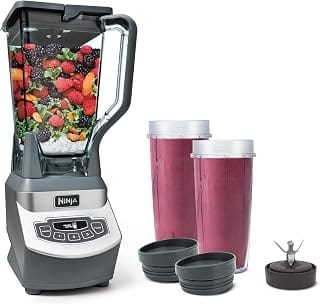
The Ninja BL660C fits a household that wants one countertop blender to cover weekend batches and weekday single servings. Its 1,100-watt base drives a 72 oz (2.1 L) Total Crushing pitcher for larger frozen drinks and smoothies, while two 16 oz (473 mL) Nutri Ninja cups with lids handle personal portions. Three speeds, pulse and a single-serve function keep the controls uncomplicated. Buyers often point to its ability to process frozen berries, ice and thick smoothie ingredients, and several appreciate the roomy pitcher. This is not the smallest appliance: the 72 oz format and multiple blade assemblies require storage space and a more involved cleanup routine than a personal cup model. It is worth preferring over a basic pitcher blender when both family-scale drinks and grab-and-go cups matter in the same kitchen.
Check Ninja Professional Blender with Nutri Cups (BL660C) on Amazon for current availability.
Pros
- 72 oz pitcher supports large smoothie and frozen-drink batches
- Two 16 oz cups add useful single-serve flexibility
- 1,100-watt base with three speeds, pulse and single-serve function
Cons
- Large format takes more counter or cupboard space
- More components to clean than a simple personal blender
Ninja Professional Blender 2.0
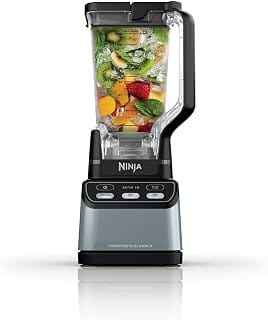
The Ninja Professional Blender 2.0 is for families or frequent hosts who mainly need a large, capable cold blender and do not need extra cup accessories. Its 1,400-watt motor, stacked ice-crushing blades and 72 oz (2.1 L) pitcher are geared toward shakes, frozen drinks and larger smoothie batches; the pitcher has a clearly marked 64 oz (1.9 L) maximum liquid capacity. Low, medium, high and pulse allow manual adjustment, while the Auto-iQ Crush program supplies a timed route for ice-heavy recipes. Buyers commonly describe the controls as simple and the appliance as effective for smoothies and cooking tasks. The compromise is specialization. It does not cook hot soup, and it lacks the personal cups included with the BL660C. Choose it when a full pitcher and a dedicated Crush program are more valuable than an extensive accessory bundle.
Check Ninja Professional Blender 2.0 on Amazon for current availability.
Pros
- 1,400-watt base and stacked blades designed for ice crushing
- 72 oz pitcher with 64 oz maximum liquid capacity marking
- Auto-iQ Crush preset plus low, medium, high and pulse controls
Cons
- No single-serve cups are included
- Cold-blending format cannot cook soups or sauces
Ninja Foodi Cold & Hot Blender
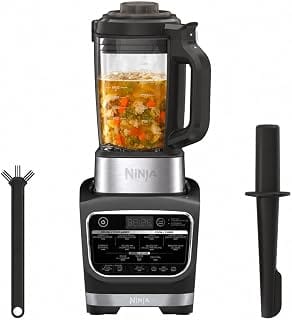
The Ninja Foodi Cold & Hot Blender is the standout choice for someone who wants a blender to participate in dinner, not just breakfast. Its 1,400-watt high-speed crushing system pairs with a precision heating element in a 64 oz (1.9 L) glass pitcher, opening the door to soups, sauces and fondue as well as smoothies and frozen drinks. Buyer feedback repeatedly mentions soup, compote and hot blending, and one reviewer specifically valued the self-cleaning function. That versatility comes with a bigger commitment than a personal blender: it is a premium, multi-function appliance with a glass pitcher to manage, and its extra cooking capability is wasted if you only make shakes. Prefer it for regular homemade soups or sauces where blending and heating in one vessel genuinely simplifies the meal.
Check Ninja Foodi Cold & Hot Blender on Amazon for current availability.
Pros
- Precision heating and high-speed blending support hot and cold recipes
- 64 oz glass pitcher suits soups, sauces, smoothies and fondue
- Buyers frequently mention successful soup preparation and self-cleaning
Cons
- More appliance than needed for simple single-serve smoothies
- Glass pitcher and cooking functions add complexity compared with a basic blender
Turelar Immersion Blender
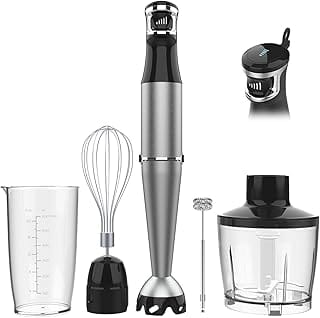
The Turelar 5-in-1 set is aimed at the practical cook who wants an immersion blender with a broader set of kitchen tasks. Its listed 1,100-watt full-copper motor, stepless trigger control and nylon blade guard suit purées, cooked root vegetables, sauces and soups, while detachable accessories expand its role beyond blending. The guard is designed to reduce suction, splashing and scratches on cookware. Buyers often mention strong performance with thick soups and tomato sauce, plus useful trigger-style speed control. There is an important limitation worth taking seriously: the manufacturer says not to use it for frozen fruit or large, hard ice cubes, and warns against extended ice crushing. Buy it for hot meals and accessory versatility, not as a substitute for a countertop frozen-drink blender.
Check Turelar Immersion Blender on Amazon for current availability.
Pros
- 1,100-watt motor with stepless pulse-activated speed control
- Nylon blade guard is intended to reduce splashes and protect cookware
- Detachable accessories support several prep tasks and easier cleaning
Cons
- Manufacturer advises against frozen fruit and hard, large ice cubes
- Multiple attachments require more storage than a basic stick blender
Ganiza Immersion Blender
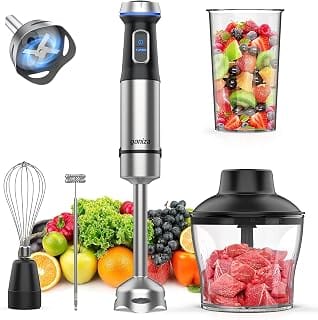
Ganiza’s 5-in-1 immersion blender set makes sense for a budget-minded cook who values attachments as much as the blending arm. The 800-watt unit has 15 speeds, a turbo button and four-leaf 304 stainless-steel blades. It includes an 800 mL mixing beaker, 600 mL chopper, whisk and milk frother, making it useful for soups, hummus, whipped mixtures and small chopping jobs. Buyers frequently praise the chopper, variable speeds and easy-to-clean detachable pieces; several also report good smoothie results. The compromise is that this remains an immersion format with accessory storage, not a large-capacity family blender. Its motor body must not be immersed in water, so cleanup still requires a little care. Prefer it when one compact kit needs to cover sauces, dips and light prep work alongside blending.
Check Ganiza Immersion Blender on Amazon for current availability.
Pros
- 15 speed settings and turbo boost provide broad control
- Includes 800 mL beaker, 600 mL chopper, whisk and milk frother
- Detachable stainless-steel blending, whisking and frothing parts are dishwasher safe
Cons
- Accessories need storage and add setup compared with a basic hand blender
- Motor body cannot be immersed in water
What to Look for in the Best Blender in Canada
Start with format, then power. A personal blender is built around single drinks and a quick exit out the door; a countertop blender earns its counter space when several people need smoothies, frozen drinks or sauces at once. An immersion blender solves a different problem: blending hot soup in the pot or making a small batch without transferring it to a tall jar.
For smoothies based on frozen fruit, look for a stated ice-crushing or frozen-blending function and enough motor power for thick mixtures. For soup, a long blending arm, variable trigger and a guard that protects cookware may matter more than a high watt number. Capacity needs an honest look too. A 500 mL or 800 mL beaker suits a small job, while a full-size pitcher can accommodate family batches but takes more storage space.
Pay attention to the parts that touch food. BPA-free cups, dishwasher-safe removable pieces and stainless-steel blades simplify daily ownership. Finally, read the limitations. Some hand blenders can handle an occasional ice cube but are specifically not intended for frozen fruit or large hard ice. That distinction matters far more than a dramatic power claim.
Top Blender Types (Smoothies, Soups, Nut Butters, and More)
Personal cup blenders are for people who want a drink, not another container to wash. The Nutri Ninja Pro blends directly in 532 mL and 710 mL cups that can be sealed with spout lids. It is a focused option for smoothies, shakes and individual frozen drinks, not a practical tool for a pot of soup or a family batch.
Full-size countertop blenders are the broadest category. The Ninja BL660C pairs a 72 oz pitcher with two smaller cups, making it attractive for a household split between shared smoothies and individual drinks. The Ninja Professional Blender 2.0 is the simpler large-pitcher choice, with manual speeds and a Crush preset. These are the sensible formats for ice-heavy drinks and larger quantities.
Immersion blenders excel at hot soups, sauces, hummus and small purées because the food stays in the pot or beaker. KitchenAid’s basic stick blender is the straightforward soup specialist. The Turelar and Ganiza sets add choppers, whisks and frothers for cooks seeking more jobs from one motor body. For true cook-and-blend soup preparation, the Ninja Foodi Cold & Hot Blender is the distinct option, since it combines high-speed blending with a precision heating element.
Key Features That Matter (Power, Speed Settings, Programs, and Controls)
Wattage gives a useful starting point, not a complete performance verdict. The listed motors here range from 180 watts for the KitchenAid immersion blender to 1,400 watts for several full-size Ninja models. A powerful countertop base is a better fit for regular frozen fruit and ice than a compact hand blender, but blade design, jar shape and recipe size also influence the result.
Controls determine how much attention a recipe needs. The Ninja Professional Blender 2.0 offers low, medium, high and pulse, plus an Auto-iQ Crush program with timed pulsing and pauses. That is handy for a repeatable frozen-drink routine. The BL660C uses three speeds, pulse and a single-serve function. Neither requires an app or a dense menu of programs.
With immersion blenders, variable triggers are genuinely useful. You can begin gently in a saucepan and raise speed as the ingredients break down, which helps contain splashes. The KitchenAid has a variable-speed trigger; Turelar uses pulse-activated stepless adjustment; Ganiza supplies 15 speeds and a turbo button. Choose presets for repeatable countertop drinks and trigger control for soups, sauces and small batches where the texture changes quickly.
Blender Jars, Materials, and Capacity: What’s Best for Your Kitchen
Capacity should reflect the batch, not the number printed on the box. The Ninja Professional Blender 2.0 has a 72 oz pitcher, with a 64 oz maximum liquid capacity marked inside. That is ample for a family smoothie round, a pitcher of frozen drinks or batch sauce. If you portion batch soups for the week, our meal prep container picks cover freezer-safe glass options. The BL660C also brings a 72 oz pitcher, then adds two 16 oz cups for households that often make individual servings.
A large pitcher has a trade-off: it occupies more cupboard or counter space and can feel excessive for one small shake. If your counter is already shared with an air fryer or coffee maker, a personal or immersion blender is easier to live with. The Nutri Ninja Pro is much better matched to solo servings through its 18 oz and 24 oz cups. Its compact base is easier to store than a large countertop model.
Material changes how you use a blender. The Ninja Foodi uses a 64 oz glass pitcher, an appealing choice for its hot-and-cold cooking role. The countertop Ninja pitcher and cup systems specify BPA-free components. KitchenAid includes a 3-cup BPA-free blending jar with a lid. With an immersion blender, the pot or beaker becomes the vessel, so check that the included guard is suitable for cookware and use a vessel deep enough to limit splatter.
Performance for Common Ingredients (Ice, Frozen Fruit, and Thick Mixtures)
Frozen ingredients are where blender categories separate quickly. The full-size Ninjas explicitly use crushing systems intended to turn ice into snow. The 1,100-watt BL660C is a strong fit for households making frozen smoothies, while the 1,400-watt Professional Blender 2.0 adds a dedicated Crush preset for people who want a simpler route to shakes and icy drinks. The Nutri Ninja Pro is the compact alternative, with listed frozen-blending capability in its travel cups.
Thick mixtures call for enough room and deliberate control. Pulse is useful when ingredients need to be moved toward the blades rather than run continuously. Buyer feedback for the personal Ninja frequently mentions smooth protein shakes and thick blends containing peanut butter. Feedback for the countertop models often highlights frozen berries, ice and larger smoothie batches. Those themes support their intended roles, but no blender can substitute for sensible liquid-to-solid ratios.
Use more caution with immersion models. Turelar specifically says not to use its hand blender for frozen fruit or hard, large ice cubes, and warns against prolonged ice crushing. It is better suited to cooked vegetables, sauces and soups. Ganiza is promoted for smoothies and buyers mention ice use, but its stick format still makes it less natural than a full-size countertop pitcher for repeated ice-heavy batches.
Cleaning and Maintenance: Ease of Use Over Time
The easiest blender to maintain is usually the one that creates the fewest parts after the meal. For a daily single smoothie, the Nutri Ninja Pro has dishwasher-safe cups and removable blade assembly, while the sip-and-seal lid lets the blending cup double as the drinking cup. Buyers frequently mention the removable blade setup as helpful for cleanup. Take care around exposed blades regardless of model.
For full-size machines, dishwasher-safe components can reduce the chore, though a 72 oz pitcher is still a large item to wash and dry. The BL660C lists dishwasher-safe, BPA-free parts. Reviewers also commonly describe its parts as straightforward to assemble. Read the instructions before putting components in a dishwasher, particularly where product listings distinguish between parts rather than the complete appliance.
Immersion blenders avoid washing a large pitcher, but attachments add their own routine. KitchenAid’s removable arm and included blending jar suit small jobs. Ganiza states that its detachable blending, whisking and frothing pieces are dishwasher safe, while its motor body must not be immersed. The Ninja Foodi has buyer feedback mentioning a self-cleaning function, an especially appealing feature for a hot blender, though its glass pitcher remains a substantial piece to handle.
Noise, Safety, and Build Quality Considerations
Blenders make noise; crushing ice with a high-speed motor is not a quiet kitchen task. Treat claims about loudness cautiously because pitch, recipe load, counter surface and room layout all affect what people hear. Some buyers describe the Ninja countertop models as quieter than a previous blender, while others simply accept blender noise as part of the job. If early-morning drinks are a concern, a smaller personal or immersion model may better suit the household, but no listed model promises silent operation.
Safety comes down to following format-specific rules. Countertop units need their lids secured before blending. Immersion blenders need a suitably deep pot or beaker, especially with hot liquids, and their motor housings must stay out of water. KitchenAid includes a removable pan guard to help protect cookware. Turelar uses a nylon blade guard intended to reduce suction, splashing and scratches.
Build quality is more than the exterior finish. Look for detachable parts that are clearly designed for cleaning, food-contact materials identified in the listing, and instructions that match your intended use. Customer feedback for the KitchenAid often praises a sturdy, simple design; feedback for Ninja models regularly cites strong blending. One BL660C buyer also reported prompt support for a small pitcher defect, a useful reminder to inspect a new appliance and retain purchase records.
Price Ranges in Canada: What You Get at Each Budget Level
At the entry level, hand blenders offer substantial flexibility for modest spending. The KitchenAid is the focused choice: an 8-inch blending arm, variable trigger, pan guard and 3-cup jar. The Ganiza and Turelar sets pursue a different value proposition, adding accessories such as a chopper, whisk and frother. They make sense for a cook who wants to purée soup, whip cream or chop a small quantity without buying separate tools. Their limitation is format, not just power: they are not substitutes for a large pitcher full of frozen fruit.
Mid-range spending opens the door to specialized smoothie systems. The Nutri Ninja Pro keeps the footprint small and includes two travel cups. The Ninja Professional Blender 2.0 shifts the money toward a 72 oz pitcher, 1,400-watt motor, manual speed choices and an Auto-iQ Crush program. Pick the former for individual routines and the latter for high-volume frozen blending.
The higher-priced options justify themselves through scale or cooking ability. The BL660C includes both a large pitcher and two single-serve cups, which can prevent a household from needing two machines. The Ninja Foodi Cold & Hot Blender costs more because it is also a cooking appliance, with precision heating for soups, sauces and fondue. Buy that function only if hot blending is part of the weekly plan.
Warranty, Customer Support, and Where to Buy in Canada
The KitchenAid, Turelar and Ninja Foodi listings state a one-year warranty; the others don’t spell out terms clearly, so confirm current coverage with the seller before checkout. That small step is particularly worthwhile with appliances that have heated components, glass vessels or multiple detachable accessories. Keep the receipt, order record and model information. They can matter if a replacement part or support request is needed.
Three of the Ninja picks here are Canadian versions (the “C” in BL450C, BL660C and HB150C), and every pick runs on a standard 120 V outlet. Product availability can shift, even for in-stock listings. Buying from an established Canadian retailer or marketplace listing with clear return terms makes inspection less stressful. Check the package as soon as it arrives: confirm the pitcher, lids, cups, blade assemblies and accessories match the listed contents, and inspect plastic or glass containers for shipping damage before use.
Customer support is difficult to predict from ratings alone. The BL660C feedback includes one report of satisfactory support after a minor pitcher issue, but an isolated account is not a guarantee. More useful signals are clear instructions, readily identified model numbers and a seller policy that explains returns. If you are deciding between a basic immersion blender and a multi-attachment bundle, also consider which replacement parts you may realistically need later.
How to Choose the Right Blender for Your Needs (Quick Checklist)
Choose by answering a few practical questions.
First, what is the main job? For a one-person smoothie or protein shake, choose the Nutri Ninja Pro and use its 18 oz or 24 oz cups. For frozen drinks and batch smoothies, choose a countertop Ninja with a 72 oz pitcher. For soup straight from the pot, choose an immersion blender. For soup that cooks in the appliance, choose the Ninja Foodi Cold & Hot Blender.
Second, how hard are the ingredients? Regular frozen fruit and ice point toward the countertop Ninja models or the Nutri Ninja Pro. Cooked vegetables, sauces and hummus suit any of the immersion choices. Do not select the Turelar for frequent frozen fruit or large hard ice, as its own instructions warn against that use.
Third, how many servings and how much storage space? The BL660C serves both shared and personal blending with its pitcher and two cups. The Professional Blender 2.0 is the large-batch pick for a family. KitchenAid is the pared-back stick blender for small tasks. Ganiza and Turelar are better for cooks who will use the extra whisk, frother or chopper attachments.
Last, be realistic about cleanup. A travel cup can be the lowest-fuss daily routine. A large pitcher suits big batches but asks more at the sink. Pick the appliance that fits the meals you already make, not the one with functions you may never use.
Frequently Asked Questions
Should I choose a countertop blender or immersion blender for soups?
Choose an immersion blender if you make soup in a pot and want to purée it in place. The KitchenAid, Turelar and Ganiza formats are suited to cooked vegetables, sauces and smaller batches. Choose a countertop blender for cold smoothie work first, or the Ninja Foodi Cold & Hot Blender if you specifically want an appliance that can blend and precision-heat soups and sauces. Be careful with hot liquids in any vessel and follow the manufacturer’s fill and safety instructions.
Which blender is better for frozen fruit and ice?
For frequent frozen fruit and ice, the countertop Ninja models are the strongest match because their listings specifically describe ice-crushing systems and large pitchers. The Ninja Professional Blender 2.0 adds a Crush preset, while the BL660C combines a 72 oz pitcher with single-serve cups. The Nutri Ninja Pro is the compact choice for individual frozen smoothies. Avoid choosing the Turelar immersion blender for this job; its instructions caution against frozen fruit and hard, large ice cubes.
Is a large pitcher worth it for family-sized batches?
Yes, if you regularly make several servings at once. The 72 oz Ninja pitchers are designed for large smoothie and frozen-drink batches, and the Professional Blender 2.0 marks a 64 oz maximum liquid capacity. A large pitcher is less appealing for one daily shake because it uses more storage space and creates a larger item to clean. In that case, a personal cup system is the more sensible fit.
Which option offers the easiest cleanup after daily blending?
For individual drinks, the Nutri Ninja Pro is likely the simplest routine because you blend in the 18 oz or 24 oz cup, then use the sip-and-seal lid; the cups are dishwasher safe. For soups and sauces, an immersion blender avoids a large pitcher, though detachable attachments still need washing. Ganiza lists dishwasher-safe blending, whisking and frothing parts, but its motor body must stay out of water.
Are variable speeds more useful than preset programs for smoothies?
They solve different problems. Presets such as the Ninja Professional Blender 2.0’s Auto-iQ Crush program are useful when you repeat similar frozen drinks and prefer a timed cycle. Variable speeds give more direct control over texture and are especially practical with immersion blending, where starting slowly can help limit splashes. For smoothies alone, a pulse function plus a few useful speed levels is often enough; choose presets for convenience and variable control for flexibility.